
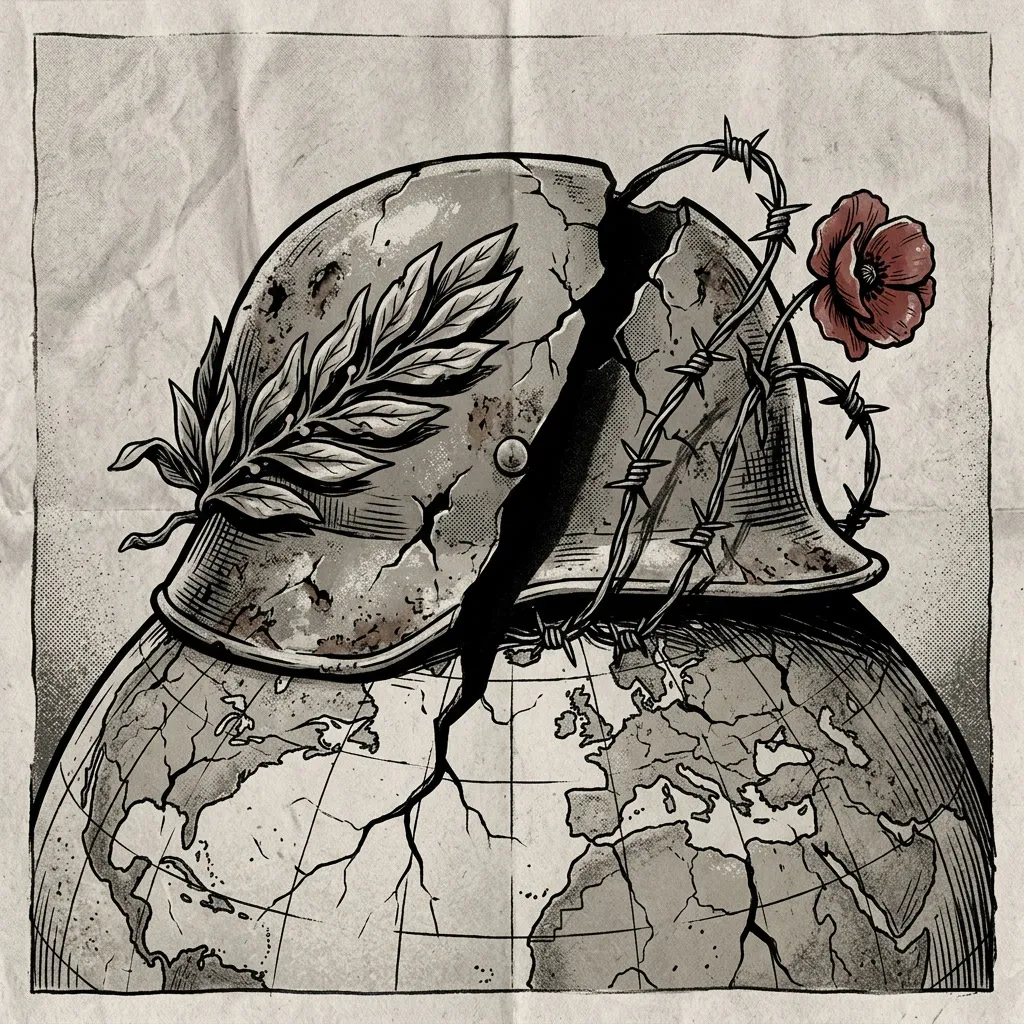
As the 81st anniversary of the defeat of Nazi Germany in World War II is marked globally, the commemorations have become deeply entangled with the ongoing Russia-Ukraine conflict. The holiday, celebrated on May 9 in Russia, is the focal point of competing narratives: one emphasizing historical sacrifice and remembrance, and another highlighting the contemporary geopolitical tensions and a controversial, short-lived ceasefire proposal. The events underscore how the memory of the past is being weaponized and contested in the present.
Russia's state-aligned media, represented by RT, frames the occasion as a global tribute to the Soviet Union's decisive role in defeating Nazism. The report emphasizes the immense human cost borne by the USSR, citing an estimated 27 million lives lost in what Russia calls the Great Patriotic War. It presents Victory Day as one of the country's most important national holidays, centered on the annual military parade in Moscow's Red Square. A significant portion of RT's coverage is devoted to criticizing what it describes as attempts in parts of Western Europe to erase this historical memory. The source reports that commemorations in several Western countries have been overshadowed by bans on Soviet and Russian symbols, such as the St. George ribbon, which Moscow condemns as a politically motivated effort to diminish the USSR's wartime contribution. This framing positions Russia as the guardian of a sacred historical legacy under attack from the West.
In stark contrast, coverage from the independent Russian outlet Meduza and a Reuters report carried by South Africa's Daily Maverick focuses almost exclusively on the ceasefire dynamics and the political fallout surrounding the commemorations. Meduza provides detailed reporting on Russia's unilateral declaration of a ceasefire from May 8 to May 10. It notes that the Russian Defense Ministry called on Kyiv to observe the pause but that Ukraine did not respond to this appeal. Crucially, Meduza reports the ministry's accompanying threat: any Ukrainian attempt to disrupt the May 9 celebrations in Moscow would trigger a massive missile strike on the center of Kyiv. The outlet clarifies the chaotic nature of the ceasefire proposals, explaining that both sides announced temporary halts to fighting but did not coordinate. Ukraine proposed a truce starting May 6, which Russia rejected, and fighting continued with each side accusing the other of violations.
The Ukrainian perspective, as conveyed through these reports, is one of skepticism and condemnation. Citing President Volodymyr Zelensky, the Daily Maverick article characterizes Russia's ceasefire proclamation as demonstrating strange and inappropriate logic. Meduza's reporting expands on this, quoting Zelensky's address where he criticized the proposal's underlying premise. He argued that Russia was effectively seeking Ukraine's permission to safely hold its parade for an hour before returning to killing Ukrainians, a logic he labeled as clearly irrational. Furthermore, Meduza reports that Zelensky urged foreign governments to boycott the Moscow celebrations, viewing foreign attendance as inappropriate given the ongoing war. He linked the ceasefire proposal to new Russian strikes, framing it as a cynical gesture rather than a genuine peace move.
Framing the Conflict The sources present two fundamentally different stories linked by the same calendar date. RT's narrative is historical and victim-centered, using Victory Day to reinforce national identity and portray Russia as a misunderstood historical champion now facing unjust erasure of its legacy. The contemporary war is a secondary context, mentioned only as the reason for symbolic bans in Europe. Conversely, Meduza and the Daily Maverick's reporting is firmly rooted in the present conflict. For them, Victory Day is a platform for current political and military maneuvers—a ceasefire declaration paired with a threat of escalation, a diplomatic plea for boycotts, and a point of rhetorical contention. The historical significance of the day is largely a backdrop to these immediate events. RT omits any mention of the ceasefire or Zelensky's criticisms, while the independent sources omit RT's emphasis on global commemorations and Western symbol bans, creating two parallel news universes.
Synthesizing these reports reveals a broader implication: the battle over the narrative of World War II is a live front in the Russia-Ukraine war. For the Russian state, controlling the memory of 1945 is essential to legitimizing its actions in 2026, framing them within a continuous struggle against a nebulous 'fascism.' For Ukraine and its sympathizers, the commemoration in Moscow is an act of hypocrisy, where a regime they accuse of neo-imperial aggression wraps itself in the mantle of the anti-Nazi liberator. The failed ceasefire, announced with one hand while the other threatened missile strikes, becomes the ultimate symbol of this disconnect. The commemorations, therefore, are not merely about remembering the past but are a potent arena for justifying present conflict and contesting international allegiances.