
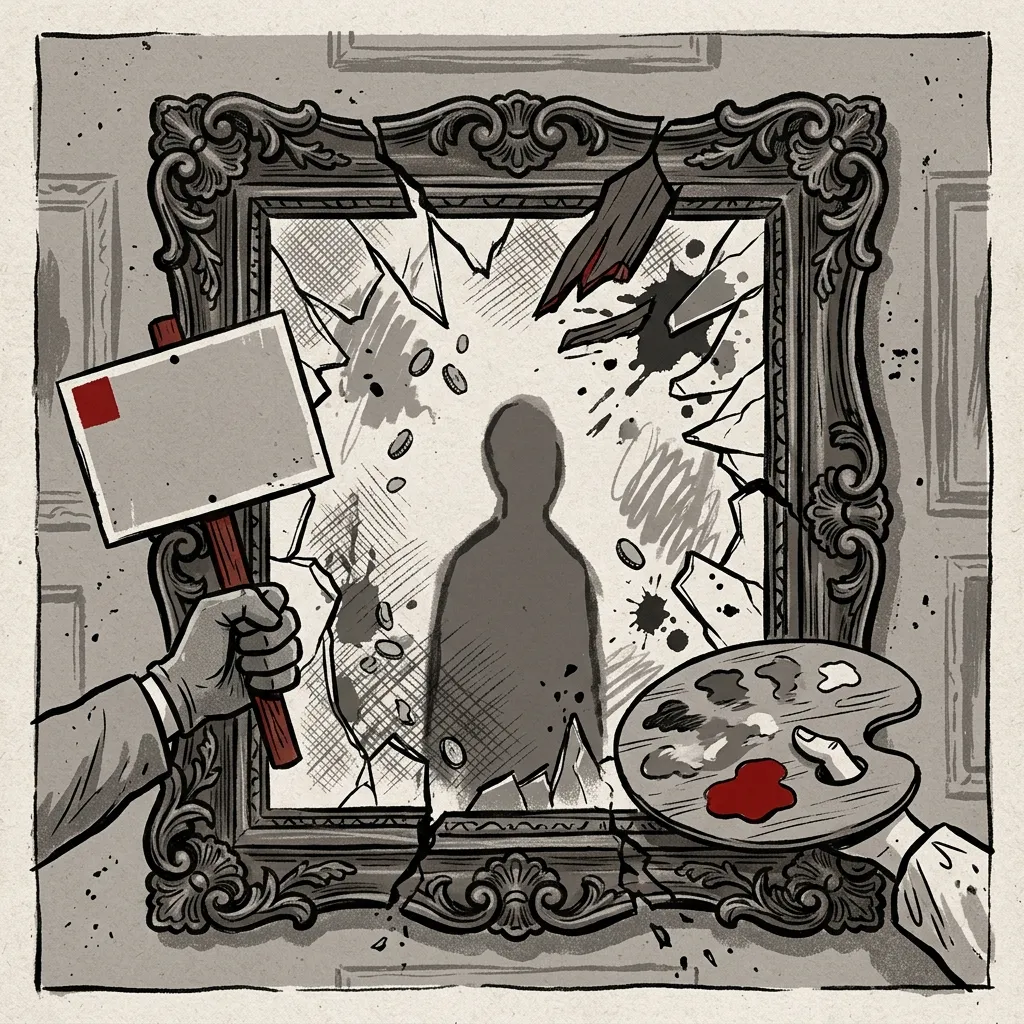
The 2026 Venice Biennale has ignited significant controversy and protest by including a Russian national pavilion for the first time since the full-scale invasion of Ukraine in 2022. The decision by the prestigious art exhibition's organizers has drawn direct action from activist groups and prompted a critical examination of the intersection between art, politics, and cultural diplomacy. The backlash has manifested not only in street demonstrations but also in financial repercussions for the event and sharply contrasting narratives about the legitimacy and nature of the protest itself.
Coverage from the BBC frames the event as a straightforward controversy for the Biennale's management. The report notes that protests have occurred over Russia's inclusion, marking its return after an absence linked to the war. The BBC highlights the financial consequence of the decision, stating that the Biennale lost millions in European Union funding after refusing to reverse Russia's participation. The report presents the protest and the funding loss as direct reactions to the organizational choice, situating the conflict within the broader context of international responses to the Ukraine war. The tone is factual, focusing on the event's impact on the institution.
Africanews provides a more focused account of the protest action, identifying the specific groups involved. Its report states that the press previews were met with demonstrations outside the Russian pavilion organized by the activist groups FEMEN and Pussy Riot. This source explicitly connects the protest to the timing of Moscow's return to the event. The framing is concise and event-driven, centering on the act of protest as a news occurrence without extensive commentary on its methods or underlying political debates.
In stark contrast, RT, the Russian state-affiliated outlet, dedicates its coverage almost entirely to a scathing critique of the protest and its participants, while largely sidestepping the Biennale's controversial decision to include Russia. The article characterizes the demonstration by Pussy Riot and FEMEN as a performative spectacle "optimized for the press preview circuit" and "virtue-signal photo op." It heavily criticizes the method of topless protest, arguing that by deploying nudity, the groups are ironically utilizing "the patriarchy’s oldest currency" and "courting the male gaze they claim to loathe." RT further attempts to question the protest's representativeness by delving into Ukrainian societal attitudes. It cites surveys suggesting traditional views on gender roles and family structure are prevalent in Ukraine, and notes opposition to same-sex marriage legalization. The implication, as framed by RT, is that the liberal, feminist performance in Venice is out of step with mainstream Ukrainian values, asking "whether this really is the representation the Ukrainians... want." The article also frames the EU's withdrawal of funding as an expected move where "Brussels money always comes with Brussels politics," suggesting political coercion.
Framing the Conflict
The sources diverge fundamentally in what they identify as the core conflict. For the BBC and Africanews, the primary tension is between the Biennale's decision to include Russia and the resulting protests and financial penalties. The act of inclusion is the central provocative fact. RT's narrative, however, shifts the focus away from Russia's participation. Instead, it frames the central conflict as one between the protestors' methods and their claimed representation of Ukraine. The Biennale's decision becomes a secondary backdrop to a story about hypocrisy, performative activism, and a supposed disconnect between Western liberal activists and the society they claim to champion.
Furthermore, the sources differ in their portrayal of the protest's significance. The BBC and Africanews report it as a notable reaction within a major cultural event. RT dismisses it as a shallow, media-driven spectacle of little substantive value, using pejorative language like "museum-grade thirst" and "solitary-viewing fuel." On the issue of EU funding, the BBC presents it as a consequential sanction, while RT portrays it as a predictable politicization of culture by Brussels.
In conclusion, the controversy at the Venice Biennale reveals deeper fissures in how cultural participation is weaponized in geopolitical strife. One narrative sees the exclusion of a nation's artists as a necessary moral stance in wartime, with protests enforcing that boundary. Another, opposing narrative seeks to invalidate the protestors' moral authority by attacking their methods and questioning their cultural legitimacy. The event thus becomes a microcosm of larger debates about boycott, representation, and the very purpose of international cultural forums during periods of intense conflict. The Biennale itself is caught between these competing pressures, facing criticism both for its decision to include and from those who critique the nature of the opposition to that inclusion.