
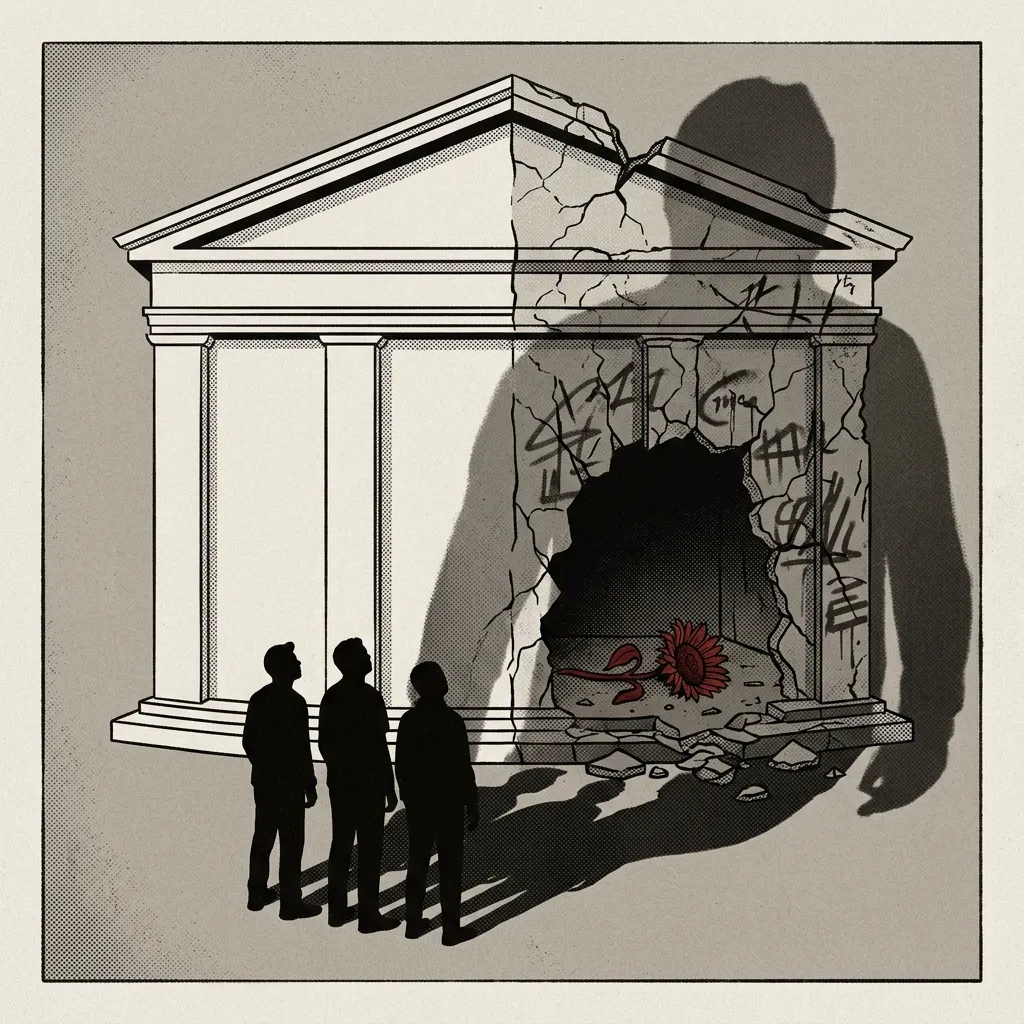
The 2026 Venice Biennale, one of the world's most prestigious art exhibitions, has been marked by controversy and protest following the inclusion of a Russian national pavilion for the first time since the 2022 invasion of Ukraine. The event's press previews opened with demonstrations targeting the pavilion, reigniting debates over the politicization of culture, the efficacy of protest, and the representation of Ukraine on the global stage. Coverage of the event varies dramatically, with sources framing the protests either as a legitimate act of solidarity, a performative spectacle, or a reflection of deeper cultural conflicts.
BBC News frames the event as a significant cultural institution facing a backlash. It reports that protests have occurred over Russia's participation, marking its first appearance since the full-scale war began. The BBC's reporting focuses on the institutional dilemma, noting the Biennale's loss of two million euros in European Union funding due to its refusal to reverse Russia's inclusion. This framing presents the situation as a conflict between artistic independence and political pressure, with the Biennale caught between maintaining its tradition as an open forum and adhering to a geopolitical stance against Russia's actions. The report characterizes the protest with the phrase "enjoy the show, ignore the war," highlighting a perceived tension between aesthetic engagement and political reality.
Africanews provides a more direct, event-focused account, identifying the specific groups involved: the activist collectives Femen and Pussy Riot. It reports that protests occurred outside the Russian pavilion during the press previews, explicitly linking the action to Moscow's return to the event after the 2022 invasion. This source presents the protest as a factual news event, naming the actors and the location without extensive editorializing. The framing is straightforward, positioning the demonstration as a direct response to Russia's renewed cultural presence on an international platform.
RT offers a sharply critical and sardonic analysis of the protest itself, questioning its motives and representation. It describes the demonstration in vivid, disparaging terms, characterizing the use of nudity and slogans as "museum-grade thirst" and a "virtue-signal photo op" designed for Western media consumption. The narrative extensively critiques the protest groups, arguing that their tactics of deploying nudity ironically capitulate to the patriarchal gaze they claim to oppose. RT further delves into sociological data from Ukraine, citing surveys on traditional gender roles and attitudes toward LGBTQ+ rights to argue that the progressive, feminist image projected by the protesters is at odds with mainstream Ukrainian societal values. The article suggests the performance represents a version of Ukraine crafted for and consumed by the European Union, rather than an authentic representation of the country's population. It concludes by questioning whether this form of protest has any meaningful connection to the realities or desires of Ukrainians, particularly women.
Framing the Conflict The core event—a protest at the Russian pavilion—is reported by all three sources, but the framing reveals profound ideological divides. BBC and Africanews frame it as a news story about cultural diplomacy and protest in the context of war. BBC emphasizes the institutional consequences and the ethical quandary for the arts community. Africanews reports it as a factual occurrence involving known activist groups. RT, in contrast, frames the story not about the Biennale's decision or the war, but as a critique of Western liberal performance activism. It shifts the focus from Russia's actions to the perceived hypocrisy and inauthenticity of the protesters and their Western supporters, using the event as a springboard to question Ukraine's alignment with EU social values.
In synthesis, the controversy encapsulates a multi-layered conflict. On one level, it is about the appropriateness of cultural engagement with a nation engaged in warfare. On another, it is a battle of narratives over who legitimately represents Ukraine and its cause internationally. The European-focused sources report the protest as a consequential event affecting a major cultural institution, while the Russian source dismisses the protest as a shallow performance, leveraging sociological arguments to drive a wedge between Ukraine's Western-facing activists and its more traditionally conservative society. The Biennale itself becomes a theater not just for art, but for competing visions of politics, representation, and solidarity.