
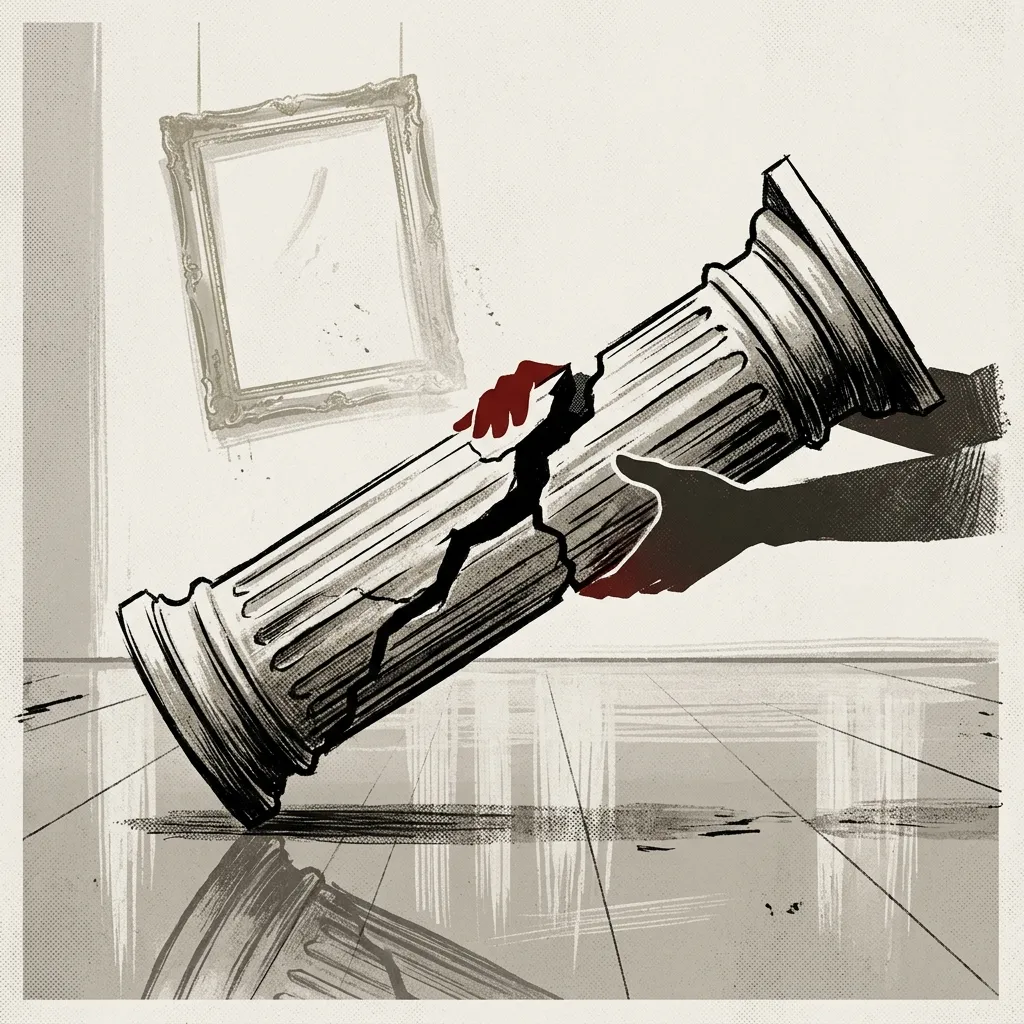
The resignation of the entire international jury of the Venice Biennale, just days before the opening of the 2026 exhibition, has escalated a simmering controversy over the event's decision to allow Russia to participate for the first time since 2022. The move has drawn sharp criticism from European governments and Ukraine, while highlighting the intense pressure on cultural institutions to take political stands in times of conflict. The resignations center on the jury's refusal to evaluate works from nations whose leaders face International Criminal Court (ICC) arrest warrants, a stance directly clashing with the Biennale Foundation's invitation to Russia and Israel.
Divergent Regional Reporting on the Core Conflict
Reporting from RT, a Russian state-affiliated outlet, frames the resignations as a reaction to pressure from Italian and European Union officials, describing the jury's action as occurring "amid pressure" from the decision to include Russia and Israel. The report notes the Biennale organizers' caveat that the Russian exhibition would be "strictly closed to the general public," a detail presented as a mitigating factor. RT's coverage emphasizes that both Russia and Israel have "rejected" the ICC arrest warrants, framing the legal actions as contested allegations rather than established facts. The report concludes by noting the postponement of the awards ceremony due to the "exceptional nature of the ongoing international geopolitical situation," presenting the Biennale's response as a measured administrative adjustment.
In contrast, Politico Europe provides a detailed account of the political fallout, heavily featuring the perspective of Ukrainian Foreign Minister Andriy Sybiha, who labeled the Biennale's choice "cowardly" and "disgraceful." The report explicitly connects Russia's participation to a broader strategy of "soft power," arguing it illustrates President Vladimir Putin's attempt to "reassert Russia’s place on the international stage." Politico highlights concrete consequences, including an Italian government investigation into the decision and an EU threat to cut funding. The report also notes the symbolic clash of the Biennale's public opening on May 9 coinciding with Moscow's Victory Day parade, framing the timing as a provocative alignment.
BBC News offers a more concise, breaking-news style report, anchoring the crisis to the "growing tensions over the return of Russia" since its full-scale invasion of Ukraine. While less detailed on political reactions than Politico, the BBC's framing implicitly supports the narrative that the invasion is the central, uncontested reason for the previous exclusion and current controversy, a point treated with more procedural neutrality in the RT report.
Framing the Conflict: Neutrality vs. Complicity
The core divergence in reporting lies in how the act of cultural participation is framed. Sources aligned with Western institutional perspectives, like Politico and the BBC, present the Biennale's invitation as a controversial political decision that grants legitimacy and a platform to an aggressor state. Politico, in particular, amplifies the Ukrainian viewpoint that "the aggressor’s culture... must never be utilized to serve the interests of the aggressor." The resignations are portrayed as a principled ethical stand against this normalization.
The RT narrative, conversely, frames the Biennale's initial invitation as an act of cultural inclusivity and the jury's resignation as a capitulation to external political pressure that undermines the separation of art and state. The report avoids moral language regarding the war, instead presenting the ICC warrants as one side of a disputed issue. The focus on the exhibition being closed to the public subtly suggests the Biennale attempted a compromise that was nonetheless rejected by political actors.
Broader Implications for Cultural Institutions
The crisis at the Venice Biennale underscores the increasingly untenable position of major cultural forums seeking to maintain a space for international dialogue amid stark geopolitical divisions. The jury's mass resignation, based on a principle tied to international law, represents an unprecedented challenge to the event's authority and curatorial independence. Simultaneously, the threats of funding cuts and government investigations, as reported by Politico, demonstrate the potent leverage political bodies now wield over cultural programming. The outcome sets a significant precedent for how other global institutions may navigate the inclusion of states involved in armed conflict or subject to international censure, potentially forcing a redefinition of cultural diplomacy's boundaries in an era of renewed great-power tension.