
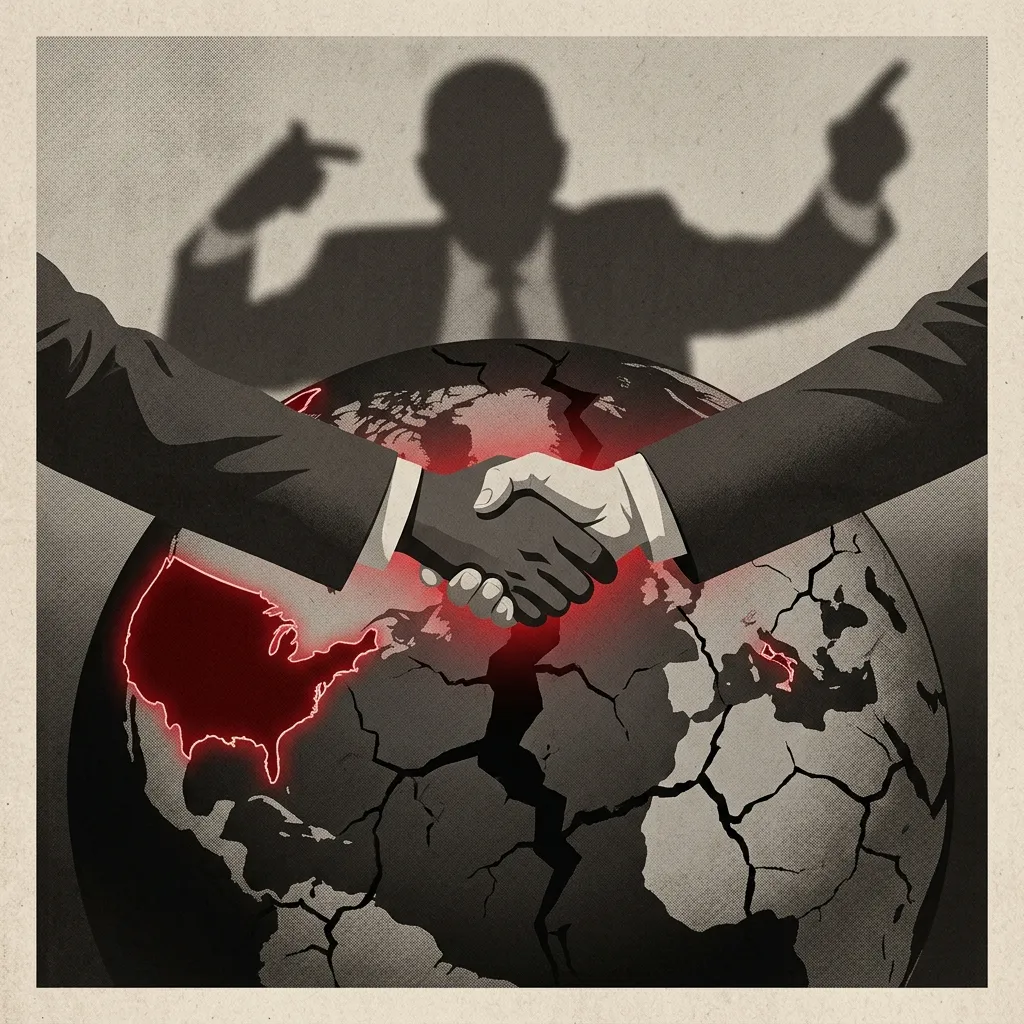
A diplomatic visit by US Secretary of State Marco Rubio to the Vatican is unfolding against a backdrop of renewed public criticism of Pope Leo XIV by President Donald Trump, highlighting a complex interplay between personal diplomacy and political rhetoric. While the State Department frames the trip as routine engagement, the timing and context have led international observers to view it as an effort to manage a significant bilateral strain, with the core dispute centering on Middle East policy and nuclear non-proliferation.
US Administration's Framing: Business as Usual According to Politico Europe, Secretary Rubio explicitly dismissed the notion that his upcoming meetings with Pope Leo XIV and Italian Prime Minister Giorgia Meloni are aimed at easing tensions. Rubio characterized the visit as standard diplomatic practice, citing engagement on humanitarian aid in Cuba and challenges faced by Christians in Africa as typical areas of US-Vatican collaboration. This framing seeks to normalize the trip and downplay the significance of the president's concurrent remarks. When pressed on Trump's latest comments, Rubio, acting as a White House spokesperson, offered a defense. He suggested the president's intention was to emphasize the perceived danger of Iran obtaining nuclear weapons and to express bewilderment that anyone, implicitly including the Pope, might not share this urgent concern.
Pope Leo XIV's Response and the Core Dispute Latin American sources provide detail on the Pope's direct rebuttal to Trump's accusations. Clarin reports that Pope Leo XIV responded to the criticism by stating that anyone wishing to criticize him should do so with truth, firmly asserting that the Catholic Church has been unequivocally opposed to all nuclear weapons for years. This positions the Pope's stance as one of consistent moral principle rather than a political position on a specific country. The dispute originates from differing narratives on the Middle East conflict. As reported by Le Monde, Trump's social media attacks, labeling the Pope 'weak on crime' and 'terrible for foreign policy,' came after Leo XIV called for peace in a war involving Israel and the United States. Politico Europe adds that the Pope has specifically condemned Trump's threats against Iran as "truly unacceptable," framing his own rhetoric as a plea against war and the destruction of civilization.
International Perspectives on the Rift Media outside the US and Vatican often frame the situation as an open conflict requiring management. Al Jazeera headlines its coverage by stating Trump has "restarted" a feud, implying a history of tension and characterizing his claim that the Pope supports Iran's nuclear ambitions as an "attack." The Hindu notes that while a senior US diplomat to the Holy See downplayed the idea of a "deep rift," the article's title references Trump's "fresh potshots," suggesting an ongoing, one-sided verbal assault. Latin American outlets like Folha de S. Paulo focus squarely on the content of Trump's accusation, highlighting the charge that the Pope's position on Iran is endangering Catholic faithful, thereby amplifying the gravity of the US president's language.
Framing the Diplomatic and Ideological Clash The sources reveal two parallel narratives. The US administration, through Rubio, projects a narrative of normalcy and functional diplomacy, separating the Secretary's official duties from the president's provocative political commentary. The underlying US argument, as defended by Rubio, is framed around a specific security threat (Iran's nuclear program) and a puzzle over moral clarity on that issue. Conversely, the Vatican and its sympathetic observers frame the conflict as a clash between warmongering rhetoric and a long-standing, principled pacifist doctrine. The Pope's response, as covered by Clarin, does not engage with the specifics of US policy but retreats to the higher ground of the Church's immutable teachings against nuclear weapons. International media largely treats the "feud" as a factual element of the story, with European and Middle Eastern sources particularly attentive to how the tension impacts the broader geopolitical landscape, especially concerning Iran and the Middle East.
Conclusion: Diplomacy Amidst Discord The synthesis of reports indicates that Secretary Rubio's Vatican trip, regardless of its official agenda, will occur in a climate of significant diplomatic friction. The core divergence is not merely a personal spat but a profound disagreement on foreign policy methodology and moral authority in international affairs. While US officials attempt to compartmentalize, the global perception is of a strained relationship where a senior diplomat must navigate the fallout from his president's words. The meeting's outcome may be less about resolving the ideological divide on Iran and more about maintaining functional channels of communication between two powerful global institutions whose leaders hold starkly different visions of peace and security.