
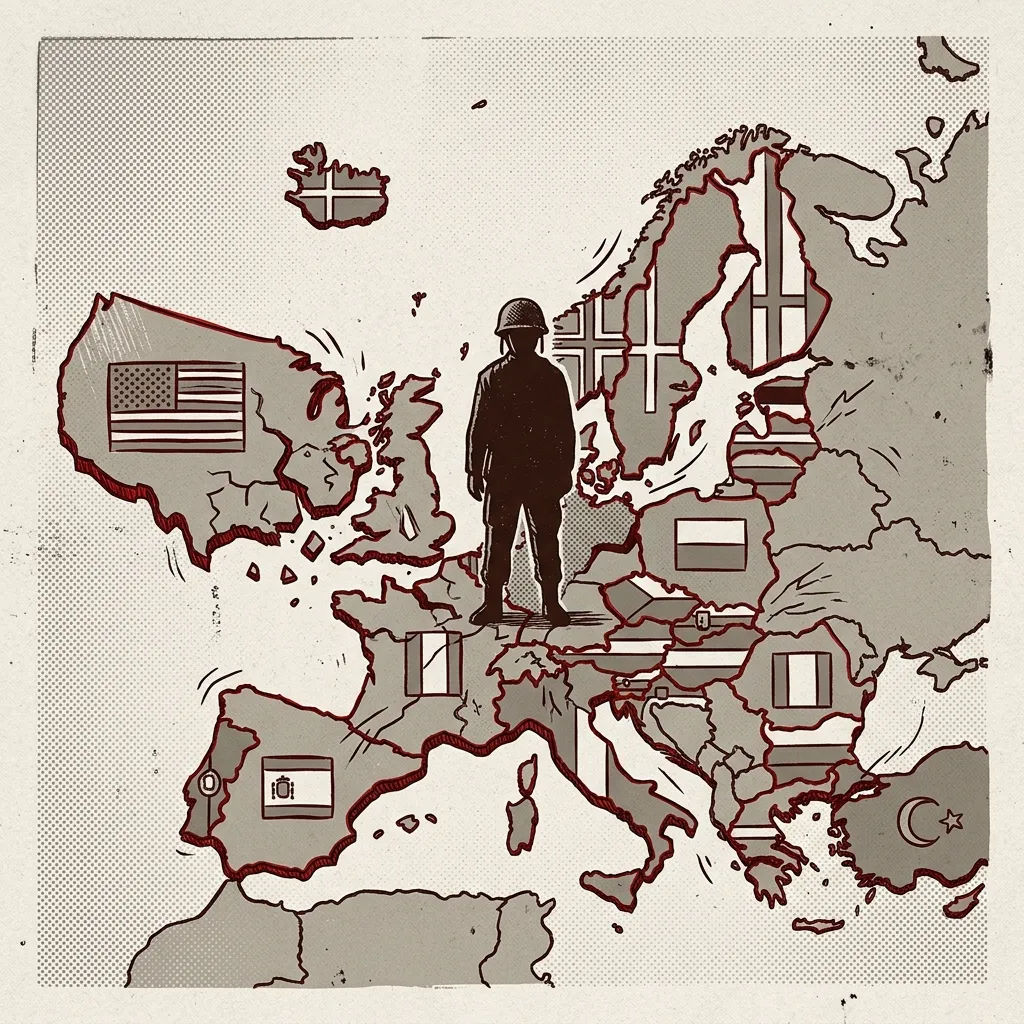
The United States' decision to withdraw thousands of troops from Germany has prompted a spectrum of international reactions, revealing divergent perspectives on transatlantic security and the future of NATO. While senior U.S. politicians express concern over the strategic implications, European officials frame the move as a catalyst for greater regional defense autonomy. The announcement, confirmed by the Pentagon, involves pulling out 5,000 service personnel over the next year, a decision President Donald Trump indicated could be just the beginning of deeper cuts.
Political Reactions in the United States Within the U.S., the decision has drawn criticism from prominent figures in the President's own party. According to BBC News, the chairs of the House and Senate armed services committees, both Republicans, stated that removing 5,000 personnel risks undermining deterrence against Russia. They argued the move sends an undesirable signal to Moscow. This internal GOP concern is echoed by Channel News Asia, which notes top Republicans are worried about the strategic impact. The Politico Europe report adds context, stating the withdrawal reverses a military buildup that began under the previous Biden administration.
The German and European Response German officials have publicly adopted a measured, pragmatic tone. Multiple sources, including The Hindu and Politico Europe, quote Defense Minister Boris Pistorius describing the U.S. decision as "foreseeable," an apparent reference to President Trump's recent threats. Pistorius and other European leaders are using the moment to advocate for a stronger European defense capability. Folha de S.Paulo reports Pistorius said the withdrawal should serve as an impetus for European nations to reinforce their own defenses. Politico Europe elaborates that he sought to downplay the move's impact, casting it as expected and underlining the need to strengthen the "European pillar within NATO."
The broader European institutional response is one of cautious coordination and emphasis on existing efforts. Politico Europe cites a NATO spokesperson saying the alliance is "working with the U.S. to understand the details" of the plan, while also stating it underscores the need for Europe to invest more in defense. A European Commission spokesperson, also quoted in Politico Europe, affirmed the U.S. military presence is a significant contribution to NATO and noted that EU members are increasing military spending at an "unprecedented pace." However, not all European reactions are unified. Politico Europe highlights Polish Prime Minister Donald Tusk's critical social media post, in which he lamented a "disastrous trend" in transatlantic relations and called the ongoing disintegration of the alliance the "greatest threat."
Framing the Strategic Context Sources differ significantly in how they contextualize the troop decision, particularly regarding U.S. motivations and the shadow of the Ukraine conflict. Several European and Asian outlets directly link the withdrawal to diplomatic tensions between the U.S. and German leadership. The Hindu and Politico Europe report that the U.S. move followed President Trump's renewed criticism of German Chancellor Friedrich Merz, who had stated the U.S. was being "humiliated" by Iran in negotiations related to the West Asian conflict. Politico Europe further notes Trump has threatened similar withdrawals from Spain and Italy, criticizing their leaders for denying U.S. military planes involved in the Iran war access to their bases.
The Latin American source Clarin provides a distinct framing, placing greater emphasis on the strategic landscape in Europe itself. It highlights the scale of the U.S. military footprint—mentioning over 40 bases—and directly connects the withdrawal to concerns about Russia, stating it occurs with the war in Ukraine as a backdrop and revives worries about Moscow. This contrasts with the German minister's public downplaying of immediate strategic risk. Meanwhile, Channel News Asia and Le Monde focus on President Trump's own escalatory rhetoric, quoting him saying the U.S. will be "cutting way down" and "a lot further than 5,000," suggesting the announced withdrawal may not be the final step.
Broader Implications for Transatlantic Relations The synthesis of reports paints a picture of a pivotal moment for NATO and European security. The official U.S. rationale, as presented by a Pentagon spokesperson in Politico Europe, cites a review of troop levels based on "conditions on the ground." However, the widespread reporting on Trump's critical comments towards European allies suggests the decision is deeply intertwined with broader political grievances. The emerging narrative from European capitals, particularly Berlin, is one of turning a perceived slight into a strategic opportunity—a chance to advance long-discussed goals of European strategic autonomy. Yet, as highlighted by reactions from Poland and NATO itself, there is palpable anxiety that this move could accelerate a fragmentation of the alliance at a time of ongoing conflict in Eastern Europe. The event underscores a tension between American unilateralism and European aspirations for a more self-reliant, yet still partnered, defense posture.