
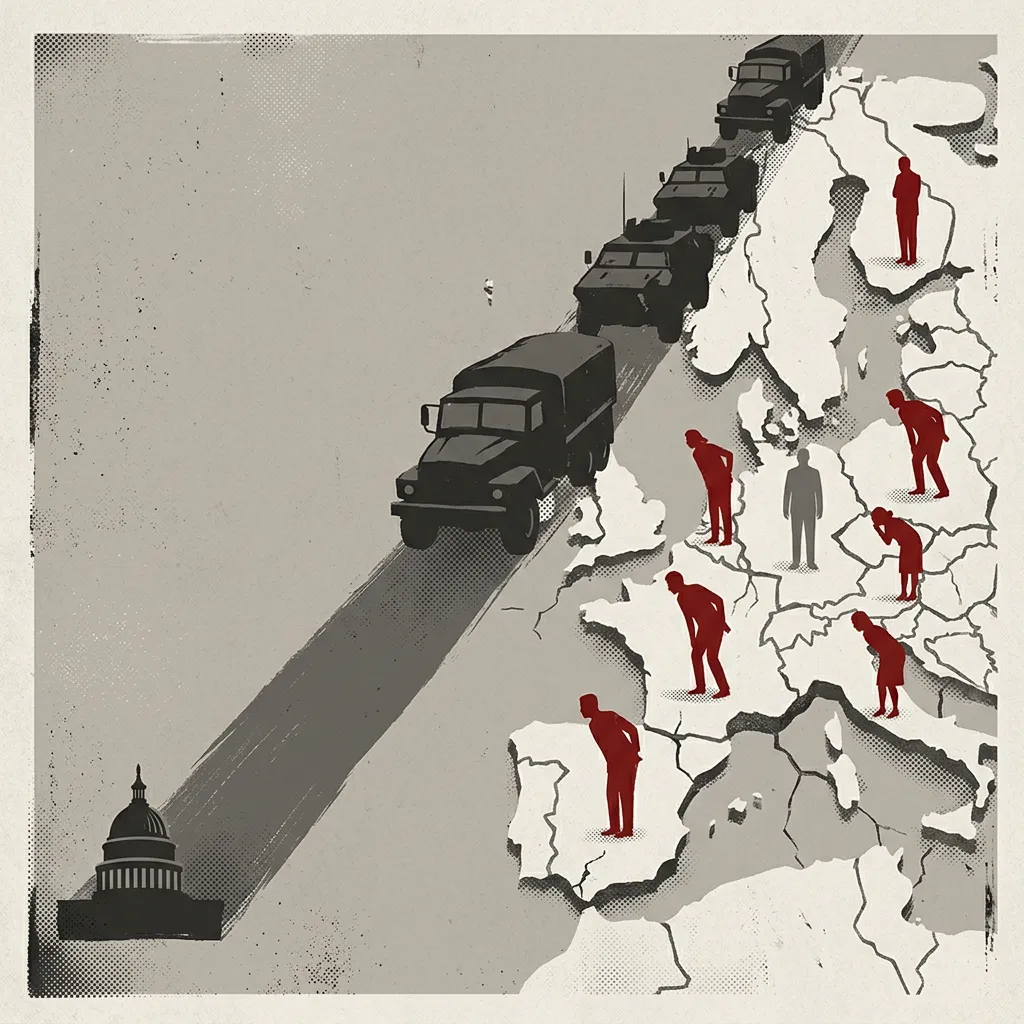
The announcement by the United States to withdraw a significant number of troops from Germany has elicited a range of official responses, from measured acceptance in Berlin to concern from other European capitals and within the US political establishment. While the Pentagon framed the move as a routine adjustment, President Donald Trump's subsequent comments suggested a deeper, politically charged reduction, placing the decision within a broader context of transatlantic tensions and calls for European strategic autonomy.
European sources, particularly from Germany, framed the withdrawal as an anticipated development that should catalyze greater European defense integration. Germany's Defence Minister, Boris Pistorius, characterized the move as "foreseeable," a point echoed by The Hindu and BBC News. Politico Europe and Folha de S.Paulo reported that Pistorius sought to downplay the immediate impact, instead using the announcement to stress that "Europe must strengthen its own defenses." This narrative of turning a challenge into an opportunity for European strategic responsibility is a consistent thread in reporting from the region. NATO's official response, noted by Politico Europe and The Hindu, was cautiously procedural, stating the alliance was "working with the U.S. to understand" the decision while also noting it "underscores the need for Europe to invest more in defense."
In contrast, reporting from Latin American and Asian outlets placed greater emphasis on the geopolitical stakes and potential risks. Clarín framed the story with a stark headline referencing "the shadow of Putin" and a "new challenge for Europe," explicitly linking the troop drawdown to the ongoing war in Ukraine and the security of over 40 US military bases. Channel News Asia highlighted the worry from "top Republicans" in its headline, balancing the European call for self-reliance with internal US political dissent. This coverage suggests a perspective viewing the decision not merely as a bilateral adjustment but as a potential shift in the European security architecture with wider implications.
US political dynamics and President Trump's personal role are central to the framing of the announcement's origins. Multiple sources, including Le Monde, Channel News Asia, and Politico Europe, reported Trump's statement that the US would be "cutting way down" and "a lot further than 5,000" troops. Politico Europe and The Hindu directly connected the Pentagon's decision to a "public row" between Trump and German Chancellor Friedrich Merz, who had said the US was being "humiliated" by Iran in negotiations. This connection paints the withdrawal as a reaction to diplomatic friction rather than a purely strategic recalculation. The concern from two senior Republicans, mentioned by BBC News and Channel News Asia, introduces a counter-narrative within the US, suggesting the move is not universally supported.
Framing the Conflict The sources diverge primarily in their emphasis on the decision's implications. German and European institutional sources (Politico Europe, Folha, BBC) frame it as a manageable, expected event that reinforces a pre-existing goal of European defense autonomy. The narrative is forward-looking and pragmatic. Conversely, sources like Clarín and the reports on Republican concern frame it as a disruptive event that heightens existing risks, primarily from Russia, and potentially weakens alliance cohesion. The role of Trump is also framed differently: European sources often mention his threats as context but focus on the official German and NATO response. Other global sources give more weight to Trump's escalating rhetoric and its connection to other bilateral disputes, as noted by Politico Europe regarding potential withdrawals from Spain and Italy. The European Commission's statement, reported by Politico Europe, served as a subtle rebuttal, emphasizing the US footprint as a "foundation of collective defense" and noting EU members are already increasing spending.
The broader implications of this episode touch on the fundamental nature of the transatlantic alliance. The synthesis of reports suggests a scenario where a unilateral US decision, driven by domestic politics and bilateral grievances, is being metabolized by European allies as a catalyst for a long-discussed strategic evolution. However, voices like that of Polish Prime Minister Donald Tusk, cited by Politico Europe as deploring a "disastrous trend" in transatlantic relations, indicate significant anxiety on NATO's eastern flank. The event underscores a continuing tension between American expectations of burden-sharing and European fears of abandonment, with the shadow of the Ukraine conflict, as highlighted by Clarín, making the calculus for all parties more urgent and complex.