
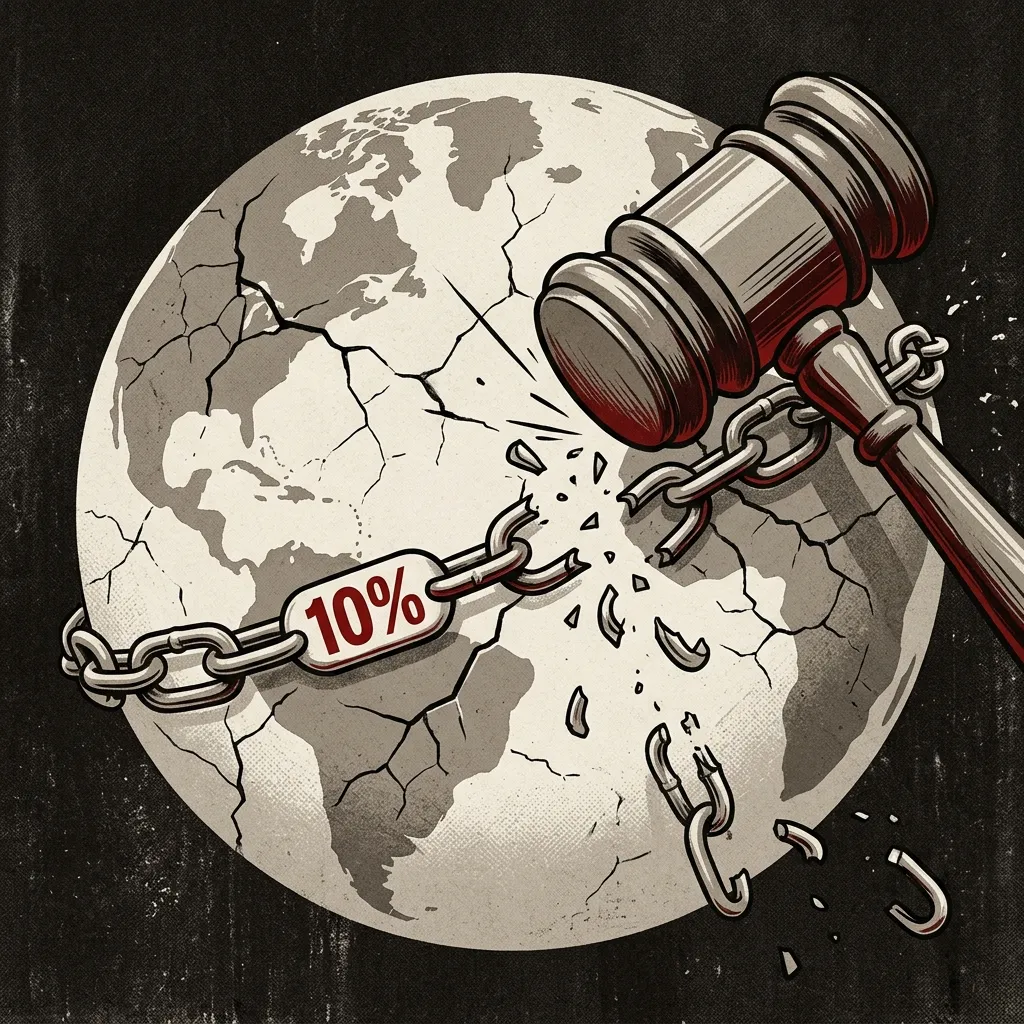
A federal trade court has ruled that former President Donald Trump's imposition of a 10% tariff on imports from most countries was illegal, marking a second judicial setback for his trade policy. The decision, delivered by a divided panel of the U.S. Court of International Trade, found the administration overstepped its legal authority. While the immediate injunction applies only to a limited set of plaintiffs, the ruling establishes a legal precedent that could enable broader challenges from importers who have paid the duties.
The Ruling and Its Immediate Scope The core finding from the Court of International Trade, as reported across sources, is that the tariff proclamation issued in February was invalid. European outlets like Le Monde and Politico Europe specify the ruling was a 2-1 decision, with Judges Mark Barnett and Claire Kelly forming the majority against the policy. The dissenting vote came from Judge Timothy Stanceu. The court ordered defendants to cease collecting the tariffs from the successful plaintiffs within five days and to provide refunds, as noted by Le Monde. However, Politico Europe provides crucial detail on the ruling's limited initial reach, explaining that while 24 Democratic-led states and two companies sued, the panel found only the state of Washington and the companies—spice importer Burlap and Barrel and toy company Basic Fun—had legal standing. Therefore, the injunction does not grant nationwide relief but sets a precedent other importers can cite.
Legal Context and the 'Plan B' Narrative A significant framing difference emerges in how sources contextualize this tariff. Politico Europe offers the most detailed legal and political background, labeling the 10% levy a "replacement" or "backup plan." It explains this policy was implemented after the U.S. Supreme Court earlier struck down a more extensive worldwide tariff program. The report delves into the specific statute used, Section 122 of the Trade Act of 1974, which allows a president to impose temporary surcharges to address "fundamental international payments problems." Politico highlights that challengers argued this Nixon-era law was intended for narrow balance-of-payments emergencies, not for broad modern trade policy, a point echoed in a statement from a plaintiffs' lawyer they quote. The Hindu also references the prior Supreme Court loss, framing the new tariffs as those "imposed after loss at Supreme Court." In contrast, Al Jazeera's brief report does not mention this sequential legal history, simply stating the court ruled in favor of small businesses that challenged the tariffs enacted in February.
Framing the Conflict The sources align on the basic outcome but diverge in emphasis and narrative framing:
- Legal Procedure vs. Political Conflict: Politico Europe frames the story through a detailed legal lens, emphasizing the statutory debate over Section 122, the standing issue, and the administration's ongoing efforts to use other trade laws like Section 301. The Hindu and Al Jazeera present a more straightforward account of a court ruling against a presidential policy, with less procedural detail.
- Scope of Impact: There is a clear divergence in explaining the ruling's practical effect. Le Monde and Al Jazeera highlight the court-ordered refunds for importers who sued, which could imply a broader immediate impact. Politico Europe and the second Hindu article carefully clarify the relief is currently narrow, applying only to specific plaintiffs, but note its potential to "open doors" for further challenges, as The Hindu puts it.
- Characterization of Plaintiffs: Al Jazeera and the first Hindu article refer broadly to "small businesses" as the challengers. Politico Europe provides specific names and notes the involvement of numerous Democratic-led states, adding a layer of partisan political context to the legal challenge.
Broader Implications The ruling represents another obstacle for the Trump administration's aggressive trade agenda, forcing it to continue seeking alternative legal pathways. As Politico Europe reports, the administration is already pursuing investigations under Section 301, which could lead to new tariffs later in the year. The decision underscores the ongoing legal battles defining U.S. trade policy, where executive actions are frequently contested in court by political opponents and affected industries. While the immediate financial impact is confined, the precedent threatens the foundation of this specific tariff program, inviting a wave of litigation from other importers seeking similar refunds and potentially forcing a broader withdrawal of the policy.