
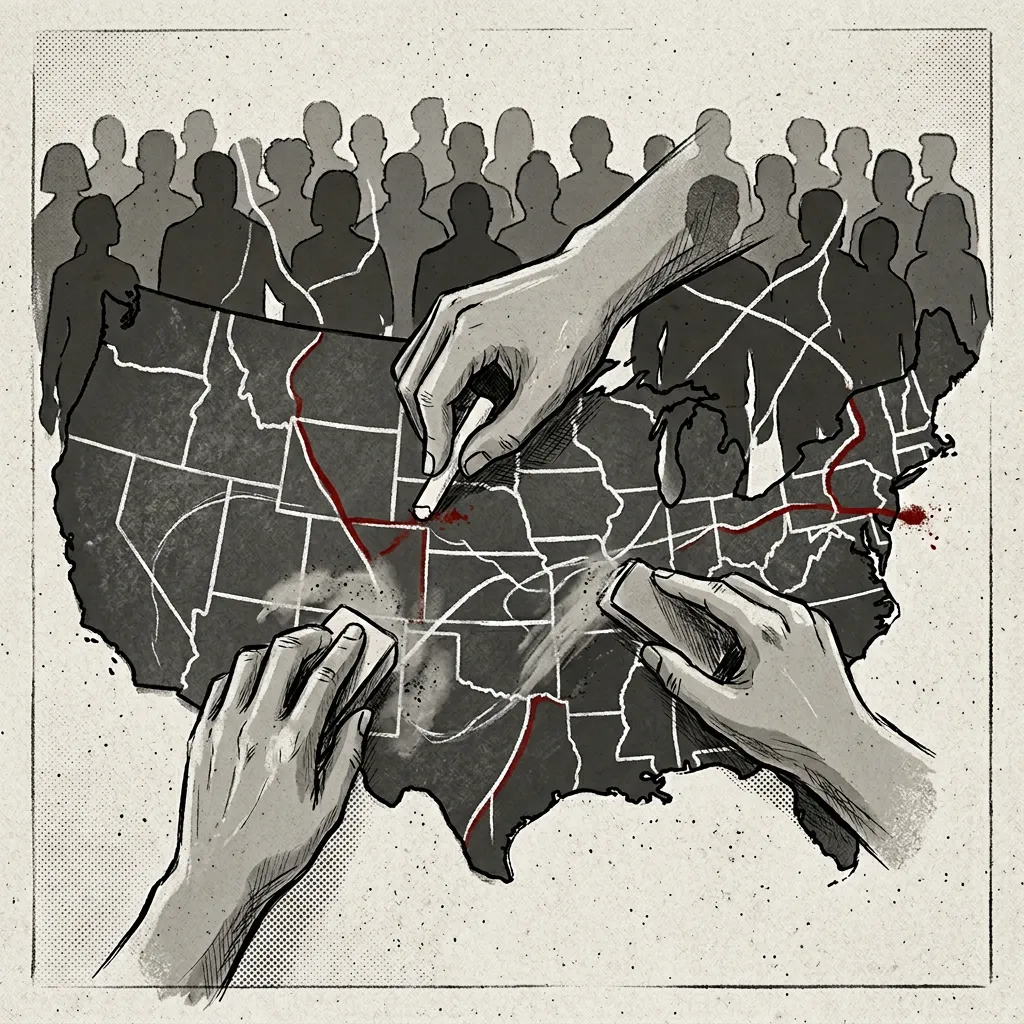
The US Supreme Court has issued a ruling that imposes new limits on how race can be considered in the drawing of electoral district maps. The decision, from a court with a conservative majority, alters a legal standard that had prevented states from redesigning districts using racial criteria in certain contexts.
According to Clarin, a Latin American mainstream source, this change could benefit the Republican Party. The outlet frames the decision as one that "limits the rights of minorities" and suggests it may open a path for Republicans to regain majority-Black districts in the southern United States.
BBC News, a mainstream European source, reports that the practical effect of the ruling will be to make it "more difficult to successfully challenge legislative maps for diluting the voting power of racial minorities." This framing focuses on the procedural and legal hurdles for future lawsuits, rather than on immediate partisan political consequences.
Both sources agree on the core action of the court: imposing a limitation. However, their framing of the implications differs. Clarin explicitly links the ruling to a potential shift in political power, naming a specific beneficiary (Republicans) and a specific geographic and demographic impact (Black-majority districts in the South). BBC News describes a more generalized legal consequence, emphasizing the increased difficulty of mounting certain types of legal challenges without specifying which political party might gain or lose as a result.
The ruling addresses a complex area of US election law known as redistricting or gerrymandering, where the boundaries of electoral districts are redrawn, typically after a census. Laws and previous court decisions have sought to balance the prohibition of racial discrimination against the need, in some cases, to create districts where racial minorities have a realistic chance to elect their preferred candidates. This latest decision narrows the circumstances under which race can be a predominant factor in designing districts to combat the dilution of minority voting power.