
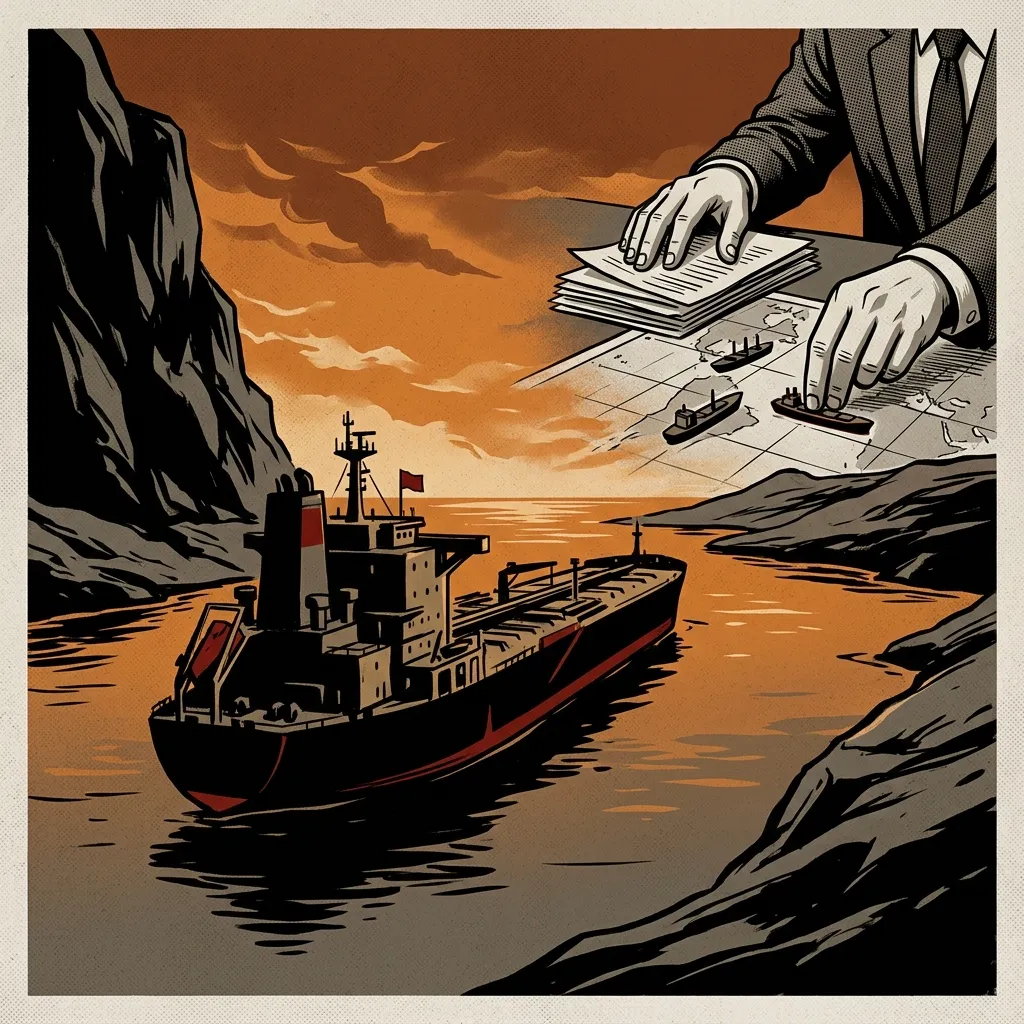
Recent developments in the ongoing conflict between the United States and Iran highlight a diplomatic stalemate, a critical blockade, and a flurry of regional outreach. The White House has stated it is reviewing Iran's most recent proposal concerning the Strait of Hormuz, a crucial maritime passage for global oil shipments that has been blockaded by Tehran for two months, according to reports. This blockade has contributed to sustained high oil prices, with experts warning of potential long-term economic disruptions.
Diplomatic efforts to resolve the conflict appear gridlocked. Sources describe US-Iran talks as "stalled," with significant disagreement over the structure and priorities of negotiations. Iranian officials, as reported by RT, have characterized the US delegation in recent Islamabad talks as lacking decision-making authority, claiming Vice President J.D. Vance was frequently on the phone during discussions. Conversely, US President Donald Trump has publicly stated that Iran has reached out to Washington, asking for the US naval blockade on Iranian ports to be lifted.
The framing of the negotiation impasse varies. Iranian state media and some international reports present Tehran as pushing a new multi-phase diplomatic plan focused initially on security guarantees and reopening the Strait of Hormuz, while deferring discussions on its nuclear program. From this perspective, the US faces a dilemma: engaging on Iran's terms would acknowledge the failure of military pressure, while refusing risks prolonging the Hormuz crisis. US-aligned reporting does not explicitly detail this proposed sequence but confirms the proposal on Hormuz is under review.
Regional diplomacy is intensifying alongside the direct talks. Iranian Foreign Minister Abbas Araghchi has undertaken a series of consultations, with his travel to Russia receiving particular attention. Russian media frames Moscow as a crucial, neutral stabilizing force, capable of speaking to all sides—Iran, Israel, Gulf states, and the US—and argues that Western channels have lost credibility in Tehran. This outreach is portrayed as part of Iran's effort to build a "diplomatic shield" and secure guarantees against future aggression.
The war has also sparked transatlantic tensions. German Chancellor Friedrich Merz commented that Iran is humiliating the United States in the negotiations, a statement that prompted a sharp rebuke from President Trump. Trump defended the US approach to the conflict as necessary and dismissed the German leader's criticism, asserting he "doesn't know what he's talking about."
Amid the military and diplomatic standoff, a minor but symbolic event occurred in the Strait of Hormuz. A luxury yacht owned by Russian billionaire Alexéi Mordashov reportedly transited the strait without objection from Iranian or US authorities, as noted by Latin American press, highlighting selective maritime passage despite the broader blockade.
President Trump's public statements offer a contrasting view of Iran's position. While acknowledging Tehran's request regarding the blockade, he has also asserted that Iran is "in collapse," a claim not independently verified in the provided reports.