
Diplomatic Impasse Deepens
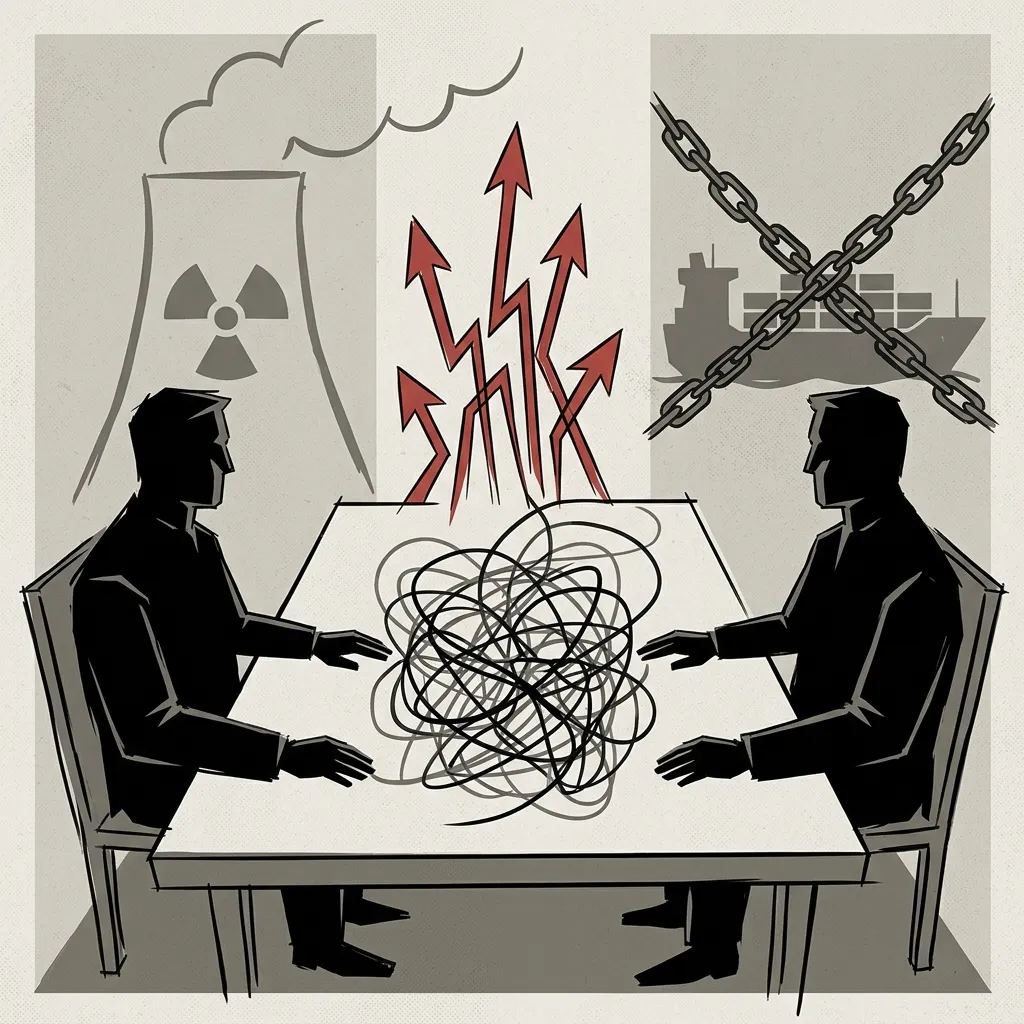
Negotiations between the United States and Iran have reached a critical stalemate, with President Donald Trump reportedly rejecting Tehran's latest proposal because it fails to address Iran's nuclear program, according to U.S. officials. The breakdown comes as the Strait of Hormuz remains closed to what Iran terms "hostile" shipping, driving oil prices upward and threatening global supply chains.
The dispute centers on fundamentally different priorities. Washington insists any agreement must include provisions on Iran's nuclear activities, while Tehran's proposals have sidestepped this issue entirely. A U.S. official confirmed Trump's dissatisfaction with Iran's approach, though specific details of the Iranian proposal have not been publicly disclosed.
Competing Narratives on Negotiating Strength
German Chancellor Friedrich Merz offered a stark assessment that has reverberated across international media. Speaking during a school visit in North Rhine-Westphalia, Merz stated that Iran is "humiliating" the United States in negotiations and that Washington lacks a "convincing strategy." The German leader compared the situation to protracted conflicts in Afghanistan and Iraq, emphasizing the difficulty of finding exit strategies once military engagements begin.
Merz specifically noted that "the Iranians are obviously very skilled at negotiating, or rather, very skilful at not negotiating," referencing American officials traveling to Islamabad only to leave without results. His comments frame Iran as holding tactical advantage in the diplomatic standoff.
Russian state media prominently featured Merz's "humiliated" characterization, presenting it as evidence of American strategic weakness. RT's coverage emphasized that Trump has failed to pressure Iran into reopening the Strait of Hormuz, framing the situation as a demonstration of Iranian strength versus American impotence.
Meanwhile, multiple sources report that both Washington and Tehran publicly claim to hold the upper hand. Al Jazeera coverage questions "who holds the cards," suggesting the reality may be more complex than either side's public posturing indicates.
Russian and Regional Diplomatic Maneuvering
Iran's Foreign Minister Abbas Araghchi traveled to St. Petersburg for meetings with Russian officials, including President Vladimir Putin. Russian media reports that Putin pledged to "do everything to achieve peace," while Araghchi praised Russia-Iran ties and welcomed Moscow's diplomatic support.
At the United Nations, where a review conference on atomic treaties commenced, the U.S. and Iran clashed over Tehran's nuclear program. Russian Ambassador-at-Large Andrey Belousov objected to what he termed the "singling out" of Iran, expressing concern that "politicisation" on the conference's opening day could undermine outcomes. Moscow's position aligns it diplomatically with Tehran against Western pressure.
Brazilian outlet Folha de S.Paulo describes the situation as an "uncomfortable limbo" between peace and war, with both nations engaged in a test of endurance with "drastic consequences for the global economy." The publication frames this as a contest over who can withstand pressure longer.
Economic and Humanitarian Consequences
The closure of the Strait of Hormuz has triggered immediate economic ripples. Indian media reports that budget airlines are the first to reduce flights as jet fuel prices surge. Oil prices have resumed their upward trajectory in Asian trading, extending recent gains.
UN Secretary-General António Guterres warned that the standoff risks triggering a global food emergency, according to Al Jazeera. The vital shipping lane's closure affects not just energy supplies but broader commodity flows essential to international trade.
Regional Responses: Pakistan's Mediation, India's Silence
Pakistan has emerged as a potential mediator, hosting recent negotiation rounds in Islamabad, though these talks ended without breakthrough. The Diplomat notes Pakistan's prominent mediation role while observing India's notably quiet approach to the crisis, despite India's significant energy import dependence and regional interests.
The contrast in South Asian responses reflects different strategic calculations: Pakistan positioning itself as a diplomatic bridge, while India maintains what analysts describe as "strategic silence" despite its vulnerability to energy price shocks.
Nuclear Program at Center of Dispute
The nuclear issue remains the fundamental obstacle. U.S. officials insist that any resolution must address Iran's atomic activities, while Iranian proposals have reportedly avoided this topic. The timing coincides with UN treaty review proceedings, where this disagreement has already generated friction between Western delegations and Russia-Iran positions.
With negotiations apparently stalled and economic pressure mounting on all parties, the question remains whether either side will adjust its position before the economic and humanitarian costs become unsustainable.