
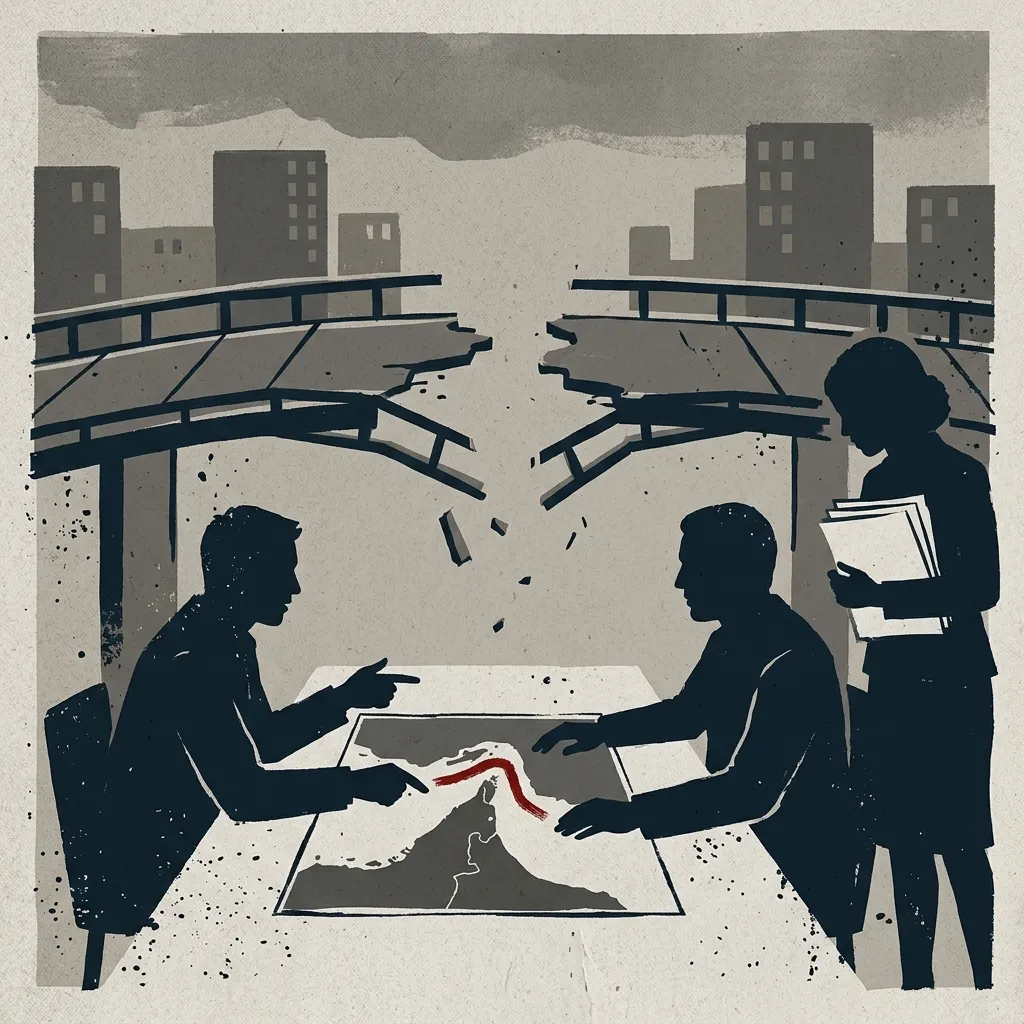
Diplomatic Deadlock Deepens
Nearly two months into a military standoff between the United States and Iran, indirect negotiations have reached an impasse, with both sides claiming leverage while a fragile ceasefire remains under strain. Iranian Foreign Minister Abbas Araghchi traveled to St. Petersburg on April 27 to meet Russian President Vladimir Putin, part of a diplomatic tour that included stops in Pakistan and Oman.
According to Russian outlet Meduza, Putin pledged Russia would do "everything" to achieve Middle East peace quickly, while Araghchi described the Iran-Russia relationship as a "strategic partnership at the highest level." The meeting lasted approximately 90 minutes. Brazilian publication Folha de S.Paulo reported that the visit followed Tehran blaming Washington for the failure of recent negotiations in Pakistan.
Competing Claims Over Leverage
The core dispute centers on who can outlast whom. RT quoted US President Donald Trump telling Fox News: "We have all the cards. If they want to talk, they can come to us." Trump indicated unwillingness to send envoys on an 18-hour journey to Islamabad for further talks.
Araghchi pushed back against this characterization, according to RT, arguing that Trump does not hold the upper hand and outlining possible escalation scenarios. Multiple Al Jazeera reports noted that German Chancellor Friedrich Merz criticized US strategy, stating America has "no clear exit strategy" and warning of another quagmire similar to Iraq and Afghanistan. Merz reportedly said Iran had "humiliated" the US and appeared "clearly stronger" in the conflict.
New Iranian Proposal
Axios reported, cited by RT and Al Jazeera, that Iran has proposed a new framework: reopening the Strait of Hormuz and potentially ending the war, while postponing nuclear negotiations until after the US lifts its blockade of Iranian ports. The proposal was transmitted through Pakistani intermediaries but does not include immediate progress on nuclear issues.
According to the Axios report, Araghchi informed mediators from Pakistan, Egypt, Turkey, and Qatar that Iran's leadership lacks internal consensus on addressing Washington's nuclear demands. The US has insisted Iran dismantle its nuclear program and surrender all enriched uranium. Al Jazeera characterized this as Iran "widening diplomacy to regional and global players while indirect US talks remain uncertain."
Argentine publication Clarín reported that Tehran offered Trump the reopening of the Hormuz Strait if the US lifts its blockade, noting the proposal excludes nuclear agenda advances.
Humanitarian and Economic Consequences
The conflict's broader impact extends beyond the negotiating table. Al Jazeera reported that the "US-Israel war on Iran" is driving up fuel and food costs, putting 32.5 million people worldwide at risk of poverty.
RT highlighted specific humanitarian concerns, quoting Razieh Alishvandi, Director for International Affairs at Iran's Red Crescent, who said a seized Iranian vessel, the Touska, was carrying raw materials for dialysis treatment. "This obviously puts patients' lives at risk, because without those raw materials human lives are in danger," Alishvandi told RT. The US Central Command has reportedly forced 38 ships to redirect and seized several tankers and cargo vessels.
Lebanon Tensions Complicate Ceasefire
The fragile ceasefire faces additional strain from ongoing Israeli operations in Lebanon. RT reported that Israeli Prime Minister Benjamin Netanyahu accused Hezbollah of "undermining the ceasefire" and announced further military action. Lebanon's Health Ministry reported at least 14 deaths from Israeli strikes on Saturday, with more than 2,500 killed and over 7,700 injured since Israel escalated hostilities with Lebanon amid the wider Iran conflict, according to Beirut's figures.
Clarín noted that Hezbollah announced it would not respect negotiations between Israel and Lebanon, adding another complication to regional diplomacy.
Nuclear Non-Proliferation Concerns
Al Jazeera reported that a Nuclear Non-Proliferation Treaty (NPT) review conference is underway, with analysts questioning whether the pact can survive the current conflict. One Al Jazeera opinion piece argued that "US-Israeli attacks on Iran under the pretext of ending a nuclear weapons programme are damaging confidence in the NPT," suggesting the review conference is unlikely to halt nuclear powers from flouting treaty rules.
Outlook
Despite the diplomatic deadlock, Al Jazeera cited analysts saying both sides are unlikely to return to open fighting, suggesting that "no deal yet doesn't mean diplomacy is dead." Pakistan and Oman remain involved in backchannel efforts, according to multiple sources, though Araghchi reportedly declined to meet Trump's envoys Steve Witkoff and Jared Kushner for new talks in Islamabad.