
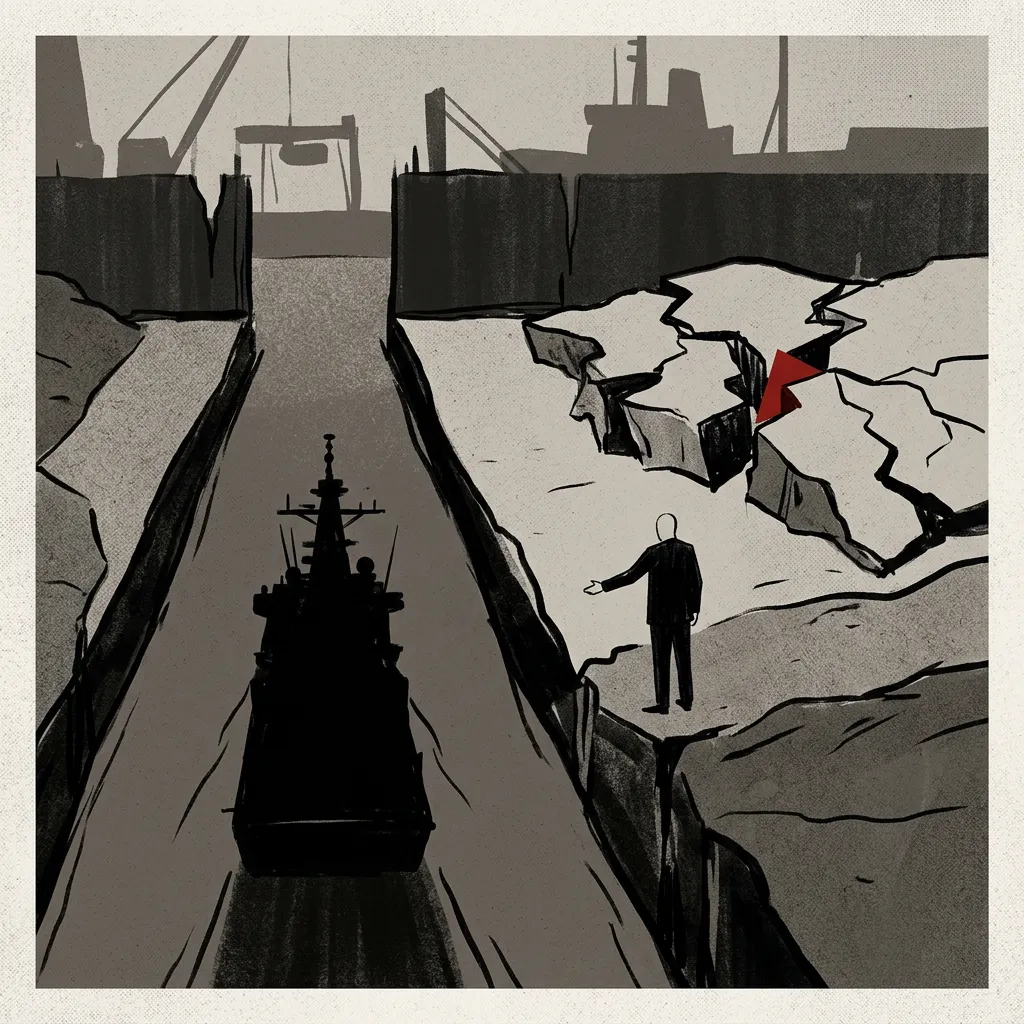
The United States has announced a temporary suspension of its newly launched naval escort operation in the Strait of Hormuz, a move President Donald Trump framed as a goodwill gesture to advance a final agreement with Iran. The decision, communicated via the president's social media platform, pauses 'Project Freedom' just days after it began, creating a complex diplomatic and military tableau where a U.S.-led blockade of Iranian ports remains in effect while a fragile ceasefire holds.
The Announcement and Its Stated Rationale Multiple sources, including reports from The Hindu, Daily Maverick, and Politico Europe, confirm the core announcement: President Trump stated he was pausing the escort mission. He attributed the decision to a request from mediator Pakistan and other nations, alongside what he characterized as significant progress toward a comprehensive deal with Tehran. Politico Europe and RT note the president specified the pause would be brief. Several outlets, such as Bangkok Post and Folha de S.Paulo, emphasize the abruptness of the decision, noting it came merely one or two days after the operation's launch and shortly after senior officials like Secretary of State Marco Rubio and Defense Secretary Pete Hegseth had publicly promoted the mission.
Contradictory Realities on the Ground While the pause is presented as a diplomatic step, reporting reveals ongoing hostilities and a tense maritime standoff. Politico Europe and The Intercept detail that despite the announced ceasefire, military engagements have continued. According to their accounts, U.S. officials stated Iran has fired on commercial vessels multiple times, seized ships, and engaged with U.S. forces on over ten occasions since the truce began. The U.S. also reportedly attacked Iranian boats. However, U.S. Joint Chiefs Chair Gen. Dan Caine is cited as framing these incidents as falling "below the threshold" of restarting full-scale combat. Al Jazeera's reporting includes a statement from Defense Secretary Hegseth affirming the ceasefire remains in place despite these growing tensions. This creates a narrative divergence: U.S. officials maintain a ceasefire is intact (Politico Europe, Al Jazeera), while independent analysis from The Intercept questions its validity, calling it "phony" and arguing the administration is "tying itself in knots" to maintain the fiction for political and legal reasons.
Framing the Conflict: Humanitarian Mission vs. Act of War The framing of the U.S. operations and the broader conflict varies significantly by source. U.S.-aligned and Western outlets often describe 'Project Freedom' in defensive or humanitarian terms. Politico Europe notes Secretary Hegseth called it "defensive in nature, focused in scope and temporary in duration." BBC News and Daily Maverick refer to it neutrally as an effort to "escort" or "guide" ships. In contrast, Russian outlet RT and Iranian state media, cited by The Hindu, present a starkly different view. RT's report emphasizes that the U.S. blockade of Iranian ports continues "in full force," which Tehran has labeled an "act of war." The Hindu's report on Iran's new transit rules frames the Strait as under Iranian "sovereign" control, mandating permits for vessels—a direct counter-narrative to U.S. claims of providing safe passage. The Intercept offers a critical U.S. perspective, suggesting the administration's rhetoric about a ceasefire and a defensive mission is a maneuver to evade domestic legal pressures, specifically the War Powers Resolution, which mandates congressional authorization for prolonged hostilities.
Regional and Global Implications The pause and the surrounding tensions carry implications for global energy markets and regional diplomacy. RT and Politico Europe highlight the Strait's role in transporting roughly one-fifth of the world's oil, underscoring the economic stakes. Latin American outlet Clarin explicitly links U.S. messaging to an attempt to "calm the markets" over rising oil prices. The role of mediator Pakistan is noted by several sources (The Hindu, RT, Politico Europe) as a key factor in the pause, indicating ongoing multilateral diplomatic efforts. Furthermore, the relationship between U.S. and Israeli objectives surfaces in reporting. RT details a question posed to Secretary Hegseth about whether the U.S. was being "roped back into a war" by Israel, to which Hegseth replied that Trump acted based on "American interests," not Israeli pressure, though he acknowledged allies might have "slightly different" objectives.
In synthesis, the pause of 'Project Freedom' is not a de-escalation but a recalibration within a highly contested and volatile environment. The U.S. narrative centers on diplomatic progress and a defensive, temporary military role, while Iranian and Russian counter-narratives assert sovereignty and label U.S. actions as belligerent. Independent scrutiny from outlets like The Intercept challenges the factual basis of the U.S. ceasefire claim, pointing to continued combat and domestic political motivations. The enduring U.S. blockade, contrasted with the paused escorts, leaves the fundamental impasse over control of the vital waterway unresolved, with the risk of miscalculation remaining high as negotiations continue.