
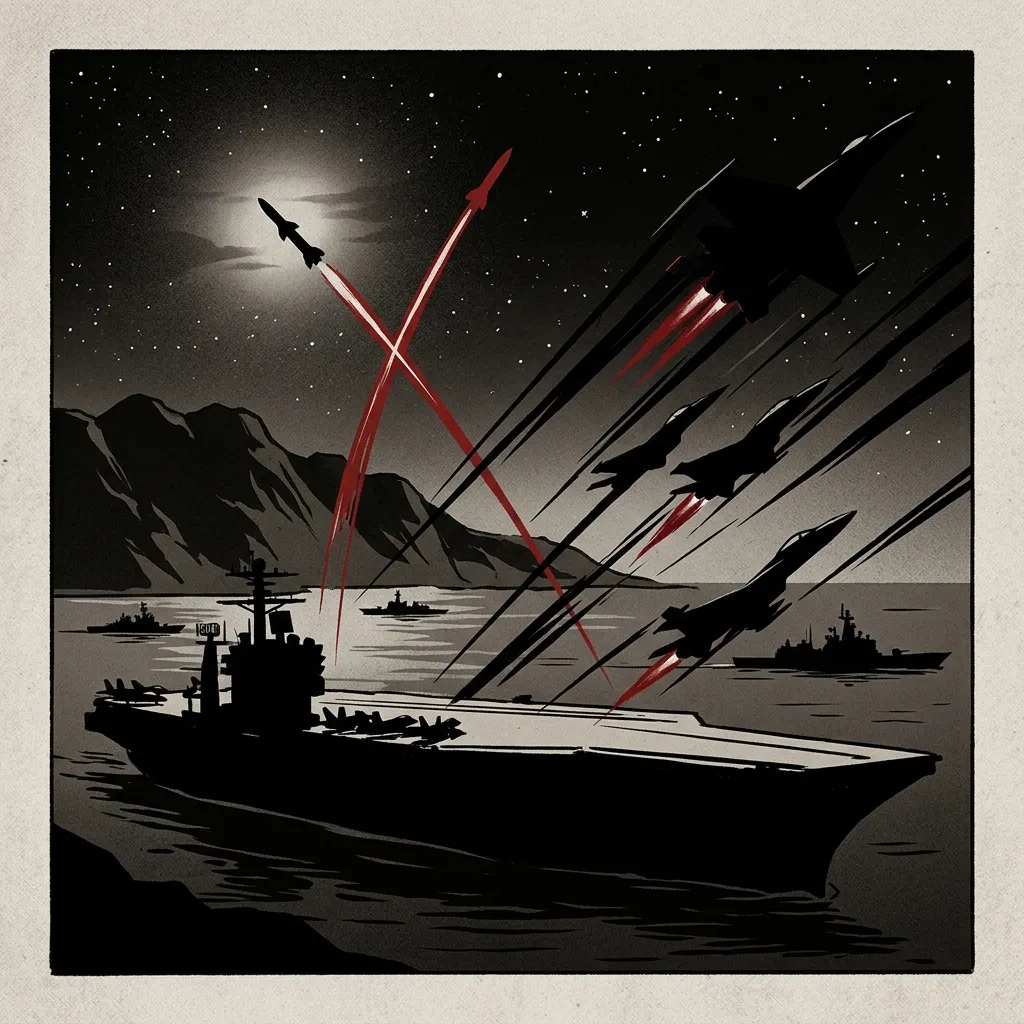
Despite a declared ceasefire, military clashes between the United States and Iran in the strategic Strait of Hormuz have escalated, with both sides accusing the other of initiating attacks. While US President Donald Trump insists negotiations are advancing and the truce remains intact, Iranian officials assert the US violated the agreement, leading to retaliatory strikes. The volatile situation has global implications, from spiking oil prices to stranded seafarers, as diplomatic efforts to secure a lasting peace deal continue under the shadow of renewed hostilities.
US Perspective: Downplaying Escalation, Emphasizing Negotiations Sources aligned with the US narrative, such as Politico Europe and The Hindu's reports on Trump's statements, frame the recent exchanges as contained incidents that do not constitute a rupture of the ceasefire. US Central Command (CENTCOM) is cited describing its actions as "self-defense strikes" in response to what it calls an "unprovoked" Iranian attack involving missiles, drones, and small boats targeting three Navy destroyers. President Trump's characterization is notably dismissive and colorful; he reportedly labeled the Iranian drones as getting "incinerated" and falling "like a butterfly dropping to its grave," and described the US response as a "love tap" or a "trifle." This framing minimizes the severity of the clashes, presenting them as manageable flare-ups within an ongoing diplomatic process. Trump is quoted across multiple sources, including Al Jazeera and RT, warning Iran to sign an agreement "fast" while threatening a much harder and more violent response if it does not, even joking about a "big glow coming out of Iran."
Iranian and Regional Perspective: Accusing US of Violation and Highlighting Consequences In contrast, reports from Al Jazeera, The Hindu, and Le Monde highlight Iran's counter-narrative. Iranian military authorities are quoted accusing the United States of violating the ceasefire by first attacking an Iranian oil tanker and other vessels in the Strait. Tehran states its forces "immediately and in retaliation" struck American military vessels. This framing positions Iran as responding defensively to an American breach of the truce. Al Jazeera's coverage provides significant depth on the regional human and economic impact, noting that the closure of the Strait has stranded approximately 20,000 seafarers in the Gulf and caused Brent crude oil prices to jump. Furthermore, Al Jazeera and Clarin report on Iran establishing a new "Persian Gulf Strait Authority," positioning itself as the sole authority to grant passage permits and impose cargo taxes, a move seen as consolidating control over the critical waterway amid the crisis.
International and Diplomatic Context: Truce Talks and Broader Maneuvering Other sources provide context on the diplomatic efforts surrounding the clashes. Folha de S.Paulo reports, citing The New York Times, that Iranian and US authorities are discussing a proposal to reopen the Strait of Hormuz and suspend hostilities for 30 days to facilitate broader peace talks. This indicates ongoing backchannel negotiations despite the public exchange of fire. RT's coverage introduces additional geopolitical dimensions, reporting that Saudi Arabia and Kuwait lifted restrictions on US military access to bases and airspace ahead of the escalation, which had previously constrained US operations. It also notes the US halt of its "Project Freedom" escort mission for commercial ships. These details suggest regional alignments and military posturing are intensifying alongside the direct US-Iran conflict.
Framing the Conflict The divergence in framing is stark. US-aligned reports consistently use language of de-escalation and defensive action ("self-defense strikes," "love tap," "does not seek escalation"), often directly quoting Trump's idiosyncratic and minimizing remarks. The focus is on preserving the ceasefire narrative to allow diplomacy to proceed. Conversely, Middle Eastern and some European sources give greater weight to Iran's claims of a US ceasefire violation, framing the Iranian response as justified retaliation. These reports also dedicate more attention to the tangible consequences of the conflict: the humanitarian plight of stranded crews, the economic shock of rising oil prices, and Iran's moves to assert legal and economic control over the Strait. Russian outlet RT amplifies the mutual accusations of "unprovoked" violations but prominently features Trump's most bellicose threats, framing the US as an aggressive actor whose "much-hyped" operations have been paused.
Synthesis and Implications The synthesis of these reports paints a picture of a highly precarious situation where a formal ceasefire exists more in rhetoric than in reality on the water. The core dispute over who initiated hostilities reveals the fragility of any agreement. The US administration appears to be pursuing a dual strategy of negotiating while using forceful, yet publicly downplayed, military actions to pressure Iran. Iran, meanwhile, is leveraging its geographic control of the chokepoint, both militarily and through new administrative mechanisms, to strengthen its bargaining position. The immediate global impacts—on energy markets and international shipping—underscore how localized clashes in the Hormuz Strait reverberate worldwide. The continued diplomatic discussions, as reported by Latin American media, suggest both sides retain an interest in avoiding all-out war, but the persistent exchange of fire and inflammatory rhetoric keeps the region on a knife's edge.