
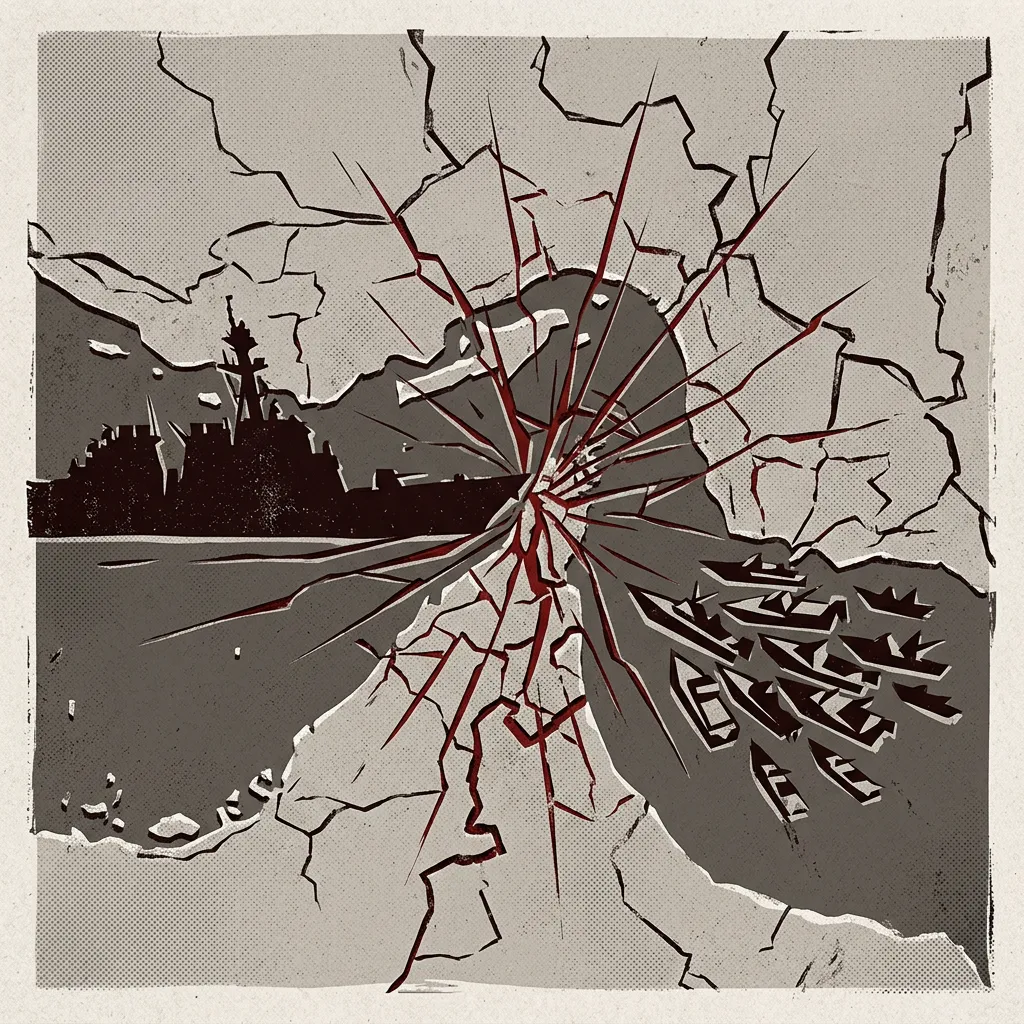
A fragile ceasefire between the United States and Iran is under severe strain as both sides exchange threats and accusations over the strategic Strait of Hormuz. While U.S. officials insist the truce remains in effect, they report continued attacks by Iranian forces and have launched a naval escort mission, "Project Freedom." Iranian officials, meanwhile, dismiss the U.S. operation as a failure and warn that the confrontation has barely begun, raising global concerns about a slide back into full-scale conflict.
U.S. Sources: A Ceasefire in Name Only? Reports from U.S. outlets depict an administration grappling with the reality of ongoing hostilities while maintaining the language of a truce. The Intercept, an independent U.S. publication, frames the situation as a "phony ceasefire," arguing that Trump administration officials are using it as a legal mechanism to evade the 60-day withdrawal deadline mandated by the War Powers Resolution. The report cites military officials stating that since the ceasefire was announced, Iran has fired on commercial vessels multiple times, seized ships, and attacked U.S. forces over ten times—actions described as being "below the threshold" of restarting major combat. This framing presents a contradiction: a declared pause in fighting coexists with acknowledged violence. The Intercept also highlights President Trump's threat that Iran would be "blown off the face of the earth" if it attacked U.S. ships, quoting an analyst who describes this as a standard play of "belligerent threats." In contrast, The Hindu reports a more restrained official stance, quoting U.S. War Secretary Pete Hegseth as saying "Project Freedom" is "defensive in nature" and that the U.S. is "not looking for a fight." This portrayal emphasizes a limited, protective mission that does not require entering Iranian territory.
Iranian and Regional Perspectives: Dismissal and Defiance From the Middle East and Latin America, the reporting emphasizes Iranian defiance and the operational reality on the water. Al Jazeera and Brazil's Folha de S.Paulo highlight Trump's provocative rhetoric, noting he said Iran should "wave the white flag" of surrender. Folha de S.Paulo adds the crucial Iranian counter-narrative, reporting that Tehran responded by asserting the conflict "hasn't even begun yet" and increased its threats over the U.S. escort operation. This directly contests the U.S. narrative of a contained, defensive mission. Russian outlet RT amplifies the Iranian position, citing an Iranian official who calls the U.S. naval blockade a "breach of the ceasefire terms" and describes the status quo as "intolerable." This framing reverses the blame, suggesting U.S. actions are violating the truce, not Iranian attacks.
Broader Geopolitical Framing and Divergent Agendas The reporting reveals starkly different narratives about the war's origins and potential escalation paths. RT focuses heavily on denying Israeli influence over U.S. policy, quoting Hegseth rejecting the idea that Trump was "pulled into" the war by Israel and insisting it was an "America First" decision. This framing appears aimed at countering Western narratives of U.S. entanglement in regional alliances. Simultaneously, RT gives significant coverage to U.S. Senator Lindsey Graham's call to "flood Iran with weapons" to spark a civil war, labeling it a "Second Amendment solution." This report frames U.S. policy as explicitly aimed at regime change and internal destabilization. The Intercept touches on a related but distinct angle, suggesting the ceasefire is being used to deflect from domestic political pressures, including an unpopular war and legal deadlines. BBC News provides a broader strategic assessment from a European perspective, warning that the mutual determination to keep pressure on one another puts the "fragile Gulf ceasefire in serious jeopardy" and raises the risk of sliding back into all-out war.
Framing the Conflict The core divergence lies in the definition of the current state of affairs. U.S. sources, even while detailing attacks, maintain the formal structure of a ceasefire, framing violence as contained "below the threshold." Iranian and sympathetic sources frame the U.S. naval operation itself as a provocative act that breaches the truce, presenting their threats as justified responses. On objectives, U.S. official statements frame "Project Freedom" as a narrow, temporary defense of shipping. Russian and Iranian outlets frame U.S. goals more expansively, citing calls for regime change and portraying the mission as part of a broader campaign to control the region and destroy Iran's future. The role of Israel is another fault line, with U.S. officials explicitly denying it as a primary motivator, while other reports imply or explore it as a contributing factor to regional tensions.
Synthesis and Implications The synthesis of these reports paints a picture of a highly unstable stalemate where a nominal ceasefire provides little actual restraint. The U.S. is conducting a military operation it describes as protective but which its adversary views as a blockade and act of war. Both sides are using the ambiguity of the "ceasefire" status to pursue their objectives—the U.S. to maintain a military presence and pressure Iran legally and rhetorically, and Iran to challenge that presence while asserting sovereignty. The public exchange of surrender demands and warnings that the fight is just beginning suggests neither side believes the current situation is sustainable, aligning with the BBC's analysis of a high risk of escalation. The conflicting reports on what constitutes a ceasefire violation and the open discussion in U.S. political circles of fomenting civil war in Iran indicate that the underlying conflict extends far beyond the Strait of Hormuz, encompassing geopolitical influence, regional alliances, and domestic political calculations in Washington.