
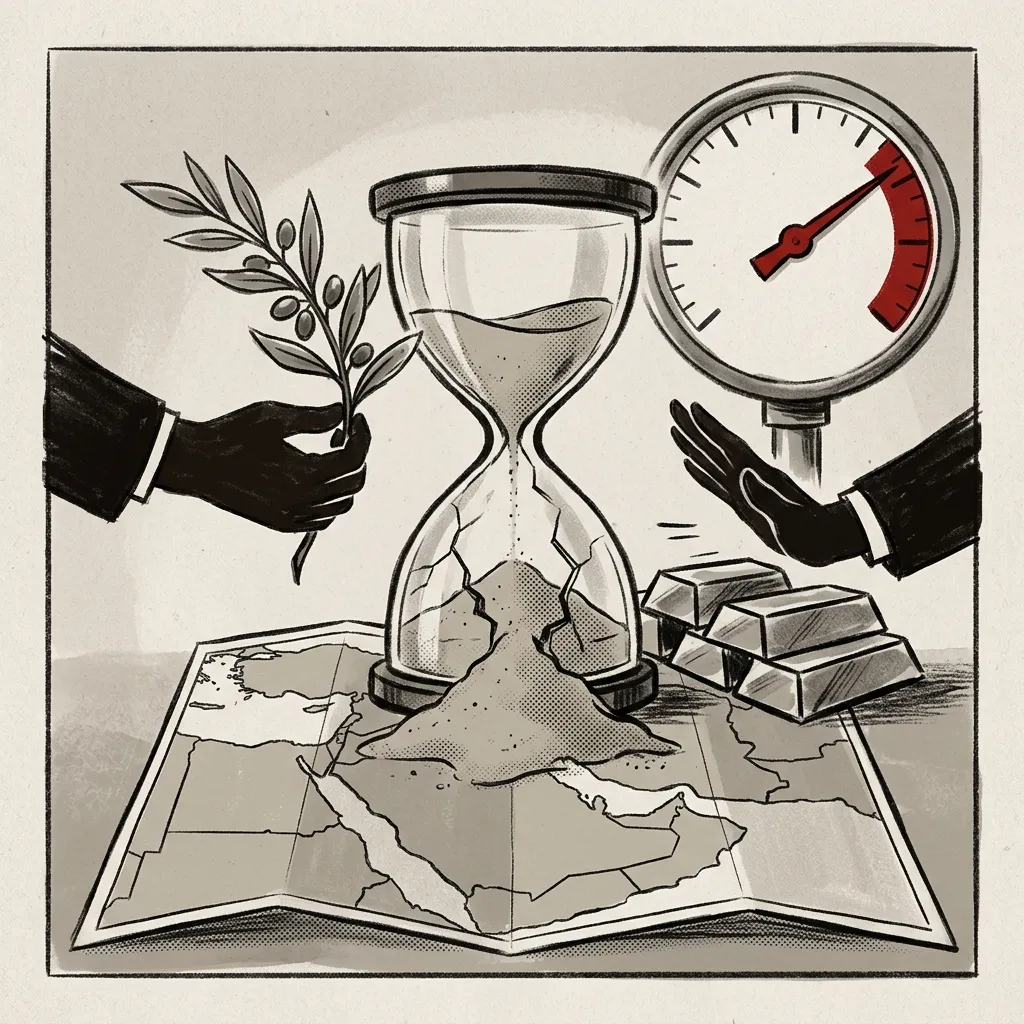
A new Iranian peace proposal has been met with public skepticism from US President Donald Trump, raising the specter of renewed hostilities even as reports indicate growing war fatigue within the US political establishment. The diplomatic maneuver, occurring 60 days into a conflict that has seen a fragile ceasefire, unfolds against a backdrop of escalating regional violence and severe economic disruptions, with oil prices surpassing $120 a barrel.
Latin American Perspective: Domestic Pressure and War Fatigue Sources from Latin America, such as Folha de S.Paulo, frame the development primarily through the lens of shifting US domestic politics. They report that influential Republicans in the US Congress are losing patience with the costly and complex war and are beginning to adopt a more skeptical stance toward President Trump after weeks of support. This narrative emphasizes internal political pressure as a potential driver for de-escalation. Another report from the same outlet and a summary from Clarín note Trump's public statements about possibly resuming strikes against Iran and his intention to review Tehran's proposal, but they highlight his expectation of rejecting it. The framing here connects the international standoff directly to Washington's political dynamics.
Middle Eastern and Russian Perspective: Iranian Diplomacy and US Intransigence Middle Eastern and Russian sources provide more detail on the Iranian proposal and place responsibility for the next move on the United States. Al Jazeera and RT report that Iran has submitted a comprehensive 14-point peace plan to mediator Pakistan. RT, quoting Iranian Deputy Foreign Minister Kazem Gharibabadi, explicitly states that "the ball is in the US court" to choose between diplomacy and confrontation. This framing presents Iran as actively seeking a diplomatic off-ramp. Al Jazeera and RT also contextualize the stalled negotiations, noting complications from mutual blockades of the Strait of Hormuz and the resumption of Israel's bombing campaign in Lebanon. A separate report from the Bangkok Post, citing a senior Iranian military officer, states that renewed war with the US is "likely," presenting a hawkish counterpoint to the diplomatic channel.
Asian and Indian Perspective: Trump's Conditional Threats Media from Asia and India focus intently on the conditional and skeptical nature of the US response. Multiple reports from The Hindu and Channel News Asia quote President Trump saying the US could restart strikes against Iran "if they misbehave." They also highlight his doubt that Iran's proposals would be acceptable, with Trump stating he "could not imagine" they would be and that Tehran "had not paid a big enough price." This framing underscores the US position as one of coercive diplomacy, where military action remains an explicit tool for enforcing compliance. The reports convey a sense of imminent threat contingent on Iranian behavior.
Framing the Conflict The sources collectively paint a picture of a precarious diplomatic moment, but their emphases diverge significantly. Latin American outlets frame the story around potential cracks in the US political consensus, suggesting internal pressure could force a change in strategy. Middle Eastern and Russian narratives center Iranian agency, detailing its peace proposal and framing the US as the party now responsible for choosing war or peace. In contrast, Asian and Indian coverage zeroes in on the US executive branch's rhetoric, portraying a stance defined by skepticism, unmet demands for punishment, and the looming threat of renewed military action.
Synthesis and Implications The synthesis of these reports reveals a conflict at a critical juncture. A month-long ceasefire has failed to yield an agreement, and the diplomatic process is being undercut by parallel military actions—such as the blockades in the Strait of Hormuz and Israeli operations in Lebanon—and by hardline rhetoric from both capitals. The economic impact, noted explicitly by RT with oil prices surging past $120, adds a global dimension to the stalemate. The divergent regional framings highlight the core tension: while Iran presents a formal plan and calls for a diplomatic solution, the US response, as reported, appears designed to reject its terms publicly while keeping military pressure firmly on the table. This dynamic suggests the fragile ceasefire is increasingly vulnerable to collapse, with significant implications for global energy markets and regional stability.