
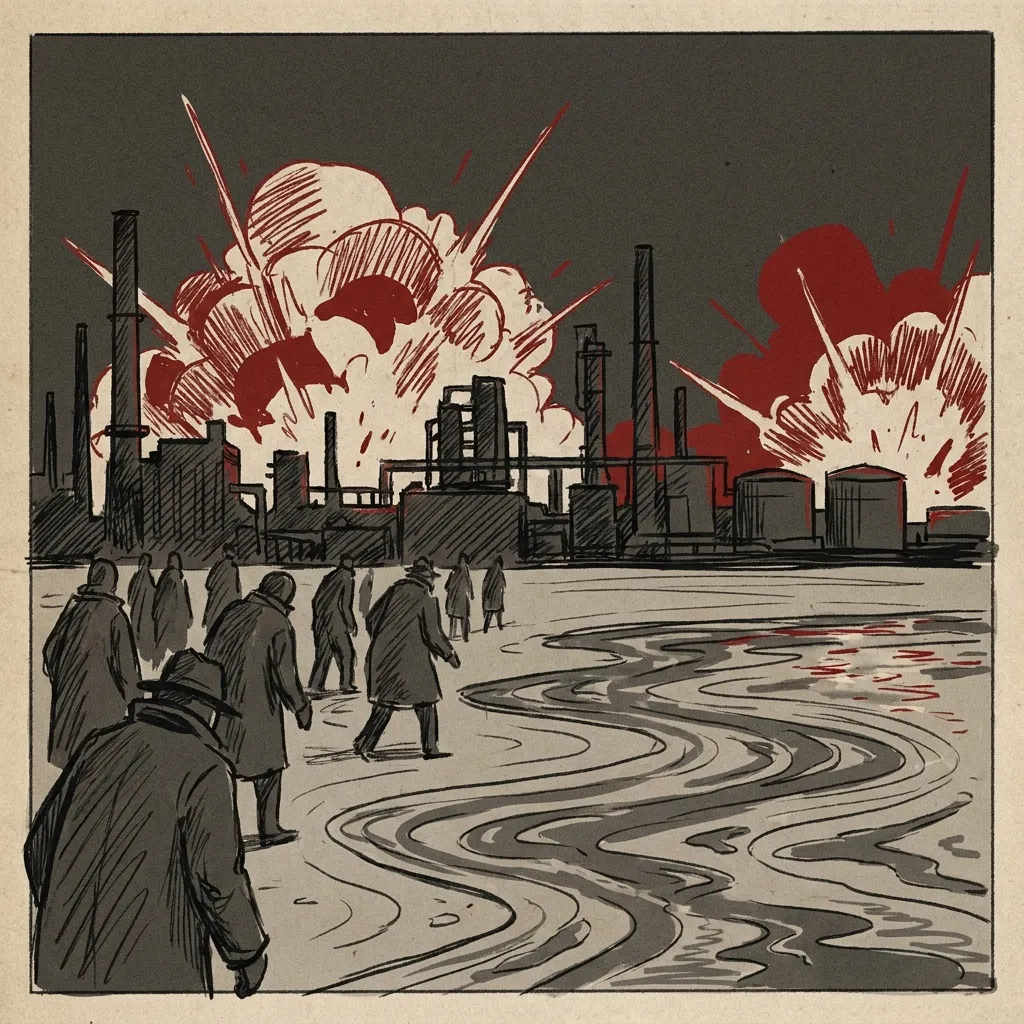
A series of Ukrainian drone strikes on an oil refinery in the Russian port city of Tuapse has resulted in significant fires, environmental damage, and the evacuation of nearby residents, according to multiple reports from Russian independent media. The incident, which occurred in the early hours of April 28, marks the third such attack on the facility in two weeks.
Russian authorities, including the Krasnodar Krai operational headquarters, reported that drone debris struck the refinery, sparking a large fire. Officials stated there were no casualties. Satellite imagery cited by independent outlet Meduza showed smoke from the blaze spreading at least 140 kilometers (87 miles) along the Black Sea coast within hours. In response, regional Governor Veniamin Kondratyev ordered the evacuation of residents from streets adjacent to the terminal, including Koshkina and Pushkina streets, relocating them to a local school. Classes were canceled across the city.
A particularly dramatic development reported by Meduza involved a "boilover" at a storage tank, which caused burning oil to spill onto a nearby road, damaging several vehicles. The head of the regional Emergency Situations Ministry described the incident to the governor, stating the situation was subsequently brought under control.
On-the-ground reporting from independent journalists and environmental outlets painted a stark picture of conditions in Tuapse. A correspondent for the outlet Kedr described "enormous black columns of smoke" hanging over the city, a pervasive smell of burning, and black streams in the Tuapse River resembling petroleum products. The report noted that many residents were outdoors without proper respirators, with some saying they had grown accustomed to the smell—a situation the correspondent described as dangerous. Pharmacies in the city were reportedly out of protective masks.
Official communication on the incident was limited. Kremlin spokesman Dmitry Peskov reportedly declined to comment in detail, stating that information about sites struck by "the Kyiv regime" was classified and that cleanup efforts were proceeding appropriately. President Vladimir Putin later addressed the strikes, stating that while attacks on civilian infrastructure were becoming more frequent and could cause serious environmental consequences, the regional governor had reported there were "no serious threats" and that local teams were managing the challenges.
The Ukrainian military confirmed the strike. Ukraine's General Staff stated the attack was carried out to reduce Russia's military-economic potential, alleging the plant was used to supply Russian occupation forces in Ukraine.
This event is part of a pattern. Reports from Meduza detail two previous strikes on Tuapse's port infrastructure on April 16 and 20. Those earlier attacks reportedly killed three people, including two children, and injured ten. The fires burned for several days, leading to severe environmental consequences: an oil slick covering roughly 10,000 square meters was discovered in the Black Sea after the first, and the second resulted in degraded air quality and "oil rain" falling on the city. Residents from the earlier incidents posted images of soot-covered pets and black puddles in the streets.
A narrative report from the journalists' cooperative Bereg, republished by Meduza, provided a vivid snapshot of life in Tuapse amid the disaster. It described residents going about daily routines—shopping, exercising, children playing—under a blackened sky, with many stopping to photograph the smoke. Conversations captured a mix of shock, resignation, and dark humor, with one resident speculating the summer tourist season might not happen. The report also noted a palpable anxiety about filming the scene, with one elderly man warning a journalist not to take pictures.
Local authorities have faced criticism for a perceived lack of transparency. Beyond ordering evacuations and reposting the governor's message, officials released little operational information about firefighting or air quality. Public health guidance was limited to basic tips like keeping windows closed and mopping floors more frequently.