
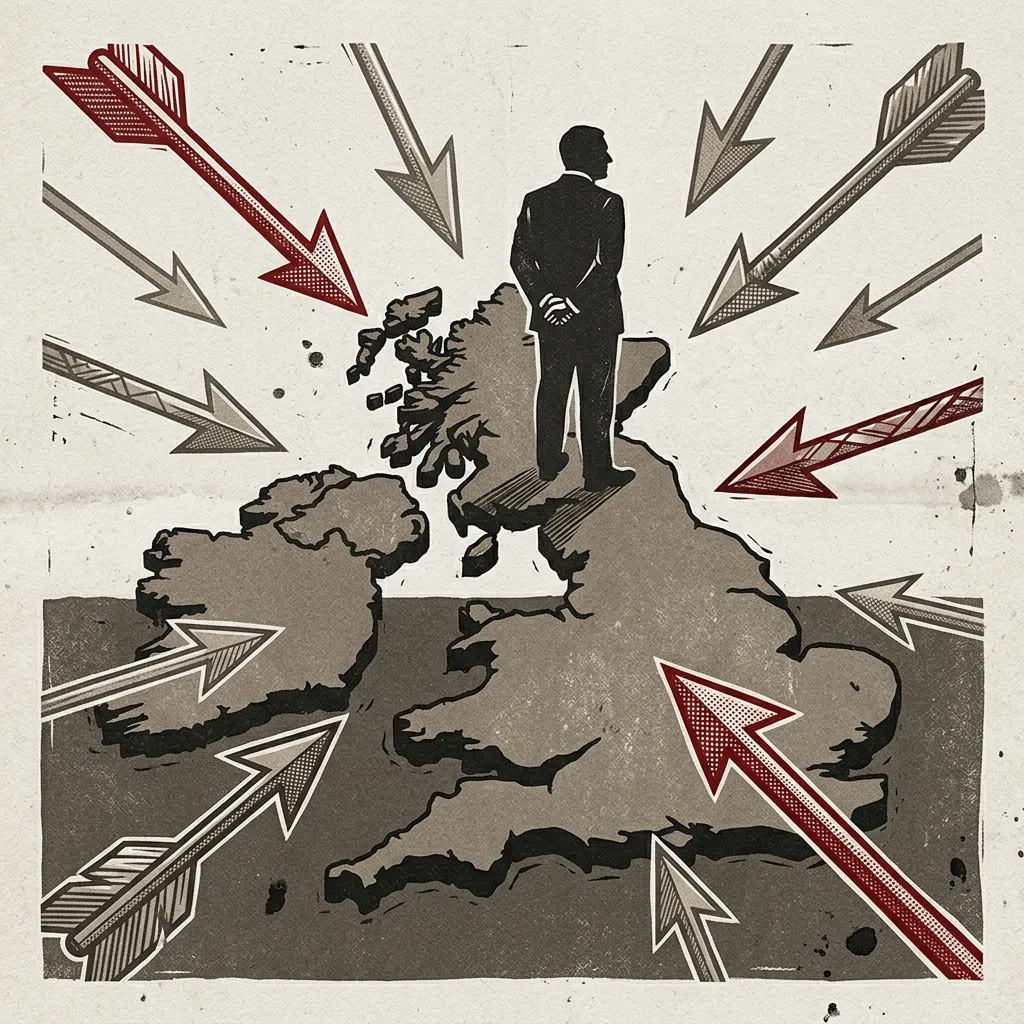
Millions of voters across England, Scotland, and Wales participated in local and devolved assembly elections, presenting the most significant electoral challenge for Prime Minister Keir Starmer since his Labour Party's decisive victory less than two years ago. The results are widely viewed as a mid-term referendum on his leadership, with his party facing pressure from both the political right and left, as well as internal divisions.
Latin American Perspective: A Premier Under Fire Reporting from Latin America frames the election as a pivotal moment for Starmer's political future. The coverage emphasizes that the Prime Minister is confronting risks from multiple directions. It highlights the growing influence of right-wing figure Nigel Farage and the Green Party's Zack Polanski, characterizing their rise as the most substantial challenge Starmer has faced from the public to date. This narrative presents the contest as one where the centre-left government is being squeezed by more ideologically defined alternatives on both flanks.
Indian Perspective: Internal Cohesion and Reputational Strain Analysis from India focuses intensely on the internal dynamics within the Labour Party. It reports that Starmer has faced difficulties in maintaining unity between the centrist and left-leaning factions of his own party. The coverage specifically points to reputational damage suffered by the Prime Minister, even among his own ranks, linked to the controversial appointment of Peter Mandelson. This framing suggests the electoral test is as much about managing internal party dissent and restoring trust as it is about confronting external opponents.
African Perspective: A Post-Landslide Reality Check African news outlets position the elections as the first major assessment of Starmer's government following its landslide parliamentary win in 2024. The reporting underscores the high stakes, noting that the vote is seen as a critical barometer of public sentiment halfway through the parliamentary term. It specifically identifies the right-wing Reform UK party as a key challenger poised to make substantial gains, framing the contest as a direct test of Labour's resilience against a resurgent populist right.
Framing the Contest The regional framings, while covering the same event, emphasize distinct facets of the political landscape. The Latin American source casts the election in dramatic, survivalist terms for Starmer, caught between two rising ideological forces. The Indian analysis drills down into the internal mechanics of the ruling party, suggesting governance is hampered by factionalism and leadership missteps. The African coverage provides a broader strategic view, interpreting the vote as a necessary correction following an initial electoral honeymoon, with a specific eye on the momentum of a single, significant opposition force in Reform UK. All three narratives converge on the premise that these local elections carry national significance for the Prime Minister's authority.
In conclusion, these regional perspectives collectively depict a leadership under pressure, albeit for different compounded reasons. The synthesis reveals a Prime Minister navigating a complex political environment where maintaining a broad coalition is challenged by external rivals capitalizing on specific issues and by internal party management struggles. The outcome will likely be interpreted not just as a verdict on local governance, but as a signal of the stability and direction of Starmer's premiership ahead of the next general election, with implications for both domestic policy and the UK's international political standing.