
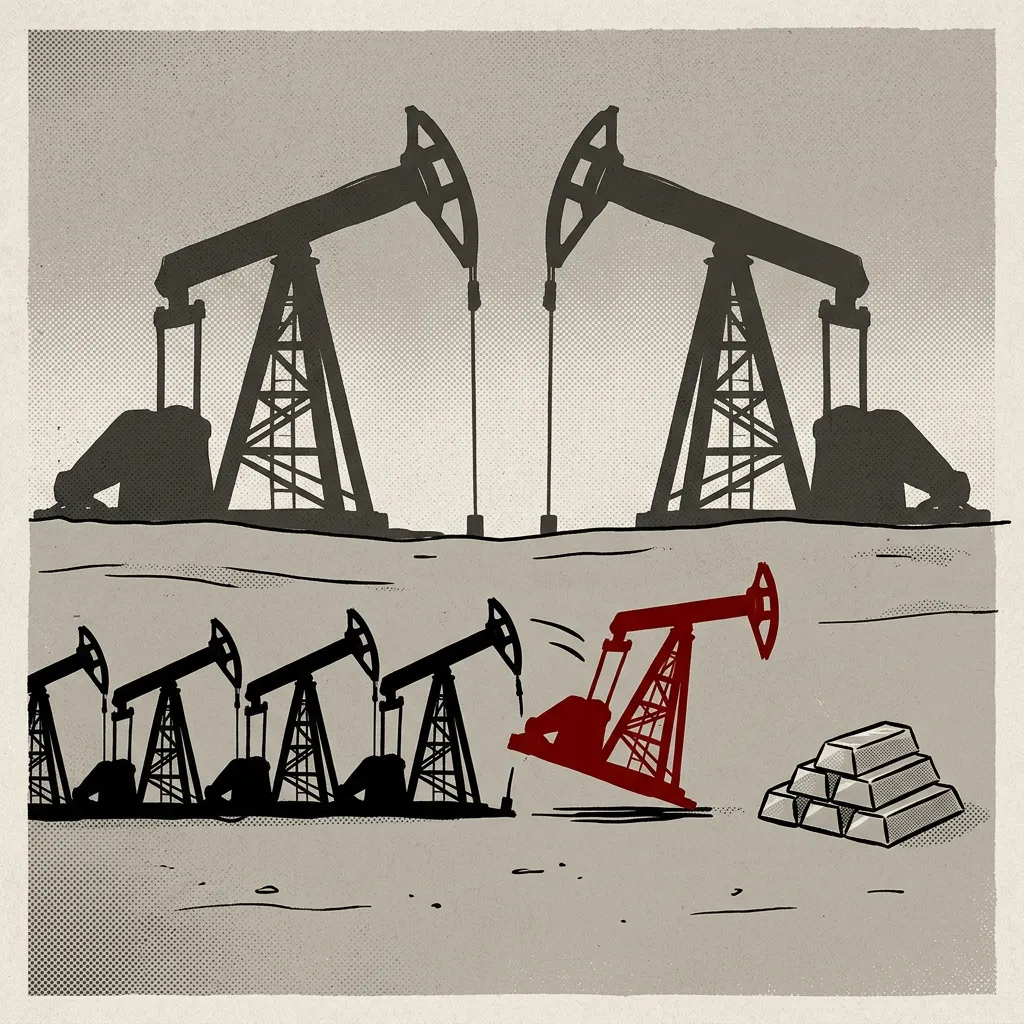
The United Arab Emirates' announced exit from OPEC and the broader OPEC+ alliance has been framed by international media as a significant event with implications for global energy markets and Middle Eastern geopolitics. While the UAE presents the move as a sovereign economic decision, analysis across different regional sources emphasizes underlying political tensions, particularly with Saudi Arabia, and potential consequences for global oil supply and regional alliances.
Russian Perspective: A Calculated Political Gambit The Russian outlet RT frames the UAE's decision primarily as a strategic power play rather than a purely economic calculation. Its analysis acknowledges the economic rationale, noting the UAE's built production capacity of nearly 5 million barrels per day has been constrained by OPEC+ quotas, creating a "growing contradiction." However, RT strongly emphasizes the political dimensions, arguing the timing and context transform it into a "political act." The source portrays the move as a direct challenge to Saudi authority within the Gulf, a bid by Abu Dhabi to cease being a "secondary participant in a Saudi-centered order." Furthermore, RT explicitly links the decision to U.S. and Israeli interests, suggesting it offers Washington a "useful instrument" for influencing energy prices and aligns the UAE with the "pressure campaign against Iran." The analysis posits this gives the Trump administration a "potential strategic advantage" by providing a friendly Gulf producer to help lower prices, framing it as a "political transaction where barrels are exchanged for strategic importance." RT also outlines potential scenarios, from a cautious supply increase to a more aggressive output push that could test OPEC+ discipline and force a Saudi response, highlighting the risk of a loss of "confidence that collective discipline remains stronger than national ambition."
European Perspective: A Resurfacing Rivalry Le Monde's coverage, from a European standpoint, also centers on the political rift with Saudi Arabia but with a different contextual emphasis. The French publication frames the withdrawal as an act of "defiance" that "highlights their growing differences." It specifically notes that these differences had been "temporarily quashed" by the regional war against Iran, implying the conflict had enforced a fragile unity that is now unraveling. This framing suggests the exit is a return to a pre-existing, underlying competition for influence between the two Gulf powers, brought back to the surface as immediate wartime pressures subside. While Le Monde's provided excerpt is brief, its focus on the bilateral Saudi-Emirati tension, without the explicit linkage to U.S. or Israeli strategy seen in the Russian analysis, presents a more regionally-contained narrative of a shifting balance of power within the Arab Gulf itself.
Framing the Decision The synthesis of these perspectives reveals a shared understanding that the UAE's exit transcends simple economics, but with distinct emphases on the primary actors and motivations involved. Both RT and Le Monde identify the challenge to Saudi leadership as a core component. However, RT expands the geopolitical canvas significantly, interpreting the move as part of a broader realignment where the UAE strengthens ties with the U.S. and Israel to counter Iran, thereby redrawing "Gulf alliances." Le Monde's framing, in contrast, concentrates more narrowly on the resumption of a direct bilateral rivalry for regional primacy. On the economic front, RT provides a detailed breakdown of production scenarios and market risks, while Le Monde's excerpt does not delve into these specifics, keeping its analysis focused on the political signal.
Broader Implications The reporting indicates that the UAE's departure is perceived as a pivotal moment with consequences extending beyond oil markets. It tests the cohesion of OPEC+, an alliance already strained by differing national interests. It introduces a new, significant source of supply that operates outside the cartel's production agreements, which could alter price dynamics and market management strategies. Regionally, the move is seen as exacerbating a visible competition for influence between Abu Dhabi and Riyadh, potentially affecting coordination within forums like the Gulf Cooperation Council. Furthermore, as highlighted by RT, the decision inserts the UAE into great power politics, offering a potential lever for U.S. energy and inflation policy while aligning its strategy with a specific, confrontational approach toward Iran. The ultimate stability of this new posture, as noted, may depend on the region avoiding a hot war that could jeopardize the export infrastructure the UAE's strategy relies upon.