
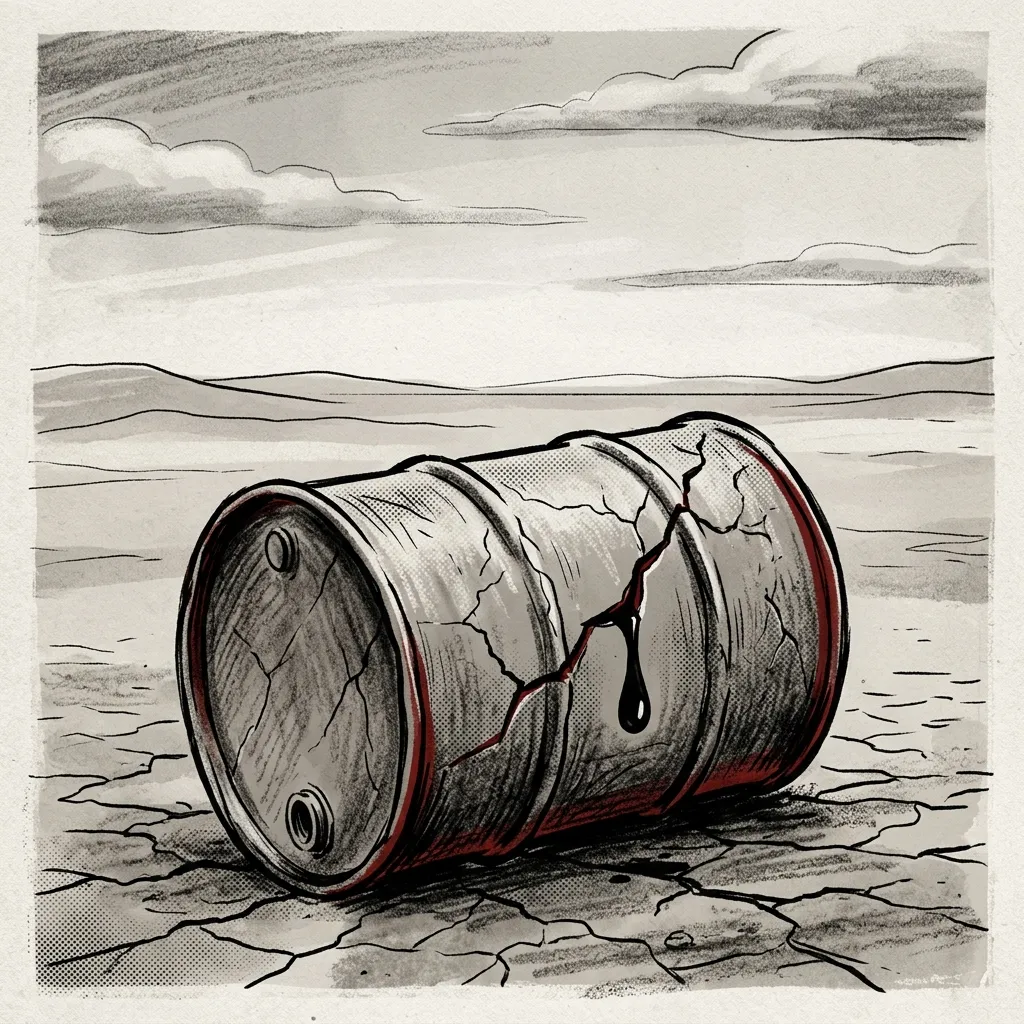
The United Arab Emirates has announced its withdrawal from OPEC and the broader OPEC+ alliance, effective May 1, 2026, ending nearly six decades of membership. This decision is widely analyzed as a significant institutional disruption with the potential to reshape global oil market dynamics and the geopolitical influence of the long-standing cartel. The move is framed by the UAE as a sovereign strategic realignment, while market observers and regional media assess its implications for oil prices, production coordination, and power balances within the energy sector.
Source Perspectives and Framing
RT (Russia) provides the most detailed and analytical account, framing the event as both a "shock and opportunity." The Russian outlet emphasizes the move's potential to "flood markets, rattle prices, and redraw power lines from Riyadh to Moscow." It presents the withdrawal as the largest disruption to oil production coordination since 2016 and a step that weakens the group's collective ability to manage global oil prices. RT's analysis focuses heavily on the underlying tensions, noting "building up" disagreements between the UAE and Saudi Arabia over production quotas. It characterizes the UAE's action as a strategic shift towards "maximizing its own production and increasing its market share" while maintaining an image as a "responsible supplier." The report underscores a transformation in market architecture, arguing OPEC+ is "ceasing to be a monolith" and moving towards a more "fragmented and sensitive" structure driven by both economics and geopolitics. It also quantifies the UAE's current production and its ambitious capacity expansion plans, linking the decision directly to a desire to monetize these investments outside a "rigid quota system."
BBC News (Europe) approaches the story through a data-driven, market-impact lens. Its headline, "In five charts - How UAE's exit could affect Opec's influence over the oil price," signals a focus on quantitative consequences rather than geopolitical narrative. While the provided content snippet is brief, its framing suggests an examination of the cartel's diminished leverage and the wider repercussions for energy markets. The BBC's likely methodology involves using charts to visualize scenarios for oil supply, price volatility, and the shifting share of production controlled by the remaining OPEC members, presenting the event primarily as a market recalibration.
The Hindu (India) covers the announcement in two distinct contexts. One article lists it among the day's top national and international stories, placing it alongside Indian election exit polls and domestic political commentary, indicating its perceived high news value for an Indian audience concerned with global economic stability. A separate, more explanatory piece titled "UAE exits OPEC: What is OPEC+, its members, and what does the bloc do?" adopts an educational frame. It provides foundational context, noting that OPEC+ produced nearly 50% of the world's oil in 2025, thereby underscoring the significance of a major producer's departure. This framing serves an audience seeking to understand the basic structure and function of the bloc now undergoing a major change.
Framing the Divergence
The sources converge on the factual core of the announcement but diverge significantly in emphasis and narrative framing. RT constructs a narrative of geopolitical realignment and institutional fragmentation, explicitly naming Saudi Arabia and Russia as affected powers and detailing the quota disputes that led to the split. Its language ("shock," "redraw power lines," "ceasing to be a monolith") paints a picture of profound structural change. In contrast, the BBC's anticipated framing is technocratic and forward-looking, centered on modeling the measurable impact on oil prices and cartel influence, likely avoiding explicit commentary on intra-Gulf politics. The Hindu's coverage splits the difference: one item treats it as a headline event in a global news digest, while another provides essential background, reflecting a reader need to comprehend the mechanics of an important international energy body. The Russian source alone delves deeply into the historical grievance with Saudi Arabia and the UAE's specific capacity goals, framing the exit as an inevitable result of national ambition clashing with collective restraint.
Synthesis and Broader Implications
The UAE's exit from OPEC, as synthesized from these reports, represents a pivotal moment for global energy governance. It is framed as a sovereign economic decision rooted in a desire for production autonomy, but its ramifications extend far beyond national borders. The move challenges the decades-old model of coordinated supply management, potentially introducing greater volatility and price competition into oil markets. Geopolitically, it signals a shift in Middle Eastern dynamics, particularly between Abu Dhabi and Riyadh, and alters the calculus for other major producers within and outside the OPEC+ framework, including Russia. For consuming nations and global markets, the event underscores a transition towards a less centralized, more multipolar energy landscape where national strategies increasingly take precedence over collective cartel discipline. The long-term test will be whether the remaining OPEC+ structure can maintain cohesion and market influence in the absence of one of its most capable and ambitious members.