
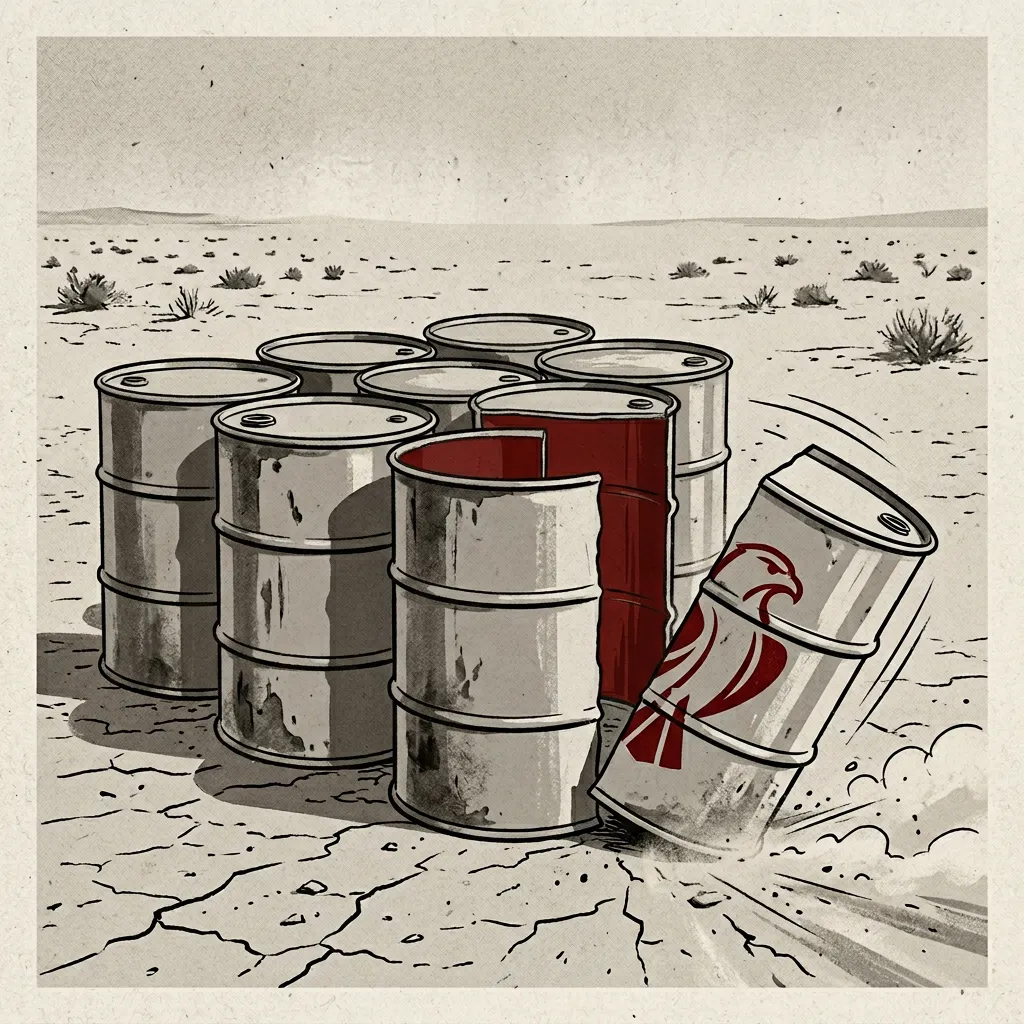
The United Arab Emirates has announced its decision to withdraw from the Organization of the Petroleum Exporting Countries (OPEC) and the broader OPEC+ alliance, with the move set to take effect on May 1. The decision has been framed by various global news outlets as a significant development for the oil cartel, though analyses differ on its immediate and long-term implications.
Multiple sources, including Al Jazeera and the Bangkok Post, describe the UAE's exit as a blow to the oil-exporting groups. Al Jazeera notes the UAE framed its decision as prioritizing its 'national interests.' The Bangkok Post elaborates that this action deals a heavy blow to the groups and their de facto leader, Saudi Arabia. It further contextualizes the move as occurring during a period of historic energy market disruption caused by the war involving Iran, which it states has unsettled the global economy.
Russian state media outlet RT provides commentary from a former UAE diplomat, Obaid Ahmed Al-Zaabi, who characterized the withdrawal as having been 'a long time coming.' According to this source, the diplomat argued that the UAE had been substantially limiting its oil production while other member nations were constrained by their output capacities. He is quoted as saying the UAE's economy is no longer entirely dependent on hydrocarbons and that OPEC acted as a 'tax on global productivity,' making it in the UAE's interest to leave. RT's headline and report emphasize the diplomat's prediction that more countries are 'very likely' to follow the UAE's example.
In contrast, BBC News analysis by Faisal Islam suggests the withdrawal will have minimal impact on current oil supply blockades but posits that 'it could change everything afterwards,' indicating a focus on the long-term structural consequences for the cartel rather than immediate market effects.
Indian publication The Hindu frames the announcement as a shocking and dramatic event that 'shocks the world,' placing it among other top global stories. This framing emphasizes the surprise element of the decision.
While sources agree on the basic fact of the withdrawal and its timing, they offer different contexts and projections. The Bangkok Post and Al Jazeera explicitly link the decision to the regional conflict involving Iran. RT's coverage, through the former diplomat, presents an economic rationale centered on production constraints and a diversified economy, while also forecasting potential further exits from the bloc. The BBC offers a more measured analysis separating short-term from long-term impacts.