
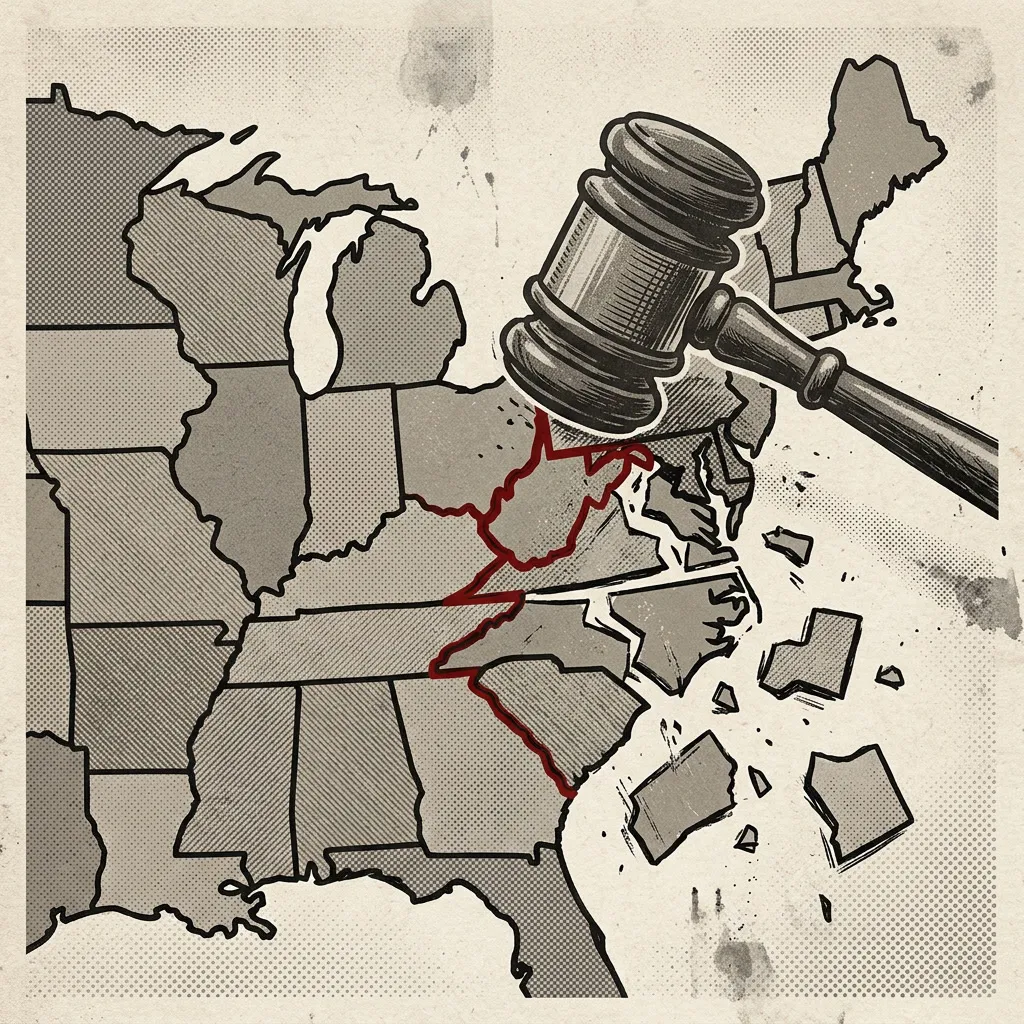
In a decision with significant implications for U.S. elections, the Supreme Court has issued a ruling that limits the ability of states to create electoral districts designed to enhance minority voting power. The case, centered on Louisiana, has drawn international attention for its potential to reshape the political landscape and reinterpret a foundational civil rights law.
European Perspective: A Civil Rights Cornerstone Weakened Le Monde, a leading European publication, frames the decision as a direct blow to long-standing civil rights protections. The outlet reports that the Court's conservative majority broke with prior interpretations of Section 2 of the Voting Rights Act of 1965. Specifically, the ruling prevents the redrawing of an electoral map to establish a second congressional district in Louisiana where Black voters would constitute a majority. Le Monde's language is historical and institutional, characterizing the affected legal provision as a "cornerstone" of civil rights. Its analysis suggests a shift away from a legal framework that had been used to ensure minority communities could elect representatives of their choice, framing the event as a judicial reversal of precedent.
Latin American Perspective: Partisan Implications and Regional Impact From Argentina, Clarín provides a analysis that connects the legal shift directly to U.S. partisan politics. It reports that the conservative-majority court altered a rule that prevented states from redesigning districts using racial criteria. Clarín explicitly states the decision limits minority rights and highlights the potential electoral consequences, suggesting it could open a path for Republicans to regain districts with Black majorities, particularly in the southern United States. This framing places less emphasis on the historical legal doctrine and more on the immediate political winners and losers, projecting the ruling's effect onto future election maps and party control.
Framing the Conflict: Legal Principle vs. Political Consequence The core divergence between these international reports lies in their primary narrative focus. Le Monde constructs a story about the erosion of a specific, historically significant legal safeguard—the Voting Rights Act—within the U.S. constitutional system. Its concern is institutional and principled, questioning the stability of civil rights jurisprudence. In contrast, Clarín tells a story of political realignment. While acknowledging the limitation of minority rights, its central thrust is the tactical advantage the ruling may grant to one political party, the Republicans, in specific geographic regions. This difference highlights whether the event is seen primarily through the lens of U.S. domestic legal history or through the lens of contemporary electoral competition.
Synthesis and Broader Implications Together, these perspectives illustrate how a single U.S. judicial ruling is interpreted abroad as both a legal landmark and a political catalyst. The decision touches on fundamental questions about race, representation, and democracy in the United States, explaining its resonance in global media. The European framing often reflects a focus on the stability of democratic institutions and rights frameworks, while the Latin American perspective may be more attuned to the dynamics of political power shifts. The ruling signifies a potential turning point where the federal judiciary is seen as retracting a tool long used to combat racial vote dilution, a change that analysts agree will likely influence the composition of the U.S. Congress for years to come. The international reaction underscores that domestic U.S. decisions on voting rights are monitored globally as indicators of the health and direction of American democracy.