
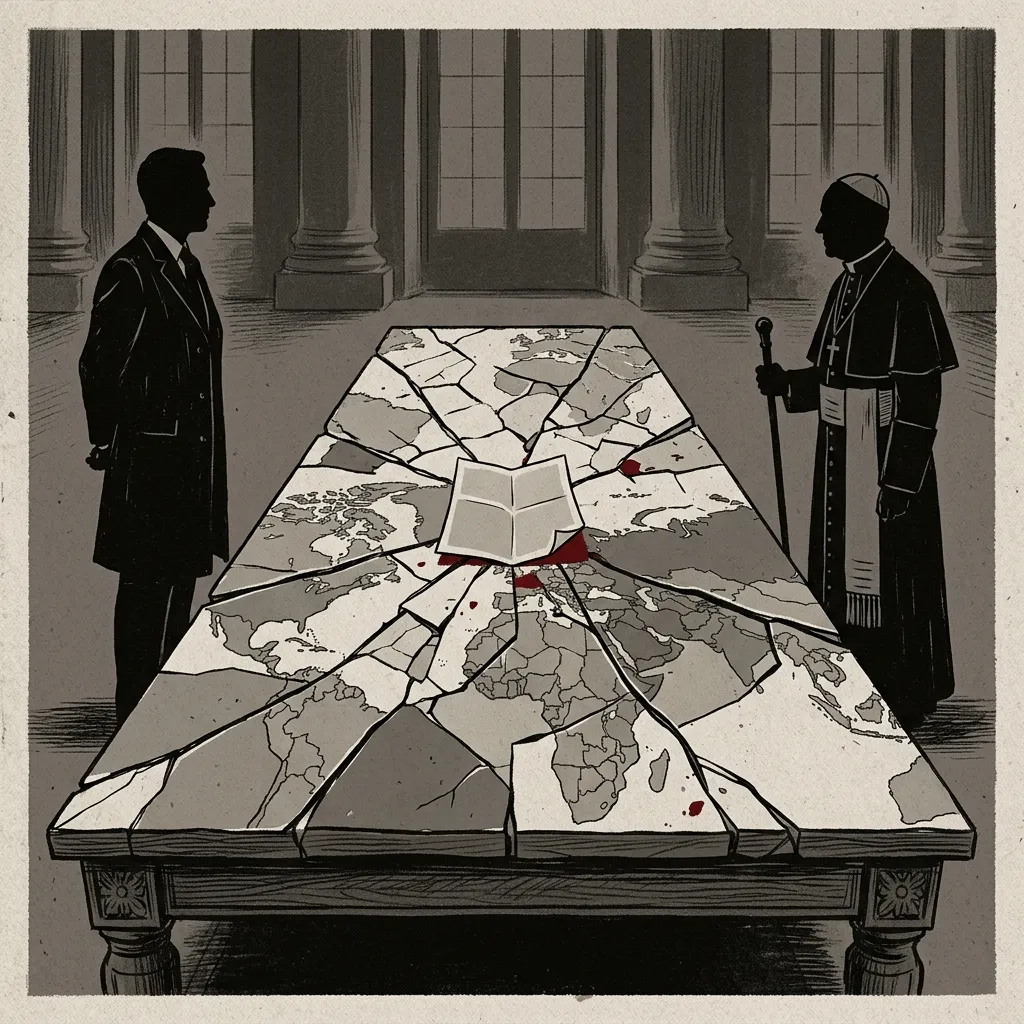
U.S. Secretary of State Marco Rubio held a meeting with Pope Leo XIV at the Vatican, a visit framed by global media as an effort to stabilize relations following public criticism of the pontiff by former U.S. President Donald Trump. The encounter, lasting approximately 45 minutes, also included discussions with the Vatican's Secretary of State, Pietro Parolin. While the core fact of the diplomatic meeting is consistent, reporting from Latin America, Russia, and India reveals significant differences in emphasis, contextual framing, and the inclusion of ancillary narratives about the Pope himself.
Latin American Perspectives: Diplomacy and Security Outlets from Latin America, such as Clarin and Folha de S.Paulo, focus intently on the diplomatic context and logistical details of the visit. Clarin describes the atmosphere of the meeting with terms like "praises" and "coincidences," suggesting a cordial and productive exchange aimed at calming tensions. The source highlights the "major security deployment" surrounding the event, framing the visit as a significant, high-stakes diplomatic engagement. Similarly, Folha de S.Paulo explicitly links Rubio's arrival to repeated attacks on the Pope by Donald Trump on social media and in public statements, establishing a clear cause-and-effect narrative for the trip. Both Latin American reports present the meeting as a direct and necessary response to a political rift, centering the story on interstate diplomacy and the restoration of normal channels.
Indian Analysis: Domestic Political Motivations The Hindu's report introduces a layer of interpretation regarding Rubio's personal and political objectives. While also noting the context of Trump's criticisms, the Indian publication cites unnamed Italian commentators who believe the Secretary of State aimed to smooth over relations not only for foreign policy reasons but also to advance his own political ambitions. The report specifies these ambitions are tied to upcoming midterm congressional elections and the 2028 presidential race. This framing shifts the focus from purely international diplomacy to the domestic U.S. political calculations potentially underpinning the visit, presenting Rubio's actions as serving a dual purpose.
Russian Narrative: A Focus on the Pope's Personal Anecdote RT's coverage diverges sharply by not reporting on the Rubio meeting at all. Instead, its article focuses exclusively on a personal anecdote about Pope Leo XIV, detailing an incident where the pontiff was reportedly hung up on by a bank employee while trying to update his account details. The story, sourced from a friend of the Pope and a New York Times report, is presented under a headline emphasizing "bad faith." It narrates how the Pope, despite answering security questions correctly, was told he needed to visit a branch in person—a request he could not fulfill from the Vatican. This reporting choice humanizes the Pope through a trivial, almost comical mishap, but does so within a frame that highlights institutional skepticism (the bank's doubt) and the Pope's practical struggles, rather than his diplomatic role.
Framing the Encounter The framing of this event falls into three distinct categories. The Latin American press frames it as high-level diplomatic repair work, emphasizing protocol, security, and the mending of a specific bilateral rift caused by Trump. The Hindu frames it as politically strategic outreach, where the diplomatic gesture is intertwined with the U.S. official's career trajectory and electoral calendar. RT entirely reframes the news cycle away from U.S. diplomacy, choosing to spotlight a personal, apolitical vignette of the Pope that portrays him as detached from ordinary bureaucratic processes yet subject to them.
In conclusion, the synthesis of coverage reveals less about the substance of the Rubio-Leo XIV talks and more about regional media priorities. Latin American sources, perhaps due to the region's strong Catholic demographics and historical ties to the Vatican, treat the meeting as a major diplomatic event with serious implications for U.S.-Vatican relations. The Indian analysis injects a pragmatic, realpolitik lens, common in its foreign policy coverage, by questioning the underlying domestic motivations. The Russian outlet's decision to ignore the diplomatic meeting altogether in favor of a human-interest story about the Pope can be seen as a narrative choice that diminishes the stature of U.S. diplomatic initiatives while presenting the Pope in an informal, non-authoritative light. The event thus serves as a prism, refracting different concerns: diplomatic stability, domestic political maneuvering, and the personal profile of a global religious figure.