
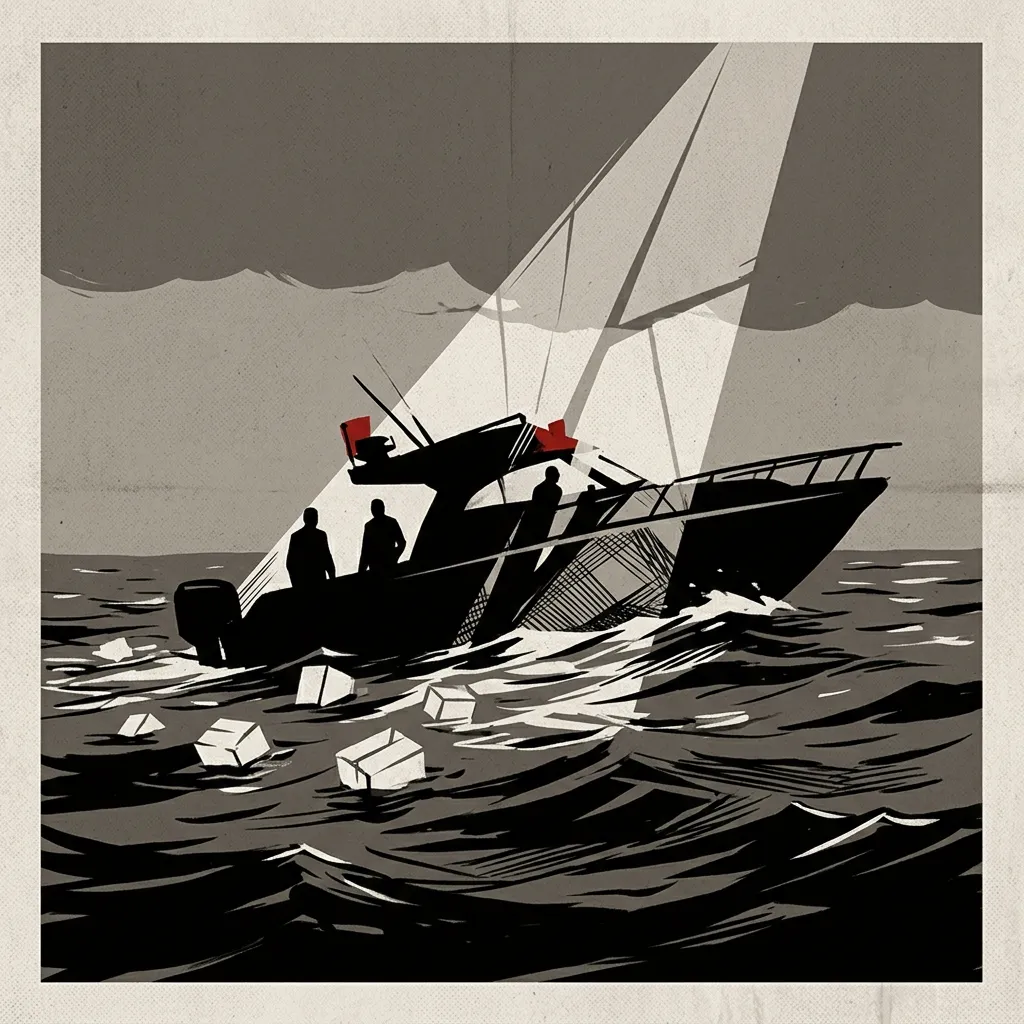
A U.S. military operation in the eastern Pacific Ocean resulted in the deaths of three individuals aboard a vessel suspected of drug trafficking. The incident has drawn attention to the U.S. government's stated policy of direct confrontation with narcotics cartels, though details of the engagement and the identities of those killed remain officially sparse. The available reporting comes from a single detailed source, with another provided article focusing on an unrelated event in Bolivia, limiting the scope for direct regional framing comparisons on this specific strike.
Reported Details of the Strike According to a report from The Hindu, the strike targeted what it describes as an "alleged drug boat." The Indian publication notes that the action was framed by former U.S. President Donald Trump, who asserted the United States is in a state of "armed conflict" with cartels based in Latin America. The justification provided, as reported, centers on the need for an escalated response to interrupt the movement of narcotics into the United States and to address the overdose crisis claiming lives domestically. The report does not specify the branch of the military involved, the precise location, or the evidence leading to the engagement. The term "alleged" used in the headline introduces a note of procedural distance, acknowledging the incident is based on U.S. claims without independent verification of the vessel's activities presented in the article.
Absence of Conflicting Regional Perspectives The synthesis is constrained by the provided source material. The article from Al Jazeera details a separate event: a transportation strike in El Alto, Bolivia, where public workers used vehicles to block roads in protest over fuel issues. This content does not pertain to the U.S. military strike in the Pacific. Consequently, there is no available reporting from Middle Eastern or other regional perspectives to compare with The Hindu's account regarding the legality, justification, or consequences of the lethal operation. A full analysis of how such an event is framed across different political and cultural contexts—for instance, comparing narratives from Latin America, the U.S., and other global regions—is not possible with the given inputs.
Framing the Incident With only one relevant source, the framing analysis is limited to the presentation by The Hindu. The report adopts a factual, international news tone, relaying the U.S. position as stated by its political leadership. It frames the event through the lens of U.S. domestic policy and security rhetoric, highlighting the connection made between cross-border drug trafficking and American public health. The report does not include perspectives from Latin American governments, human rights organizations, or legal experts on cross-border military actions, which would typically be points of divergence in global coverage. The use of "alleged" implicitly references the lack of a judicial process or public evidence, a framing choice that might differ from sources that would adopt more definitive language like "drug-smuggling" vessel based solely on official U.S. statements.
Broader Implications The incident, as reported, underscores the continuation of a U.S. policy approach that characterizes the fight against drug cartels as a military conflict rather than solely a law enforcement challenge. This has significant implications for international law, sovereignty, and the use of lethal force in policing operations on the high seas. The absence of corroborating or contrasting reports from regions directly affected, such as Latin America, leaves a gap in understanding the regional reception and geopolitical fallout of such strikes. A complete media synthesis would likely reveal sharp divides, with some narratives emphasizing counter-narcotics efficacy and others critiquing extraterritorial use of force and potential collateral damage.