
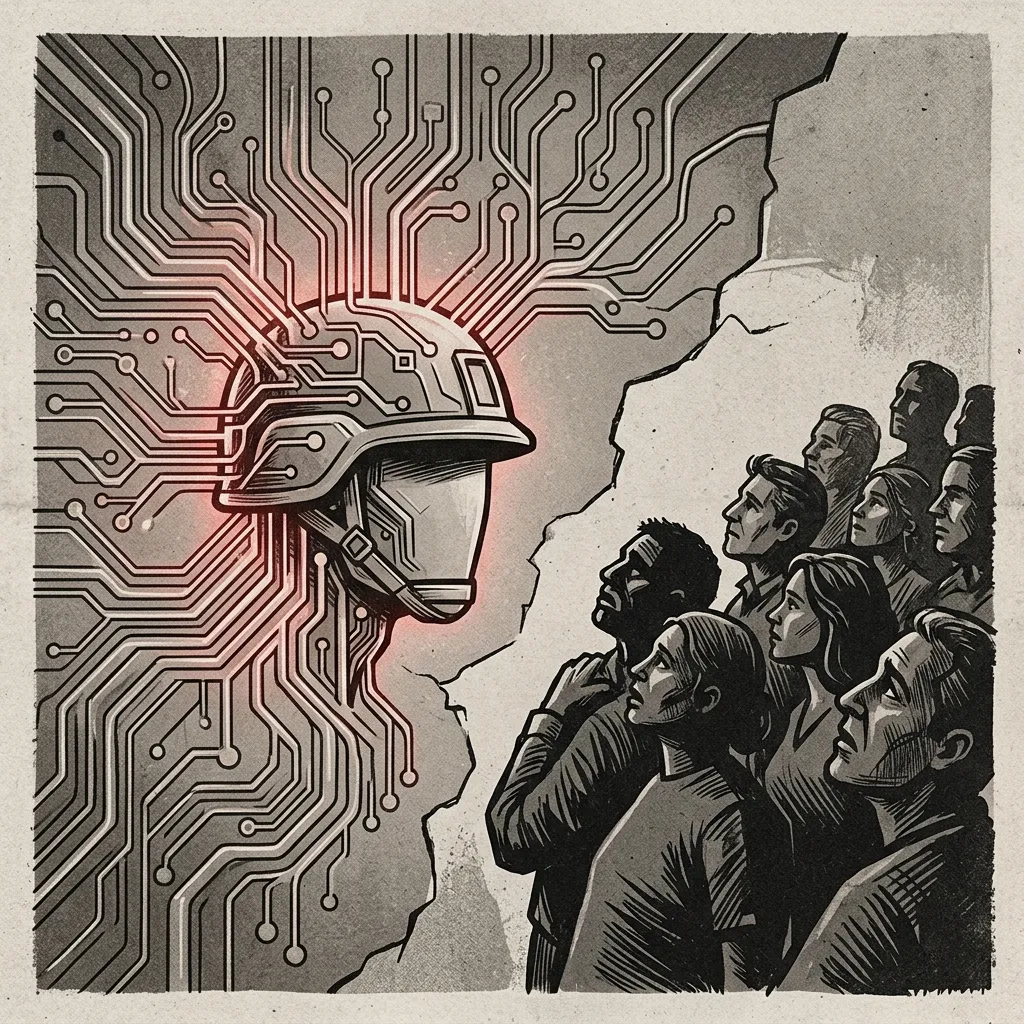
The United States is navigating a complex landscape in artificial intelligence policy, characterized by a White House push for deregulation, significant public skepticism, and deepening military integration of the technology. These developments reveal tensions between a federal strategy focused on global competition and domestic concerns over safety, jobs, and oversight.
White House Philosophy and Internal GOP Tensions A senior advisor to President Trump, David Sacks, articulates the administration's core philosophy as one of "permissionless innovation." He argues that heavy regulation would disadvantage the U.S. in a global race, particularly against China, which he notes possesses a large share of the world's AI developers. The administration's framework emphasizes minimal federal intervention, encouraging private sector innovation, expanding energy infrastructure for data centers, and promoting U.S. technological exports to secure global market share. However, polling data reveals a significant gap between this policy direction and the preferences of the administration's own voters. Surveys show that only 13% of Trump supporters believe the federal government should abstain from regulating AI. Approximately three-quarters of these voters favor either strict regulations or broad governing principles. Furthermore, Trump voters are evenly split on whether AI's benefits outweigh its risks, with job displacement being a primary concern. This skepticism has manifested in political friction, as state-level Republican leaders, including Florida's governor and a Utah legislator, have clashed with the White House over efforts to preempt state AI safety laws, viewing them as necessary community protections.
Military Integration and Corporate Dissent Concurrent with the domestic policy debate, the U.S. Department of Defense is actively integrating advanced AI into its classified networks. The agency announced agreements with seven major technology firms, including SpaceX, OpenAI, and Microsoft, to deploy their systems for what it terms "lawful operational use." The stated goal is to enhance data analysis, situational awareness, and decision-making for military personnel. Notably absent from this list is the company Anthropic. Reports indicate Anthropic was excluded after refusing to loosen certain safeguards on its technology, citing concerns over potential use for domestic surveillance or autonomous weapons deployment. In response, the Pentagon designated Anthropic a "supply-chain risk," a label with serious contractual implications. A senior Defense official publicly criticized Anthropic's CEO, framing the company's stance as an unacceptable constraint on military application.
Framing the Diverging Narratives The sources frame the core conflict around AI in distinctly different ways. The U.S. administration narrative, as presented through its advisor, centers almost exclusively on global technological competition and economic dominance. The discourse is framed in terms of "winning the AI race," securing market share, and maintaining national security through technological superiority. Risks are acknowledged but presented as solvable by the industry itself, with the advisor asserting that "AI is going to solve the problem that AI creates."
In contrast, the domestic political reporting highlights a narrative of public apprehension and democratic accountability. It frames the issue around voter fears of job loss, economic disruption, and the desire for government safeguards. This narrative presents the administration's deregulatory approach as being at odds with the preferences of its political base and with pragmatic state-level governance.
The international reporting, particularly from RT, introduces a third narrative: militarization and ethical override. It frames the Pentagon's actions as a determined push to apply AI in warfare "despite concerns" about legal reliability and civilian privacy. The exclusion of Anthropic is framed not merely as a contractual dispute but as the Pentagon sidelining a company over ethical safeguards, with the Defense Secretary's sharp rhetoric underscoring a perceived imperative to remove constraints on military use.
Synthesis and Implications These parallel developments illustrate a U.S. AI strategy proceeding on two potentially conflicting tracks: a domestic policy track seeking to unleash private sector innovation with minimal friction, and a national security track aggressively embedding commercial AI into military systems. The significant public and intra-party skepticism reported suggests the domestic policy track may face political headwinds, complicating efforts to establish a cohesive federal framework. Meanwhile, the military's assertive partnerships and its stark confrontation with a dissenting company like Anthropic highlight how national security priorities are actively shaping the commercial AI landscape, potentially incentivizing companies to align with defense needs. The broader implication is a U.S. approach where the imperatives of geopolitical competition and military advantage are currently driving policy more forcefully than domestic regulatory concerns or public caution, even within the governing party's own coalition.