
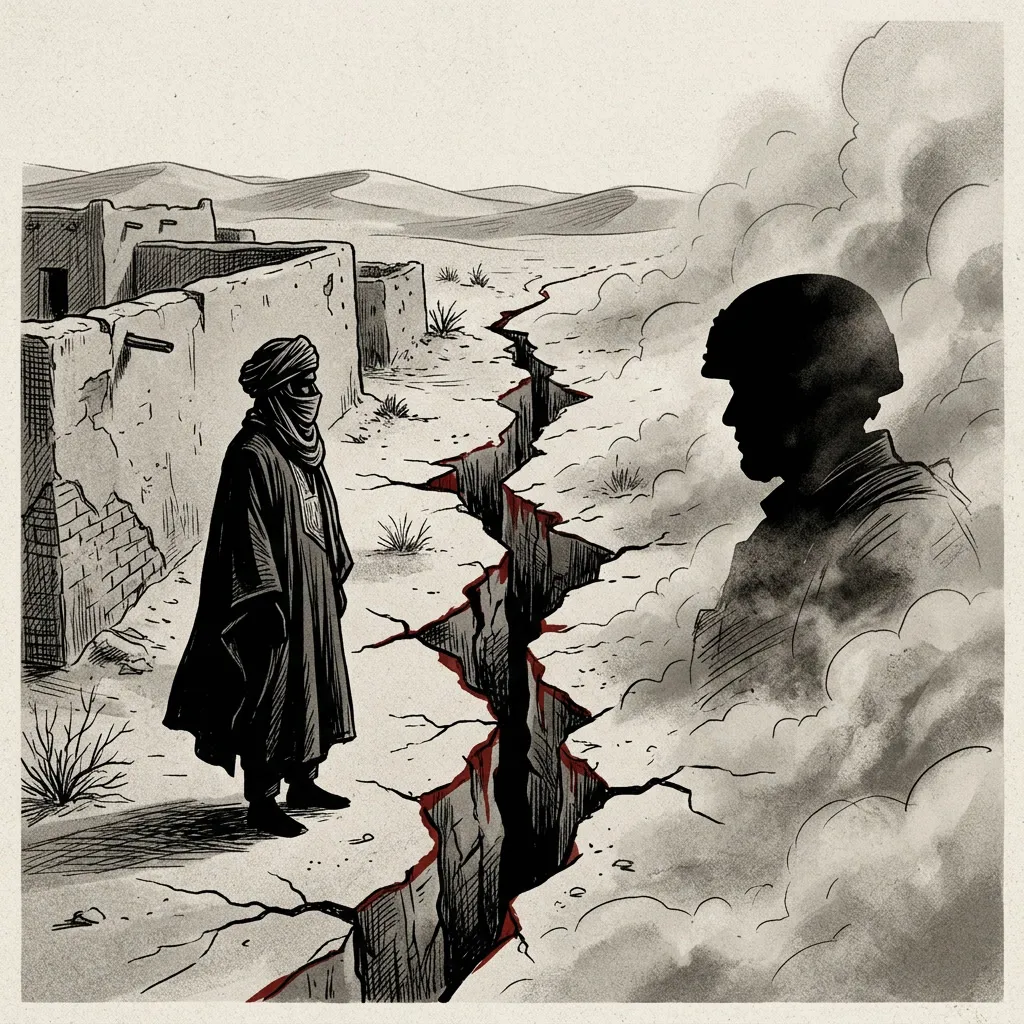
A significant escalation in northern Mali has seen Tuareg-led rebel forces capture the strategic town of Kidal, marking the largest offensive in the region in nearly 15 years. The event has triggered conflicting reports regarding the role and status of Russian military personnel in the country, with sources offering divergent accounts of casualties, responsibility, and the strategic implications of the rebel advance.
The Hindu frames the event around a direct political demand from the rebel side and a major casualty for the Malian junta. The Indian outlet reports that a Tuareg spokesman has called for the withdrawal of Russian forces from Mali. It highlights the death of Malian Defence Minister Sadio Camara in the attacks, describing him as the architect behind the military government's strategic shift towards partnership with Russia. This source presents the rebel capture of Kidal as a decisive military outcome with immediate political consequences, directly challenging the junta's authority and its foreign alliances.
Africanews focuses on the informational battle surrounding the conflict, centering its report on footage released by the Russian defense ministry. The pan-African broadcaster states that Moscow has published videos which it claims show its troops engaged in combat with Tuareg rebels. This reporting is contextualized by noting that the release follows the withdrawal of the Russian Africa Corps paramilitary unit from Kidal after attacks by a combined force of Tuareg rebels and jihadist fighters. The narrative here is one of Moscow attempting to project an image of active engagement and capability following a tactical retreat.
BBC News provides a more specific account of Russian military actions, reporting that Russian paramilitaries conducted air strikes in Mali during the rebel offensive. The British broadcaster corroborates the narrative of a Russian withdrawal, stating that the Africa Corps pulled back from a key base in northern Mali last weekend, coinciding with the attacks. The BBC's emphasis is on the operational tactics employed by the Russian forces—specifically air power—as they contended with the rebel advance, suggesting a defensive or retaliatory action during a repositioning.
Framing the Conflict The three sources collectively describe a scenario where Tuareg rebels have achieved a major territorial gain, but they diverge sharply in their portrayal of Russian involvement and the event's significance. The Hindu constructs a narrative of political rupture, where a key junta figure is eliminated and the rebels issue a direct challenge to a foreign power. Africanews presents a story of perception management, where Russia uses media to counter narratives of setback following a withdrawal. The BBC offers a tactical military perspective, detailing the use of air strikes in the context of a retreat. All sources acknowledge a Russian pullback from Kidal, but they characterize its cause and context differently: The Hindu and Africanews imply it was forced by rebel attacks, while the BBC presents it as a contemporaneous event.
In synthesis, the reports depict a multifaceted crisis where a rebel victory on the ground is intertwined with a complex information war and shifting international alignments. The death of the defense minister, as reported by The Hindu, points to a deep vulnerability within the Malian state apparatus. The competing narratives from Moscow and international media outlets highlight how the conflict is as much about controlling the story as controlling the territory. The broader implication is a potential recalibration of power in the Sahel, where a resurgent Tuareg movement directly confronts a Malian junta and its Russian security partners, with the outcomes heavily mediated through conflicting claims of military performance and political demands.