Fire Contained After Days-Long Blaze
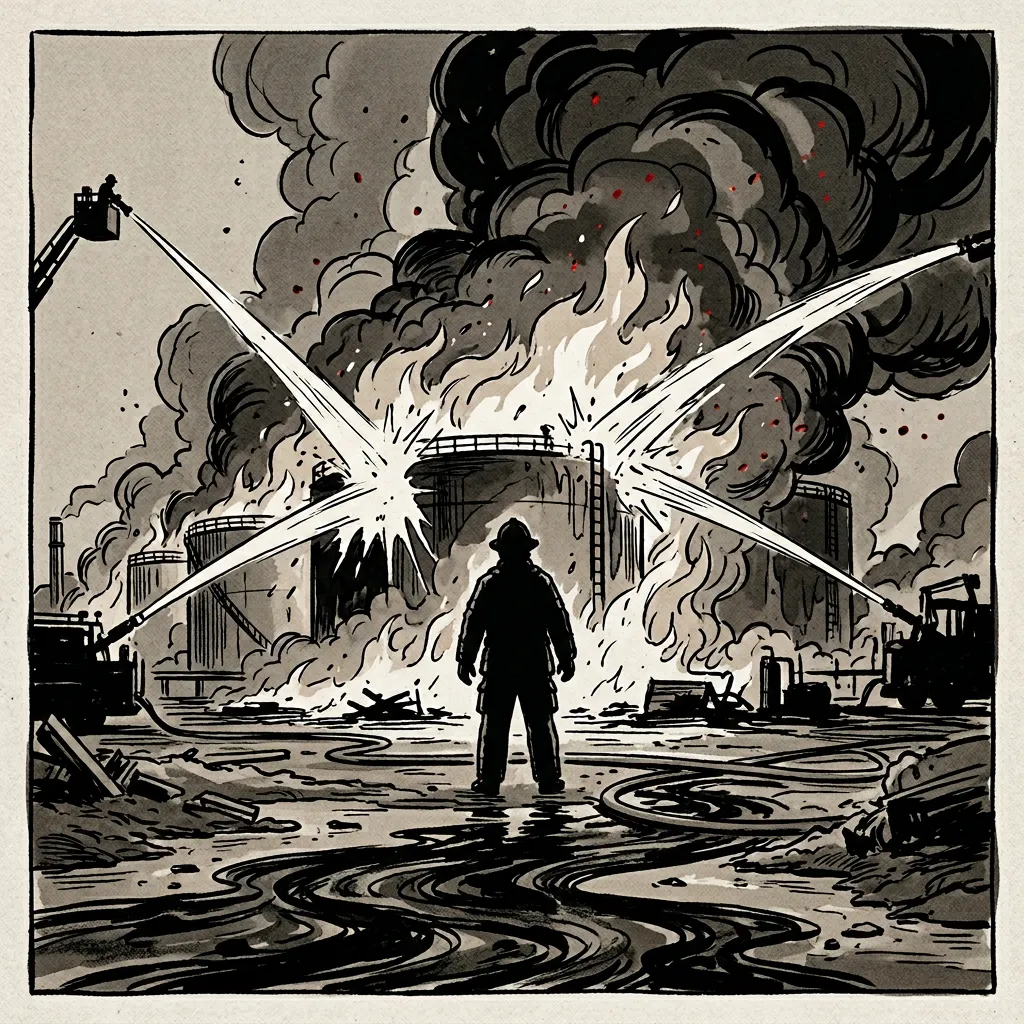
Firefighters have successfully contained and extinguished the open flames at a marine oil terminal in Tuapse, Russia, according to announcements from the operational headquarters of Krasnodar Krai. Despite the containment, 276 personnel and 77 pieces of equipment remain deployed at the scene for ongoing suppression operations.
The terminal caught fire in the early morning hours of April 20 following what Russian authorities describe as a Ukrainian drone strike. The blaze burned for multiple days, creating what international outlets have characterized as an environmental crisis in the Black Sea coastal city.
Environmental Impact and Public Health Concerns
The fire's environmental consequences have been severe. Air quality across Tuapse deteriorated sharply as the blaze consumed petroleum products, and residents reported an unusual phenomenon: "oil rain" falling on the city. On April 22, combustion byproducts mixed with precipitation, leaving black residue on surfaces throughout urban areas.
According to Russian independent outlet Agentstvo, cited by Meduza, local authorities provided minimal information to residents during the initial days of the crisis. Schools remained open despite the air quality concerns, and only on the third day of the fire did officials publicly acknowledge that combustion byproducts were entering the atmosphere.
Residents in affected neighborhoods eventually received advisories to limit outdoor exposure and keep windows closed, though the timing and scope of these warnings have drawn criticism from local communities.
Pattern of Attacks on Energy Infrastructure
The April 20 incident represents the second drone strike on Tuapse's port facilities within days. An earlier attack occurred in the early hours of April 16, also igniting fires at the terminal. That initial blaze was not fully extinguished until the afternoon of April 20—just hours before the second strike occurred.
The port houses an oil refinery that operates as an integrated production complex with the marine terminal. Both attacks resulted in petroleum products entering local waterways, including the Tuapse River and the Black Sea.
Cleanup Efforts and Local Response
Following the April 20 strike, authorities announced the deployment of 750 meters of boom barriers and specialized oil-collection equipment on the Tuapse River. However, by April 24, social media posts from local residents painted a picture of inadequate response, with claims that protective structures were "about to give way."
Residents reported seeing only four workers manually removing petroleum products with shovels, expressing frustration at what they characterized as insufficient assistance from local administration. The gap between official announcements and on-the-ground conditions has become a point of contention in local discourse.
Framing Across Sources
International coverage of the incident varies in emphasis and detail. Middle Eastern outlets have characterized the situation as an "environmental crisis," focusing on civilian concerns about health effects. Indian media highlighted the "toxic rain" phenomenon and stay-home orders, emphasizing the public health dimension.
Russian independent media provided the most granular reporting on the timeline of official responses, the gap between strikes, and specific criticisms from residents regarding communication failures and inadequate cleanup efforts. These sources documented the delay in official acknowledgment of air quality problems and the continuation of normal activities like school attendance during the crisis.
All sources attribute the strikes to Ukrainian forces, though the military or strategic rationale receives minimal attention across coverage. The focus remains predominantly on environmental and public health consequences rather than the broader military context of attacks on energy infrastructure.