
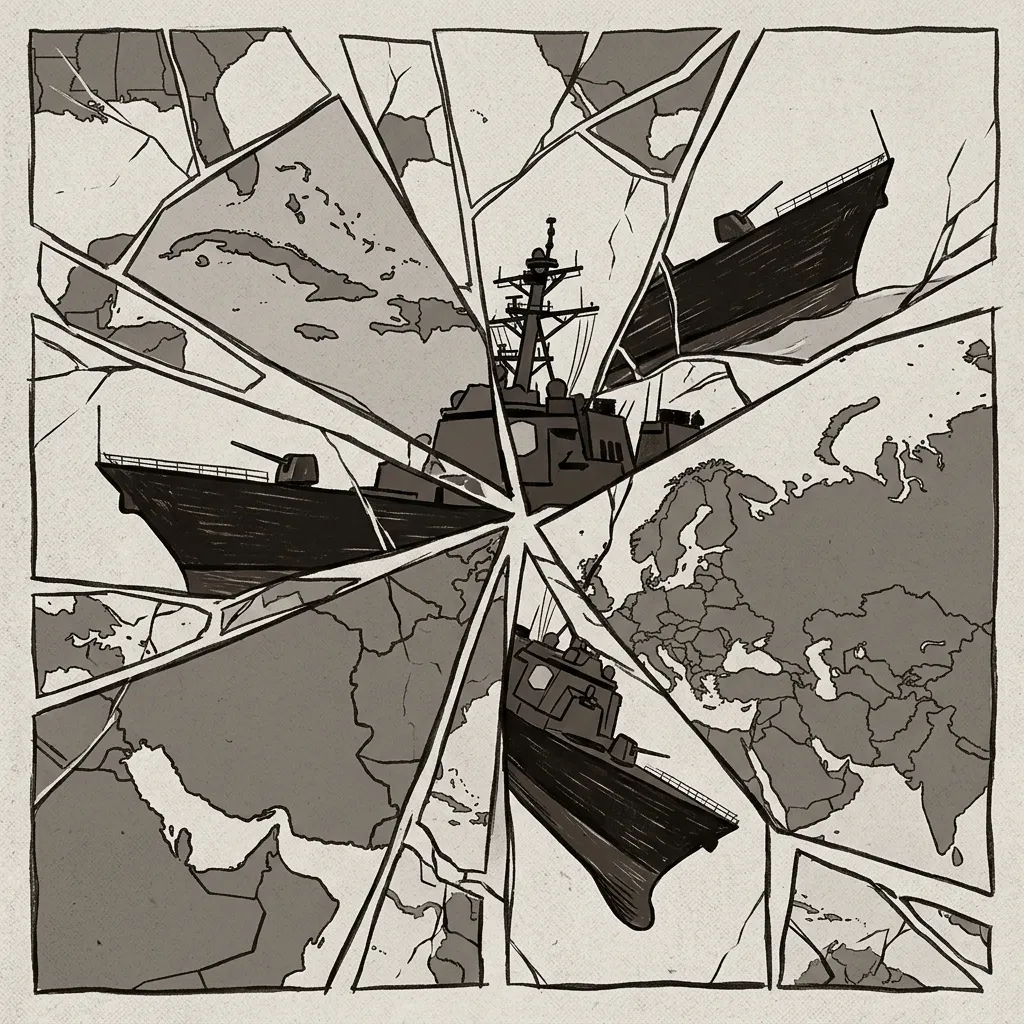
Recent statements by U.S. President Donald Trump regarding naval actions against Iran and threats toward Cuba have been reported with significant regional variations in emphasis and tone. While the core events—Trump's description of a U.S. Navy blockade against Iran and a subsequent threat against Cuba—are consistent, the framing shifts dramatically based on the source's geographic and political perspective, ranging from alarm in Latin America to a focus on geopolitical escalation in Europe and strategic ambiguity in India.
Latin American Focus on Cuban Threat Sources from Latin America prioritize the threat against Cuba, framing it as a direct and imminent danger. Clarin, an Argentine publication, leads its report with Trump's threat to take "control" of Cuba "almost immediately," characterizing it as a "dangerous and unprecedented" statement. The article notes that Cuban President Miguel Díaz-Canel called on the international community to "take note" of this threat, and it frames Cuba as actively preparing to resist. This coverage implicitly positions the U.S. as an aggressive regional hegemon, with the Cuban response presented as a legitimate call for international solidarity. Folha de S.Paulo, while its provided snippet focuses on the Iran comments, headlines Trump's accusation that the U.S. Navy acted "like pirates" during its blockade of Iranian ports. The Brazilian outlet contextualizes this within the ongoing war involving the U.S., Israel, and Iran, suggesting a critical view of U.S. military conduct by highlighting the president's own pejorative characterization.
European Emphasis on Geopolitical Tension and Profit Politico Europe provides the most detailed account of the Iran-related comments, framing them within a context of rising geopolitical risk. The report quotes Trump at length, including his boast that seizing Iranian ships and cargo is a "very profitable business" and his repeated "pirates" analogy. Crucially, Politico adds context absent from other reports: it links the remarks to escalating U.S.-Iran tensions amid unsuccessful negotiations to end a war that began in late February. It also cites an Iranian military official warning that renewed conflict is "likely" and includes the detail that the U.S. has warned shipping companies they could face sanctions for paying tolls to Iran for safe passage through the Strait of Hormuz. This framing presents the comments not as an isolated boast but as part of a dangerous and economically motivated escalation, with a focus on the potential for renewed warfare.
Indian Framing as Strategic Ambiguity The Hindu from India offers a distinctly different lens, framing Trump's Cuba threat as a "joke." Its headline states Trump "jokes" the U.S. Navy will "take on Cuba" on the way home from Iran. This characterization introduces ambiguity about the statement's intent, contrasting sharply with Clarin's portrayal of a serious threat. The article notes the Trump administration is engaged in a "monthslong campaign" to pressure Cuba for reforms, situating the remark within a broader policy context rather than an immediate military one. This framing downplays the alarmist tone seen in Latin American media and instead interprets the comment as a rhetorical flourish within an ongoing diplomatic and economic pressure strategy.
Framing the Conflict The divergence in reporting reveals how the same statements are filtered through regional priorities and historical relationships. For Latin American sources, the primary story is U.S. aggression toward a fellow American nation, Cuba, evoking a long history of interventionism. The Iranian blockade is noted but secondary. For the European source, the story is a global security and economic issue: a U.S. president glorifying naval predation risks inflaming a already volatile conflict in the Middle East, with implications for oil markets and international shipping. The Indian source, perhaps reflecting a more distant geopolitical relationship with both Cuba and the immediate U.S.-Iran conflict, chooses to interpret the Cuba remark as non-literal, focusing on the protracted nature of U.S. policy instead of imminent military action.
In synthesis, the reporting underscores that Trump's comments are not viewed through a monolithic global lens. They are interpreted as either a serious regional security threat, a dangerous escalation in a distant war with economic ramifications, or a piece of strategic rhetoric. The choice of which statement to headline, which context to provide, and which adjectives to use—"threat," "brag," or "joke"—fundamentally shapes the narrative for each audience, revealing more about the observer's vantage point than a single truth about the events themselves.