
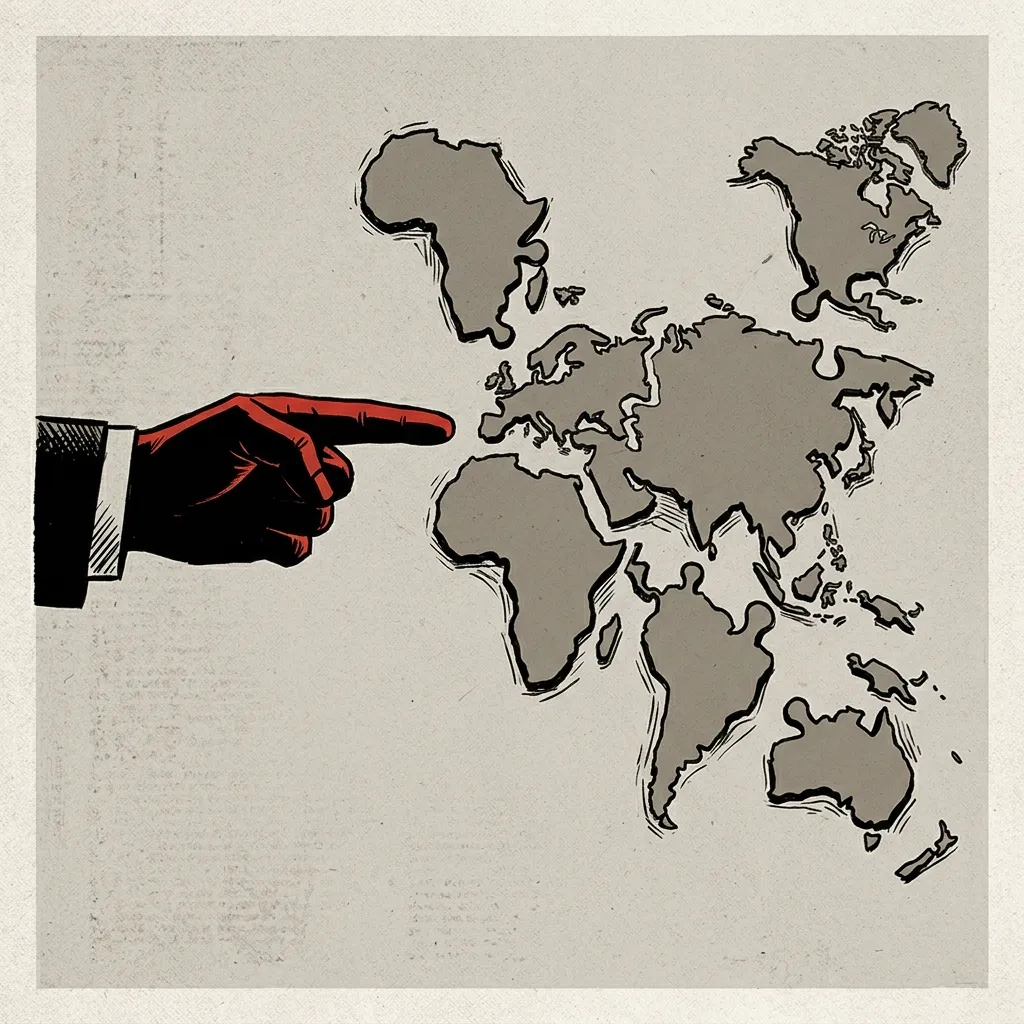
Recent statements by former U.S. President Donald Trump regarding Cuba have drawn varied international reactions and exposed domestic political pressures. While Trump suggested a potential for rapid U.S. action against the island nation, reports from Latin America, India, and Europe reveal starkly different framings of the threat's seriousness, the underlying U.S. policy objectives, and the significant internal divisions within the politically influential Cuban American community.
Latin American Perspective: A Direct Threat and Call to Resist Reporting from Argentina's Clarin presents Trump's comments as a serious and immediate danger. The outlet characterizes the statement as a threat to assume control over Cuba in a very short timeframe. It notes that Cuban President Miguel Díaz-Canel responded by urging the international community to take note of what he labeled a dangerous and unprecedented provocation. This framing positions the event as a direct geopolitical confrontation, with the Cuban government actively preparing to resist external pressure. The report links the Cuba remarks to a broader agenda, noting Trump's prior comment about needing to first 'finish the job' in Iran, suggesting a sequential approach to foreign interventions.
Indian Perspective: A Casual Remark Amid Broader Pressure The Hindu's coverage offers a contrasting interpretation, framing Trump's comment about the U.S. Navy taking on Cuba as a joke made in passing. The Indian publication describes the statement as a humorous aside, contextualizing it within a months-long U.S. campaign aimed at pushing the Cuban government toward significant reforms. This reporting minimizes the immediacy of the threat implied by other sources, instead presenting it as rhetorical flair within a sustained diplomatic and economic pressure strategy. The focus is less on a specific military threat and more on the ongoing policy effort to instigate change.
European Perspective: Domestic Political Calculus and Policy Ambiguity Politico Europe provides deep analysis of the domestic U.S. political dynamics shaping Cuba policy, particularly the tensions within the Cuban American diaspora in Florida. The report details how Cuban American activists, who have been strong Trump supporters, are pressuring the administration for a complete overthrow of Cuba's communist leadership. It reveals a growing fissure, as the Trump administration appears willing to settle for economic reforms and negotiated changes short of full regime change. This approach, the report suggests, risks alienating a key voter bloc ahead of elections, with some activists warning that inaction could affect voting behavior. The article notes the administration has imposed an energy blockade and expanded sanctions while simultaneously engaging in negotiations, sending mixed signals about its ultimate goals. Secretary of State Marco Rubio's role is highlighted, with his public statements emphasizing the need for both economic and political change, but leaving room for interpretation on whether top leadership changes would suffice. The report concludes that the ongoing conflict with Iran has pushed Cuba down the administration's priority list, adding to the policy uncertainty.
Framing the Conflict The divergence in reporting centers on the perceived intent and seriousness of Trump's remarks. Clarin interprets them as a clear and present danger, necessitating international vigilance and Cuban mobilization. The Hindu dismisses them as an offhand joke, reflecting a style of rhetoric rather than a policy declaration. Politico Europe largely sidesteps the specific remark to analyze the substantial policy rift it symbolizes between the U.S. administration and its exile constituency. The Latin American source adopts the perspective of the Cuban state as a nation under threat. The Indian source adopts a detached, analytical tone regarding U.S. foreign policy posture. The European source delves into the internal American political conflict and electoral implications, treating the remark as a symptom of a broader, unresolved policy dilemma.
Synthesis and Implications The coverage collectively illustrates how a single political statement intersects with regional perceptions, domestic U.S. politics, and long-standing geopolitical strife. For Latin American observers, it reinforces narratives of U.S. interventionism and hemispheric sovereignty. From a distance, Indian media views it as part of Washington's persistent strategic pressure. The European analysis underscores how foreign policy, especially toward Cuba, remains deeply entangled with U.S. electoral politics and the expectations of specific diaspora communities. The reports agree that the U.S. is actively seeking change in Cuba but profoundly disagree on the methods being contemplated—from military action to economic negotiation—and the credibility of the most confrontational threats. The overarching implication is that U.S. policy remains in flux, caught between maximalist demands from a core political constituency and a potentially more pragmatic, if ambiguous, administrative approach, with global audiences interpreting its direction through vastly different lenses.