
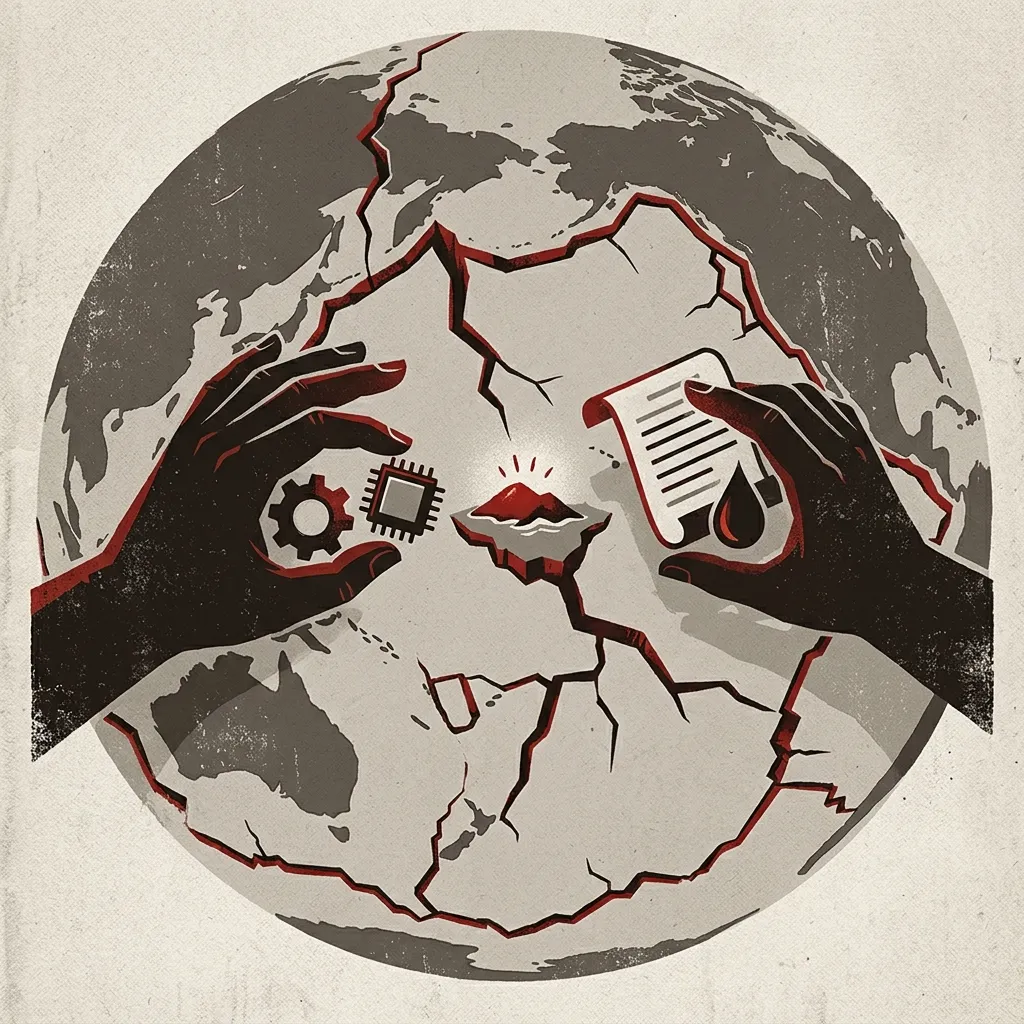
U.S. President Donald Trump is scheduled for a state visit to China from May 13 to 15, with Washington and Beijing confirming the trip will cover a complex agenda. The visit occurs against a backdrop of heightened global instability, including a protracted conflict in the Middle East and persistent bilateral friction over core strategic issues. Reports indicate discussions will center on trade relations, technology competition, the status of Taiwan, and China's economic dealings with Iran, reflecting the multifaceted nature of the current U.S.-China relationship.
Framing from Indian Media (The Hindu) The Hindu's coverage presents the visit through a lens of shifting global power dynamics. One article frames President Trump as primarily seeking a tangible 'deal' in Beijing, particularly on trade and technology, while it characterizes China's posture as one of strategically assessing a perceived American 'decline.' This framing suggests a transactional U.S. approach contrasted with a longer-term, evaluative Chinese strategy. A separate report from the same outlet broadens the context, explicitly linking the diplomatic meeting to external crises. It notes the visit is happening during a 'prolonged U.S.-Israel-Iran war' that has triggered a global energy crisis, thereby situating the bilateral talks within a wider landscape of international conflict and economic disruption. This connection implies the regional war is an unavoidable factor influencing the discussions, adding a layer of urgency and complexity beyond the standard bilateral agenda items like Taiwan.
Framing from Middle Eastern Media (Al Jazeera) Al Jazeera's reporting provides a more focused and immediate geopolitical angle, centering its narrative on the Iran issue. Its headline and content state that Trump will 'discuss Iran' with Chinese leader Xi Jinping and is expected to 'apply pressure' on Beijing regarding its purchases of Iranian oil. This framing presents the U.S. president's objective as direct and coercive, aiming to alter Chinese foreign policy behavior in the midst of an ongoing war. The report positions China's energy trade with Iran not merely as a background issue but as a central, contentious point of discussion where the U.S. intends to make specific demands. This contrasts with the Indian media's portrayal, which lists Iran as part of a broader contextual crisis rather than the headline objective of the visit.
Framing the Conflict and Cooperation The synthesis of these reports reveals distinct regional emphases in framing the same state visit. The Indian sources offer a macro-analysis of the encounter, interpreting it as a symptom and potential catalyst within a broader narrative of American relative decline and Chinese ascendancy. The agenda items—trade, tech, Taiwan—are seen through this prism of strategic competition. Conversely, the Middle Eastern source drills down into a single, active conflict zone, framing the visit as a critical diplomatic channel through which the United States hopes to manage a specific wartime challenge by leveraging its relationship with China. Here, the U.S. is portrayed as an actor seeking to enforce compliance on a third-party issue, rather than solely a negotiator seeking a mutual deal.
In conclusion, the upcoming summit is portrayed as a pivotal moment with implications extending far beyond U.S.-China relations. While all sources agree on the fundamental topics of discussion, their framing diverges significantly based on regional perspective. From South Asia, the visit is a key indicator in the long-term recalibration of global power. From the Middle East, it is a immediate diplomatic maneuver within a live military and economic crisis. These differing lenses underscore how the bilateral relationship is inextricably linked to, and interpreted through, regional security and economic concerns worldwide, making the outcomes of this visit consequential for multiple international theaters.