
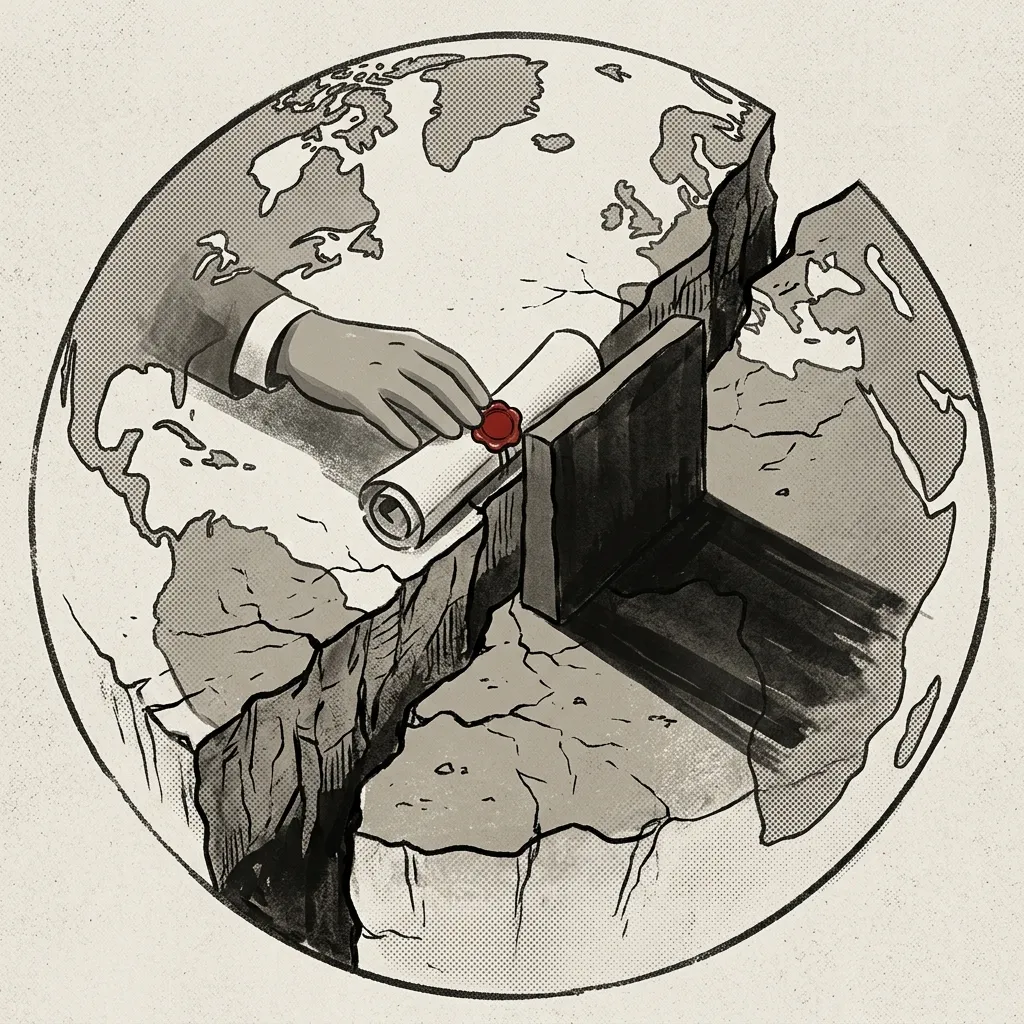
Former U.S. President Donald Trump has publicly expressed dissatisfaction with a new peace proposal from Iran, which was reportedly transmitted through Pakistani mediators. The development, emerging from a statement by the Iranian state news agency IRNA, signals a continuation of diplomatic friction between the two nations, though the specific contents of the proposal and the exact nature of Trump's objections remain undisclosed.
The Hindu's report frames the event as a direct diplomatic update, focusing on the procedural aspect of the communication. It notes that Trump declared himself "not satisfied" with Iran's latest offer aimed at ending the conflict with the United States. The Indian publication highlights a key informational gap, stating that the former president did not provide further details on what he perceived as the proposal's shortcomings. This framing presents the story as a straightforward news item about a stalled negotiation, emphasizing the lack of transparency from the U.S. side regarding its specific grievances.
Folha de S.Paulo provides a similar core report but with subtle differences in emphasis and terminology. The Brazilian outlet explicitly attributes the proposal to "the regime of Iran," a phrasing that carries a more pointed political connotation than the neutral "Iran" used by The Hindu. Folha confirms the channel of communication, noting the proposal was sent to Pakistani mediators, and cites IRNA as the source of the information on a specific date. Its reporting structure presents the basic facts—the proposal's submission and Trump's rejection—without additional analysis, similar to its Indian counterpart.
Framing the Communication The synthesis of these reports reveals a shared factual baseline but divergent narrative shadings. Both sources agree on the central actors: Iran, the United States (represented by Trump), and Pakistan as an intermediary. They concur on the core event: a proposal was sent, and it was rejected as unsatisfactory. The primary divergence lies in descriptive language. The Hindu maintains a neutral, procedural tone, describing the event without evaluative adjectives. In contrast, Folha de S.Paulo's use of "regime" to describe the Iranian government injects a layer of political framing that implicitly questions the legitimacy or nature of the authorities in Tehran. This word choice may reflect different regional perspectives on Iran's government or align with common diplomatic terminology in Latin American media.
Furthermore, both articles are defined by a significant absence: the substance of the Iranian proposal. This omission is a critical part of the story, as it leaves the public and analysts without the context needed to assess Trump's dismissal. The reports present a diplomatic impasse where the reasons are opaque, framing the situation as one of continued stalemate fueled by non-disclosure. The reliance on IRNA as the initial source also frames the story as one initially controlled by Iranian state media, with Western or U.S. responses being reactive and lacking in detail.
In conclusion, the reports depict a familiar pattern of fraught U.S.-Iran relations, where diplomatic overtures are quickly met with public rebuffs without detailed explanation. The event underscores the persistent challenges in dialogue between the two nations, where public posturing often overshadows private negotiation. The involvement of Pakistan as a mediator highlights the role of third-party nations in attempting to bridge this enduring geopolitical divide, even as the core disagreements remain shrouded in ambiguity. The coverage ultimately frames this not as a breakthrough, but as another incremental—and unsuccessful—step in a long-standing conflict.