
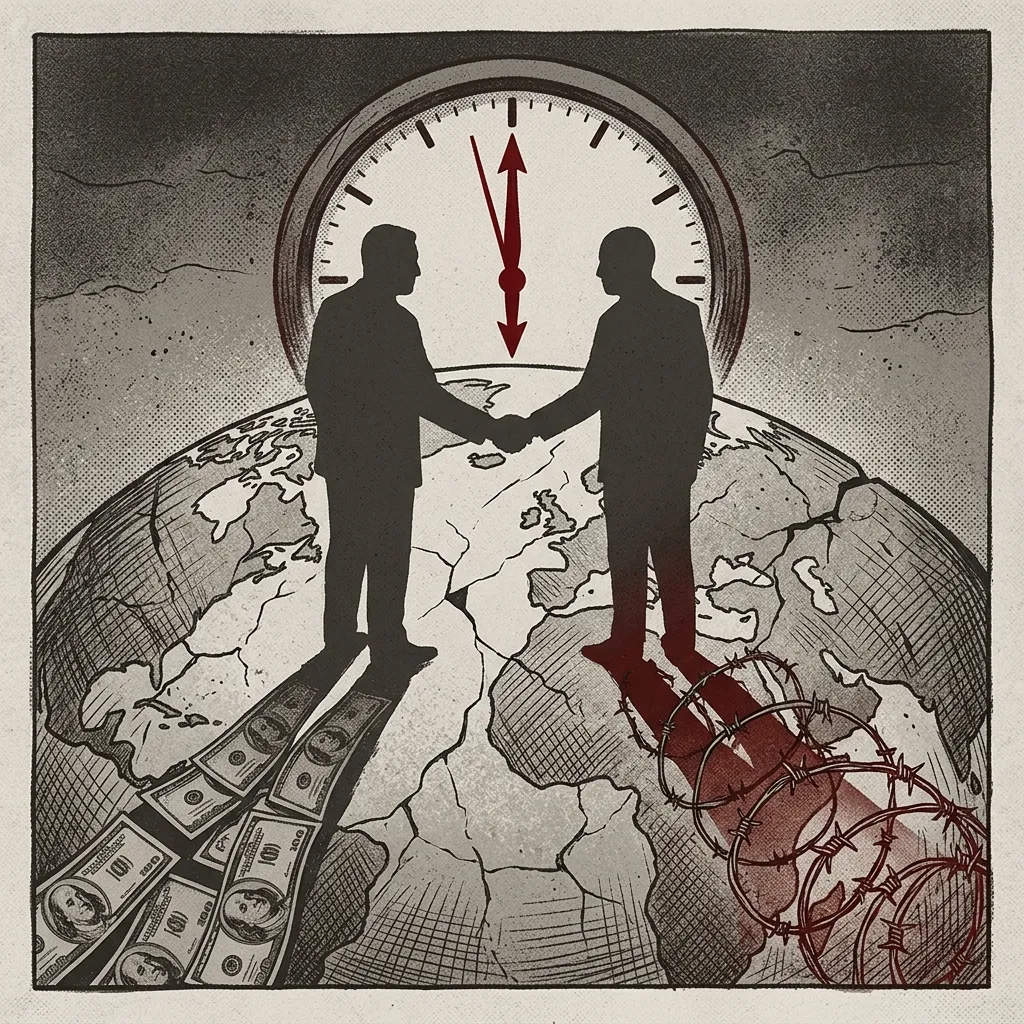
A three-hour meeting between U.S. President Donald Trump and Brazilian President Luiz Inácio Lula da Silva at the White House has been characterized by both sides as positive, with a focus on resolving long-standing trade disputes and enhancing cooperation against organized crime. The encounter, which included a working lunch, resulted in an agreement to task ministerial teams with finding a solution to tariff issues within 30 days. However, regional and international media reports frame the significance and context of the talks differently, highlighting the complex political and historical backdrop of U.S.-Brazil relations.
Brazilian Mainstream Media: A Detailed, Cautiously Optimistic Account The Brazilian mainstream outlet Folha de S.Paulo provides a comprehensive overview of the meeting's agenda, listing topics such as combating organized crime, tariffs, critical minerals, and the role of major technology companies. It notes Trump's post-meeting description of Lula as a "good man" and a "smart guy." Another Folha report explicitly states that the two leaders did not discuss the potential U.S. designation of Brazilian criminal factions like the Comando Vermelho and PCC as terrorist organizations, a sensitive topic for Brazilian sovereignty. The coverage is factual and detailed, presenting the meeting as a significant diplomatic event covering a broad agenda, with a subtle emphasis on topics of particular domestic concern to Brazil, such as the non-discussion of the terrorist label for gangs.
Brazilian State Media: Emphasizing Process and Brazilian Positions Agência Brasil, the state news agency, offers the most detailed and process-oriented reporting. It extensively covers the agreement to form a working group to resolve the tariff impasse and a U.S. Section 301 trade investigation within a month. The agency strongly frames the Brazilian position, stating the government "does not recognize the legitimacy of unilateral instruments" like Section 301 and arguing they are inconsistent with World Trade Organization rules. It highlights Lula's post-meeting optimism and his statement that Brazil is prepared to discuss any topic except its democracy and sovereignty. The reporting also gives significant space to Lula's announcement of a forthcoming national plan against organized crime and the agreed financial cooperation with the U.S., while again noting the terrorist classification was not discussed. The narrative is one of proactive Brazilian diplomacy defending national interests and achieving structured commitments from the U.S.
European Media: Highlighting Domestic Political Stakes France's Le Monde provides a distinct geopolitical framing, situating the meeting within Brazil's domestic political calendar. It describes the talks as "a boost" for President Lula, who is seeking re-election in a tight race against Flavio Bolsonaro, the son of former president Jair Bolsonaro, whom the article identifies as a "close Trump ally." This framing introduces an electoral dimension largely absent from the Brazilian reports, suggesting the meeting's value for Lula's political standing at home amidst historically "rocky relations" between the two leaders.
Indian Media: A Concise, Top-Level Summary The Hindu's brief report captures the essential, public-facing outcome. It quotes Trump's social media post calling Lula a "very dynamic President" and stating the discussion on trade and tariffs went "very well." This reporting presents a straightforward, diplomatic snapshot of cordiality and productive discussion, without delving into the historical tensions or specific negotiation points covered by other sources.
Framing the Encounter The synthesis reveals clear differences in how the same event is contextualized. The Brazilian state media (Agência Brasil) constructs a narrative of sovereign negotiation, emphasizing Brazilian agency, defined positions (e.g., against Section 301), and concrete bilateral mechanisms (the 30-day working group). The Brazilian mainstream press (Folha) adds granularity to the agenda and flags sensitive, avoided topics, maintaining a neutral but informed tone. In contrast, Le Monde steps outside the bilateral frame to connect the meeting's success directly to Lula's domestic re-election challenges and the shadow of his predecessor's alliance with Trump. The Hindu offers a minimalist, positive diplomatic readout.
Conclusion: A Meeting of Pragmatism Over Ideology The reporting collectively depicts a meeting driven more by pragmatic concerns—trade imbalances and transnational crime—than by ideological alignment. While all sources agree on the cordial tone and focus on tariffs and crime, the depth of context varies significantly. The Brazilian sources, particularly the state agency, root the discussions in a history of trade conflict and a defense of multilateralism. The European perspective introduces an electoral calculus, suggesting the diplomacy serves internal political needs. The convergence on a 30-day timeline for tariff talks indicates a shared desire for tangible progress, yet the divergent framings underscore the complex layers—historical, economic, and political—that define this pivotal relationship between the Western Hemisphere's two largest democracies.