
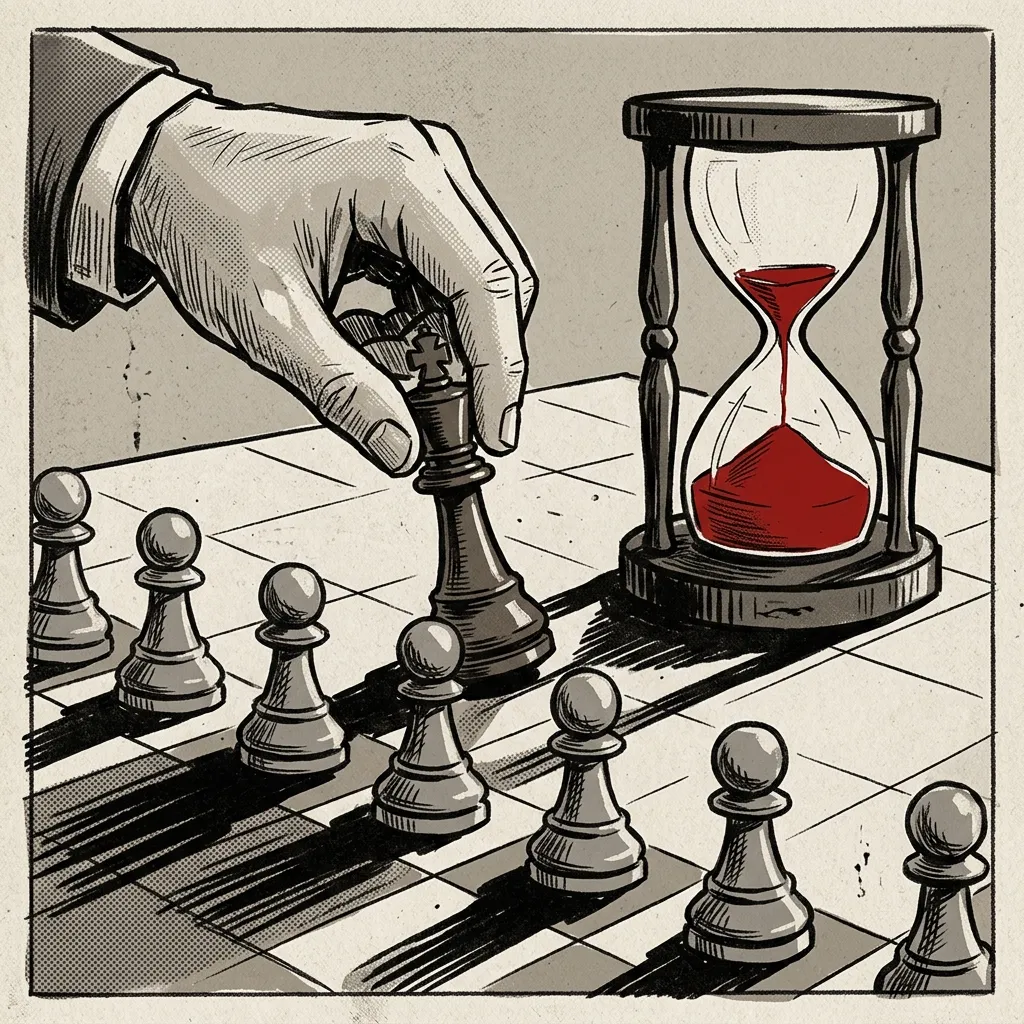
The Trump administration has informed the U.S. Congress that hostilities with Iran have ended due to an ongoing ceasefire, a legal interpretation that would allow military operations to continue without new legislative authorization. This move, coming just before a 60-day deadline imposed by the War Powers Resolution, has ignited a constitutional debate over presidential war powers and the definition of an active conflict.
Source Perspectives and Framing
BBC News frames the development as a direct presidential assertion against congressional oversight. The report centers on a communication from the president stating that hostilities "have terminated" because of the ceasefire, thereby arguing he does not require congressional approval to proceed. The BBC's coverage presents this as a clear point of contention between the executive and legislative branches, highlighting the legal argument without extensive commentary on the military situation on the ground.
RT (Russia) provides a more detailed account of the administration's legal rationale, citing a report from the Associated Press. It notes the White House's position that "the hostilities that began on Saturday, February 28, have terminated" for the purposes of the War Powers Act, a stance reportedly echoed by the U.S. Secretary of War. RT's report emphasizes the existence of the ceasefire and the administration's view that the 60-day clock is "on hold." It also includes contextual details not heavily featured in other reports, such as the continued presence of multiple U.S. naval carrier groups in the region, some of which are enforcing a blockade. This framing subtly underscores the contrast between the declared end of hostilities and the sustained military posture.
Latin American outlets Clarin and Folha de S.Paulo focus on the procedural and political impasse. Clarin explains the 1973 law that compels a U.S. president to seek congressional authorization after 60 days of foreign deployment, framing the White House's declaration as a "strategy to sidestep" the legislature. Similarly, Folha de S.Paulo describes the administration facing a "legal and political deadlock" related to continuing the conflict as the deadline expires. Both sources present the story through the lens of an institutional power struggle within the U.S. government, with less emphasis on the specifics of the Iran conflict itself.
The Hindu takes a broader, more analytical approach, situating the event within ongoing scrutiny over "presidential war powers and the constitutional boundaries of military engagement." It notes that high tensions and stalled negotiations have reignited this debate. This framing presents the legal maneuver not as an isolated incident but as the latest episode in a enduring tension between executive authority and congressional war powers, relevant to an international audience observing U.S. foreign policy mechanics.
Framing the Conflict
The sources converge on the core fact: the administration is using a ceasefire declaration to argue the War Powers Act clock has stopped. However, their narrative emphasis diverges significantly. BBC and the Latin American sources frame it primarily as a domestic U.S. constitutional clash. RT's narrative, while reporting the same legal claim, pairs it with details of persistent military force deployment, creating an implicit question about the sincerity of the "terminated" declaration. The Hindu elevates the story to a systemic issue of legal boundaries, relevant to global observers of U.S. power. Notably, sources like BBC and The Hindu refer to "hostilities with Iran," while RT employs the phrase "US-Israeli war on Iran," a formulation that assigns more direct responsibility and frames the conflict as an offensive action.
In conclusion, this event reveals a pivotal moment in the balance of U.S. war powers. The administration's legal interpretation, if accepted, would establish a significant precedent for using ceasefires to circumvent legislative deadlines for military engagement. The international coverage reflects not only on the immediate U.S.-Iran situation but also on the stability of the constitutional framework intended to check unilateral executive military action. The divergent regional framings—from internal power struggle to geopolitical maneuver—highlight how this domestic U.S. legal argument is perceived as a matter of global strategic significance.