
Deadly Collision Outside Indonesian Capital
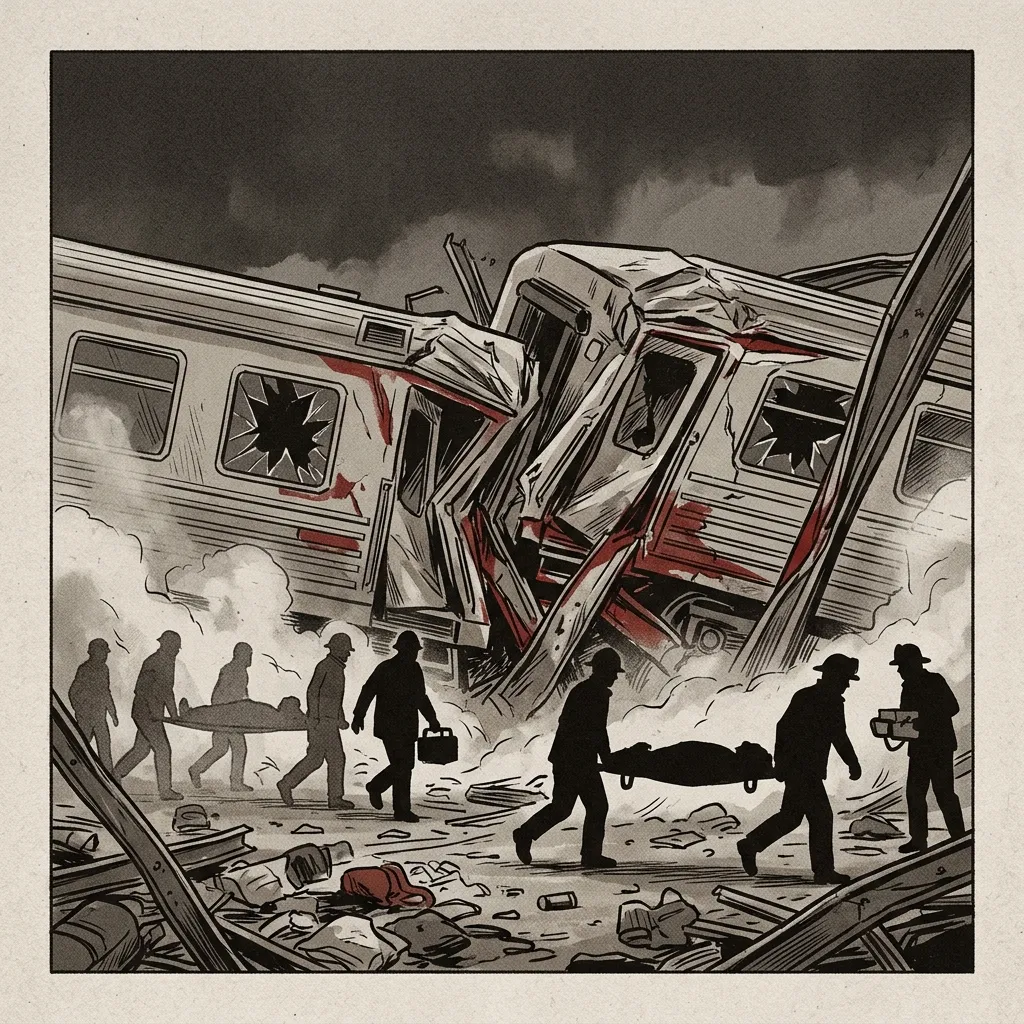
A collision involving two trains on the outskirts of Jakarta, Indonesia, has resulted in at least 14 deaths and dozens of injuries, according to multiple international reports. The incident occurred on Monday, April 27, 2026, in the Bekasi area near the Indonesian capital.
Rescue operations continued into Tuesday as emergency workers raced to extract survivors trapped inside the wreckage. The head of Indonesia's national rescue agency confirmed that efforts to remove trapped passengers remained ongoing as of Tuesday morning.
Sequence of Events
According to Bobby Rasyidin, Chief Executive of state-owned railway operator PT KAI, the collision involved a commuter train and a long-distance train. Rasyidin provided specific details about the crash sequence: "A taxi on the train tracks was hit by the commuter train, and the long-distance train hit a women-only carriage on the commuter train," as reported by The Hindu.
This account suggests a multi-stage incident, with an initial collision between a commuter train and a vehicle on the tracks, followed by a second impact involving the long-distance train striking a specific carriage designated for female passengers on the commuter service.
Casualty Count Evolution
Reports show the death toll rising throughout the day. Al Jazeera's video coverage initially reported "at least four people" killed late Monday with "dozens more" injured. By Tuesday, multiple sources confirmed the toll had climbed to 14 fatalities. The BBC stated that "at least 14 people" died in the Monday collision, while The Hindu and Al Jazeera's later reporting both confirmed the same figure of 14 deaths.
The number of injured passengers has been described as "dozens" across sources, though precise figures for the wounded have not been consistently reported.
Government Response
The Indonesian government moved quickly to address the incident. Folha de S.Paulo reported that authorities ordered an investigation on Tuesday, April 28, following the collision. The investigation will presumably examine how a taxi came to be on the railway tracks and what circumstances led to the subsequent collision between the two trains.
Rescue Operations
Emergency response efforts focused on extracting trapped passengers from the damaged carriages. The BBC emphasized the urgency of rescue work, describing how "rescuers race to free survivors trapped inside train" in its headline framing. Al Jazeera's video coverage showed "survivors of deadly Indonesia train crash pulled from wreckage," documenting the ongoing extraction efforts.
The complexity of the rescue operation appears related to the nature of the collision, particularly the impact on the women-only carriage, which may have resulted in significant structural damage trapping passengers inside.
Location Context
The crash occurred in Bekasi, an area on the outskirts of Jakarta. Multiple sources identified the location as near or around the Indonesian capital, with Folha de S.Paulo specifically noting it happened in "the surroundings of the capital." Jakarta, recently identified by the UN as having surpassed Tokyo as the world's largest city, relies heavily on commuter rail services to transport residents between the capital and surrounding areas like Bekasi.