
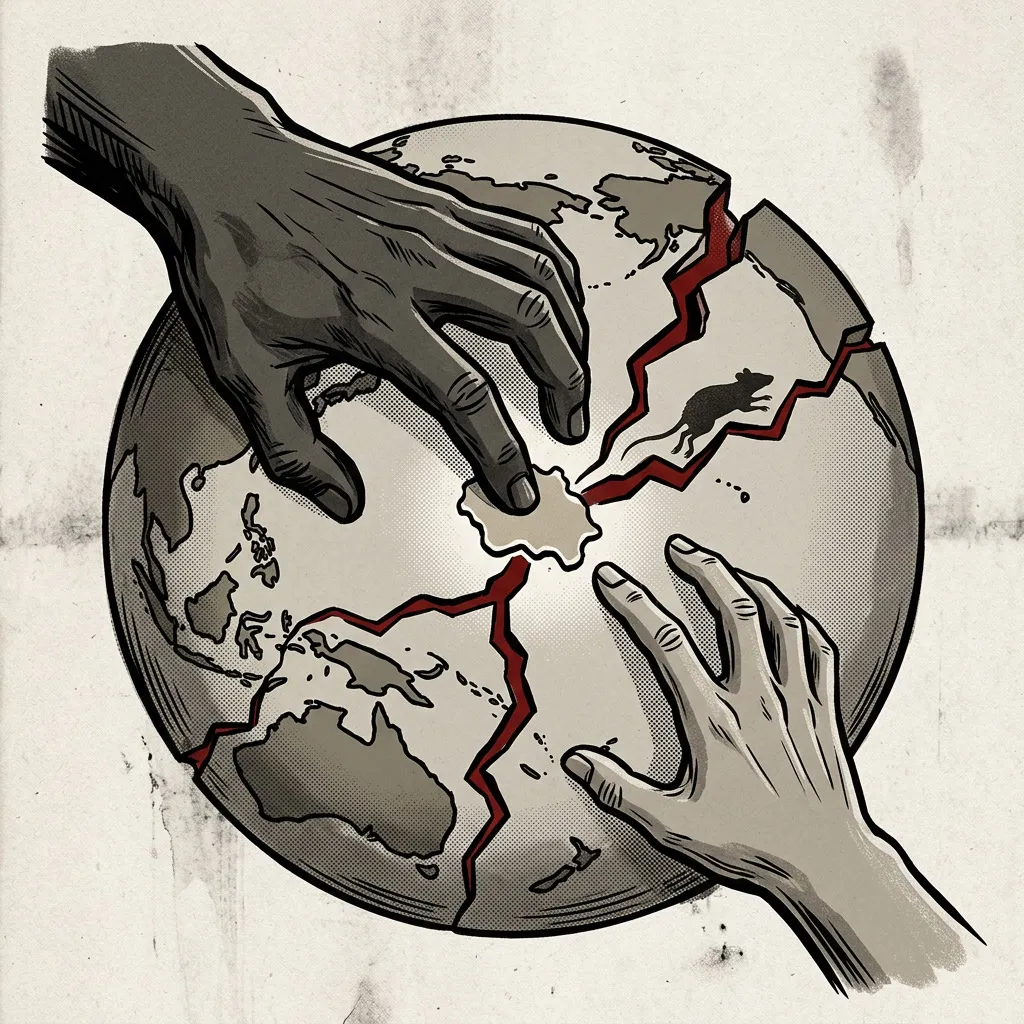
Taiwan's President Lai Ching-te has concluded a state visit to Eswatini, one of the few nations maintaining formal diplomatic ties with Taipei. The trip, aimed at reinforcing bilateral relations, was met with a sharp and colorful denunciation from Beijing, which labeled Lai a 'rat' and framed the journey as a covert operation challenging China's sovereignty claims. The incident underscores the persistent and volatile diplomatic struggle over Taiwan's international status, with regional media outlets highlighting different facets of the confrontation, from its logistical hurdles to its symbolic rhetoric.
Africanews, reporting from the continent, frames the visit primarily as a diplomatic engagement. It notes Lai's arrival was intended to strengthen ties with a key ally, contextualizing it within the broader challenge of 'growing international pressure from China.' This framing presents the event as a standard act of statecraft by Taiwan, focusing on the bilateral relationship with Eswatini and the external pressures it faces, without delving deeply into the provocative language from Beijing or the logistical drama surrounding the trip.
In contrast, The Hindu provides a more detailed account that centers the rhetorical clash. Its headline directly juxtaposes Lai's 'defiant' posture with China's 'rat' insult. The report quotes the specific language from China's Taiwan Affairs Office spokesperson, describing Lai's conduct as 'despicable' and akin to 'a rat scurrying across the street.' This framing presents the story as a war of words, giving significant weight to Beijing's harsh characterization while also noting Lai's defiant response, thereby illustrating the escalating verbal tensions between the two sides.
RT's coverage offers the most narrative-driven and detailed version, emphasizing secrecy and Chinese diplomatic pressure. It characterizes the visit as a 'secret' mission, noting Lai 'secretly boarded an Eswatini government aircraft' for an 'unannounced state visit.' The report provides crucial background absent from other sources: that the visit was initially scheduled for late April but was canceled after several African nations—Seychelles, Mauritius, and Madagascar—revoked overflight permits, which Taipei attributed to Chinese coercion. RT also includes Taiwan's forceful counter-rebuke, quoting the Mainland Affairs Council's description of Beijing's comments as 'fishwife's gutter talk.' Furthermore, it explicitly reiterates China's position on sovereignty and its non-renunciation of force, providing a fuller picture of the underlying geopolitical stakes.
Framing the Diplomatic Confrontation The three sources collectively frame the event through distinct lenses. Africanews adopts a neutral, fact-based tone focused on the act of the visit itself. The Hindu frames it as a headline-grabbing diplomatic spat defined by incendiary language. RT presents it as a cloak-and-dagger diplomatic struggle, highlighting the covert nature of the travel, the behind-the-scenes pressure exerted by Beijing to thwart it, and the robust exchange of insults. This last framing suggests a narrative of Taiwanese resilience in the face of concerted opposition, while also firmly anchoring the conflict in China's core sovereignty claim.
The synthesis of these reports reveals a multifaceted event. On one level, it is a routine presidential visit to an allied nation. On another, it is a testament to the extreme difficulties Taiwan faces in conducting even routine diplomacy, as illustrated by the revoked overflight permits. At its most visceral, it is a propaganda battle, with Beijing employing vividly derogatory language to delegitimize Taiwan's leadership and Taipei responding in kind. The broader implication is the unyielding nature of the 'One-China' dispute, where even a visit to a small African kingdom can trigger a high-stakes exchange that reinforces the fundamental disagreement over Taiwan's status in the international community.