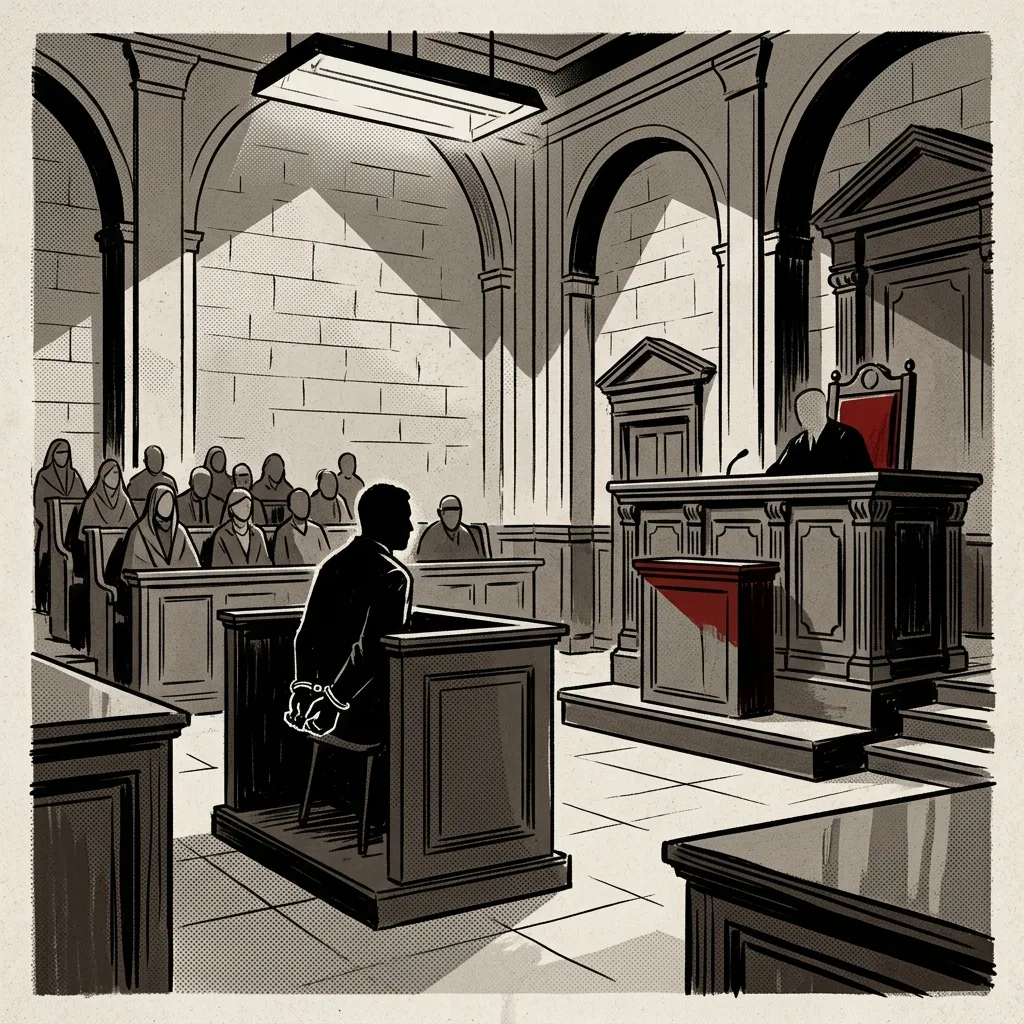
Syria has commenced its first public trial of officials from the ousted government of former President Bashar Assad, marking a significant step in the country's transitional justice process following the regime's collapse in late 2024.
The Defendant and Charges
Atef Najib, former head of political security in Deraa province, appeared in court as the initial defendant facing charges described as "crimes against the Syrian people." According to Indian and Middle Eastern sources, Najib appeared in handcuffs in the Damascus courtroom. The proceedings represent what Syria's Justice Ministry has framed as a long-awaited moment for victims seeking accountability.
Meanwhile, Bashar Assad and his brother Maher, who have fled Syria, will face trial in absentia, according to reports. Their current whereabouts remain unspecified in the available coverage, though their relative Najib now stands as the first high-profile figure physically present to face justice.
Historical Context: The Deraa Connection
The choice to begin with cases tied to Deraa province carries symbolic weight. Russian sources provide detailed context: protests erupted in Deraa in 2011 following the arrest and alleged torture of 15 students accused of writing anti-government slogans during the Arab Spring uprisings. When security forces opened fire on demonstrations, the violence escalated into what became a 13-year civil war that claimed over half a million lives.
Najib's role as security chief in Deraa during this period places him at the center of events that sparked the broader conflict. Middle Eastern sources identify him specifically with these early abuses, though they provide less historical detail about the war's origins than Russian coverage.
The New Political Landscape
The trials occur under a transitional government led by Ahmed al-Sharaa, chief of Hayat Tahrir al-Sham (HTS). Russian sources characterize HTS as "an Al-Qaeda offshoot" and describe how this "jihadist group" led a rebel coalition in an 11-day offensive in late 2024 that toppled Assad. This framing emphasizes the group's militant origins.
Middle Eastern and Indian sources, by contrast, do not use terms like "jihadist" when describing the current authorities, instead focusing on the procedural aspects of the trials and the transitional justice framework. They present the new government primarily through its judicial actions rather than its militant history.
Russian coverage notes that a Moscow- and Ankara-brokered truce in 2020 had ended major fighting for nearly four years before the 2024 offensive, highlighting Russia's prior role as a conflict mediator. This detail appears absent from other regional coverage, which does not mention Russian involvement in earlier peace efforts.
Justice Ministry Announcements
Syria's Justice Ministry announced the proceedings would begin with Deraa-related cases, positioning this as part of a broader transitional justice effort. The new authorities have arrested numerous Assad-era officials and pledged public trials as part of efforts to restore public trust and unify the fractured country.
Russian sources add that Syria remains affected by "foreign intervention, including by the US," framing external actors as complicating factors in the country's reunification. This geopolitical dimension receives no mention in Middle Eastern or Indian coverage of the trials.
Courtroom Preparations
According to Justice Ministry statements, the Damascus criminal court has completed preparations and finalized judicial procedures for what officials describe as long-awaited public proceedings. The trials are explicitly framed within a transitional justice framework designed to ensure accountability while moving the country forward.
The public nature of these proceedings represents a departure from the secrecy that characterized Assad-era governance, signaling the new authorities' attempt to demonstrate transparency and rule of law.