
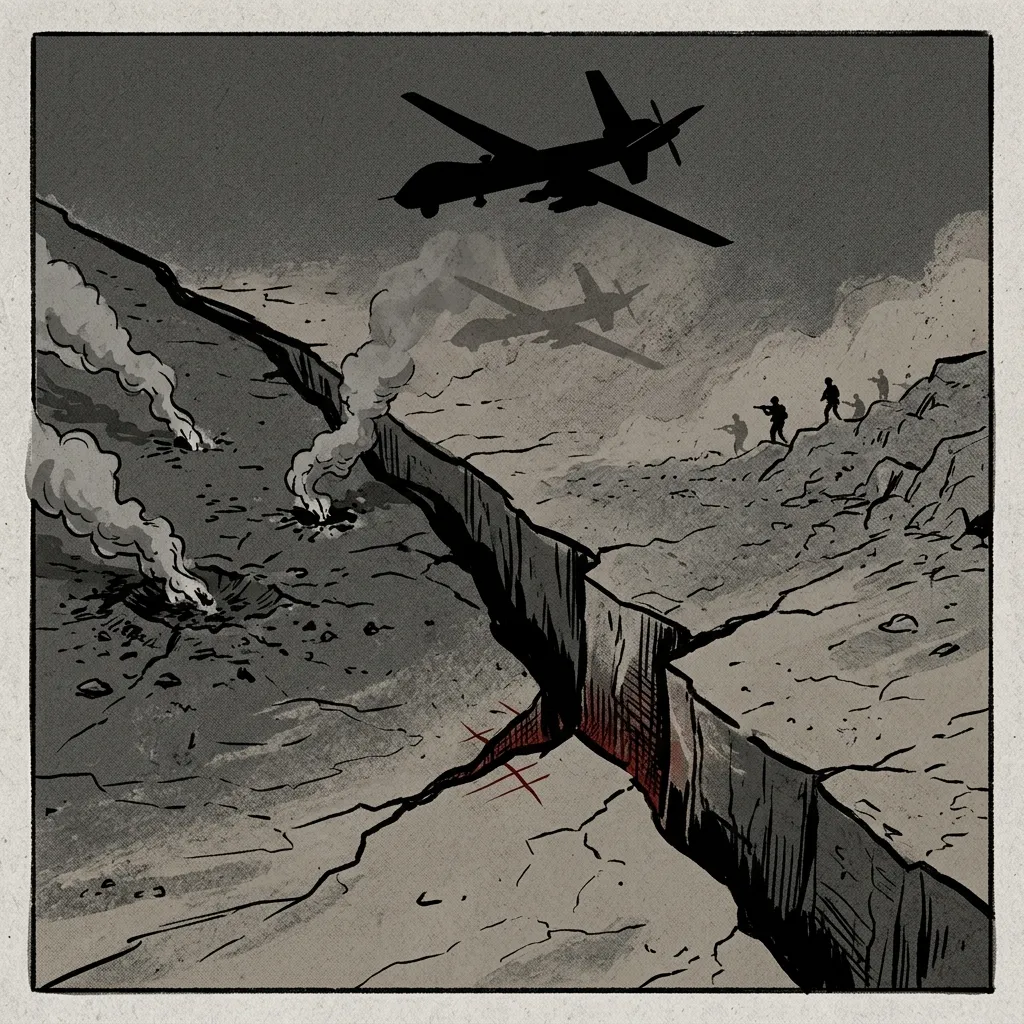
A diplomatic crisis has escalated between Sudan and Ethiopia, marked by the recall of Sudan's ambassador from Addis Ababa and a series of mutual accusations. Sudan's military government alleges that Ethiopia, with possible involvement from the United Arab Emirates, is responsible for drone attacks on Khartoum's airport and other sites. Ethiopia has countered with its own formal accusations, claiming the Sudanese military is supporting Ethiopian rebel groups and violating its territory. The exchange highlights the deepening tensions between the two Horn of Africa nations, with each side presenting a starkly different narrative of aggression and provocation.
Sudan's Accusations and Diplomatic Response Sources reporting from Sudan's perspective detail a series of alleged aerial attacks. According to Al Jazeera, Sudan has recalled its top diplomat from Ethiopia, directly blaming Addis Ababa for strikes on the capital's airport. This action is framed as a significant diplomatic rebuke. Africanews provides additional detail, noting that a drone was launched and subsequently intercepted before reaching Khartoum International Airport on a specific date, Monday. Officials from the airport are cited as the source of this information, and the report explicitly states Sudan's accusation against Ethiopia. The Hindu offers the most specific technical claim from the Sudanese side, reporting a military spokesperson's assertion that the government possesses evidence linking four separate drone strikes since March 1st to Ethiopia's Bahir Dar airport. This frames the incidents not as isolated events but as part of a sustained campaign originating from Ethiopian soil.
Ethiopia's Counter-Narrative and Allegations The Ethiopian government's position, as reported by AllAfrica, presents a completely different cause for the conflict. An official statement from Ethiopia's Foreign Ministry accuses the Sudanese Armed Forces and the military government in Khartoum of two primary offenses. First, it alleges that Sudan is providing support to what it labels "TPLF mercenaries," a reference to the Tigray People's Liberation Front, a group that was a central party in Ethiopia's recent civil war. Second, it accuses Sudan of violating Ethiopia's territorial integrity. This statement is explicitly noted as a direct response to the prior day's accusations from Sudan regarding the drone strikes. The Ethiopian framing shifts the focus from aerial attacks to ground-based subversion and border violations, painting Sudan as an aggressor supporting internal destabilization.
Framing the Conflict: Aggressor vs. Defender The regional and international sources frame the escalating dispute through distinct lenses, largely aligned with the accuser they are reporting on. Media outlets like Al Jazeera, Africanews, and The Hindu structure their reports around Sudan's claims of external aggression, emphasizing the recall of the ambassador as a key consequential action. The narrative centers on Sudan as a victim of cross-border drone attacks, with details on the targets (the airport) and the alleged point of origin (Bahir Dar). In sharp contrast, the reporting on Ethiopia's position, exemplified by AllAfrica, frames the conflict as a reaction to Sudanese provocations. Here, Ethiopia is presented as a state defending its sovereignty from foreign-backed rebel support and territorial encroachment. The involvement of the United Arab Emirates is mentioned by multiple sources as part of Sudan's accusation, but no source provides a UAE response or details on the nature of its alleged role, leaving that aspect of the narrative undeveloped.
The mutual expulsions of accusations and the severing of high-level diplomatic contact point to a significant deterioration in bilateral relations. The conflict appears to be operating on two parallel tracks: one concerning disputed aerial warfare and another concerning long-standing regional rivalries and support for opposing factions in internal conflicts. Sudan's narrative focuses on immediate security threats from the sky, while Ethiopia's focuses on perceived existential threats from cross-border support for its historical adversaries. This divergence makes de-escalation complex, as each government is responding to what it frames as a fundamentally different type of aggression. The situation risks further destabilizing an already volatile region, with the potential to draw in other regional actors, as hinted at by the allegations concerning the UAE.