
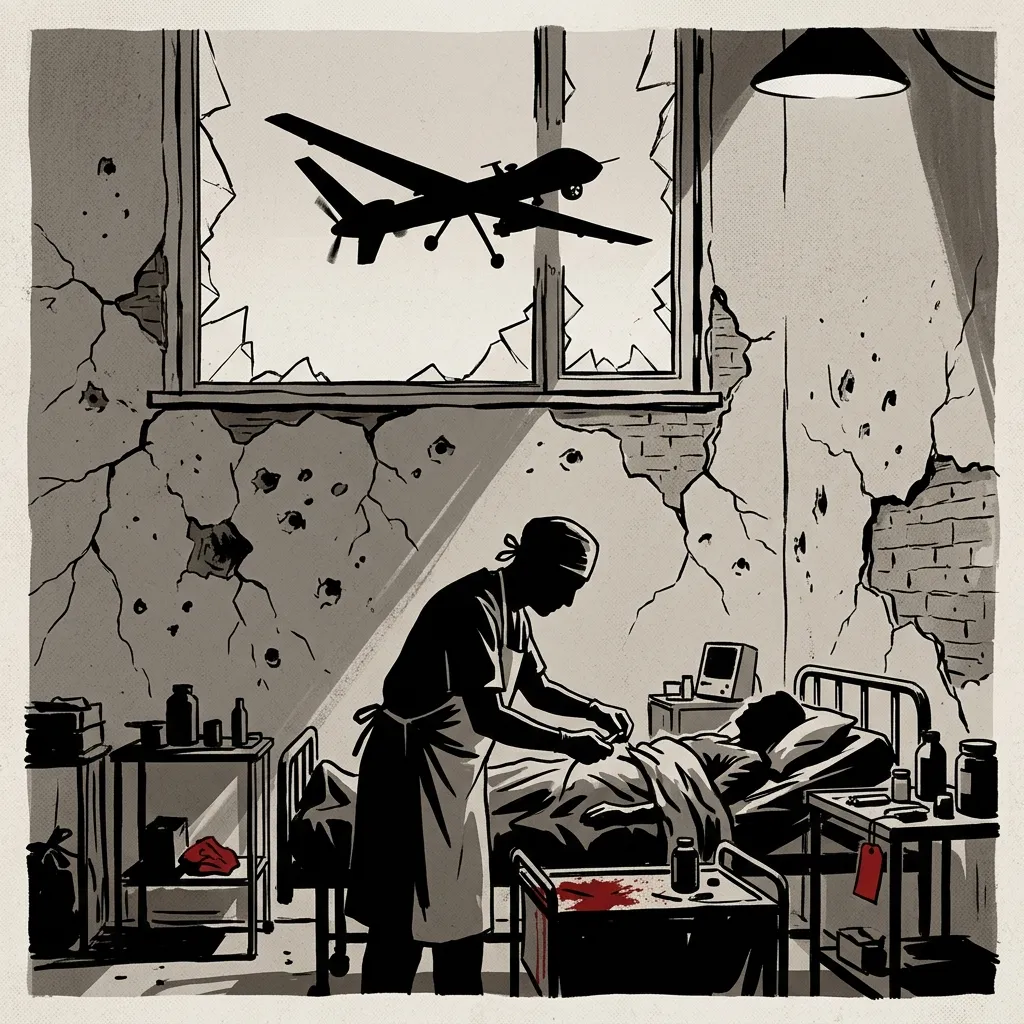
Frontline Medical Care and Targeted Aid Infrastructure
Sudan's ongoing conflict between the national army and the Rapid Support Forces (RSF) paramilitary group continues to devastate civilian infrastructure and humanitarian operations, with recent reporting highlighting both individual resilience and escalating violence.
According to Indian publication The Hindu, Dr. Jamal Eltaeb has maintained operations at Al Nao hospital in Omdurman, located just outside the capital Khartoum, despite the urban area repeatedly changing hands between the army and RSF fighters. The report focuses on the surgeon's efforts to keep the facility functioning amid the shifting battle lines, though specific details about casualties treated, resource constraints, or the duration of his efforts are not provided in the available excerpt.
Drone Warfare Targets Civilians and Aid Operations
Meanwhile, African news aggregator AllAfrica, citing Dabanga Radio, reports two separate drone strike incidents that occurred in late April, illustrating the conflict's expanding geographic scope and increasingly sophisticated weaponry.
On April 24, a vehicle transporting emergency shelter materials for the UN Refugee Agency (UNHCR) was destroyed in a drone strike near Tawila in North Darfur. The attack left the vehicle's occupants physically unharmed but destroyed supplies intended for more than 1,300 displaced families. The source does not attribute responsibility for this particular strike.
The following day, April 25, at least seven people were killed and 22 wounded in what AllAfrica identifies as an RSF drone attack on El Obeid in North Kordofan. This attribution directly names the paramilitary force as responsible for civilian casualties in a population center.
Humanitarian Access Under Fire
The destruction of the UNHCR vehicle represents a direct impediment to humanitarian assistance reaching vulnerable populations. Emergency shelter kits are critical supplies for families displaced by the conflict, which has created one of the world's largest displacement crises. The attack occurred as aid workers attempted to deliver materials to Tawila, suggesting that even clearly marked humanitarian convoys face threats in the conflict zones.
The targeting of El Obeid, a major city in North Kordofan, with drone strikes resulting in civilian casualties indicates the conflict's expansion beyond the initial flashpoints around Khartoum. The use of drone technology by paramilitary forces represents an escalation in military capabilities and raises questions about the sources of such equipment.
Medical Facilities on the Brink
The Hindu's focus on Dr. Eltaeb's work at Al Nao hospital in Omdurman underscores the extreme pressures facing medical professionals in Sudan. Omdurman, part of the greater Khartoum metropolitan area, has been a contested zone since the conflict erupted. Hospitals in such areas face challenges including supply shortages, staff safety concerns, and the treatment of combatants and civilians from both sides of the conflict.
The juxtaposition of these reports—individual medical heroism in one urban center and drone strikes destroying aid supplies and killing civilians in other regions—illustrates the multi-dimensional nature of Sudan's humanitarian catastrophe. Medical facilities struggle to function while aid delivery faces active obstruction, and civilian populations bear the consequences of both.
Broader Implications
Neither source provides comprehensive casualty figures or updates on the overall humanitarian situation, but both point to a protracted conflict with no apparent resolution. The use of drones by the RSF, as reported by AllAfrica, suggests external support or supply chains enabling the paramilitary group's military operations. The Hindu's narrative of medical perseverance offers a human dimension to the crisis, though without the broader context of how many such facilities remain operational or how many have been forced to close.
The international community's ability to provide humanitarian assistance appears increasingly constrained, with aid vehicles becoming targets and medical facilities operating under siege-like conditions.