
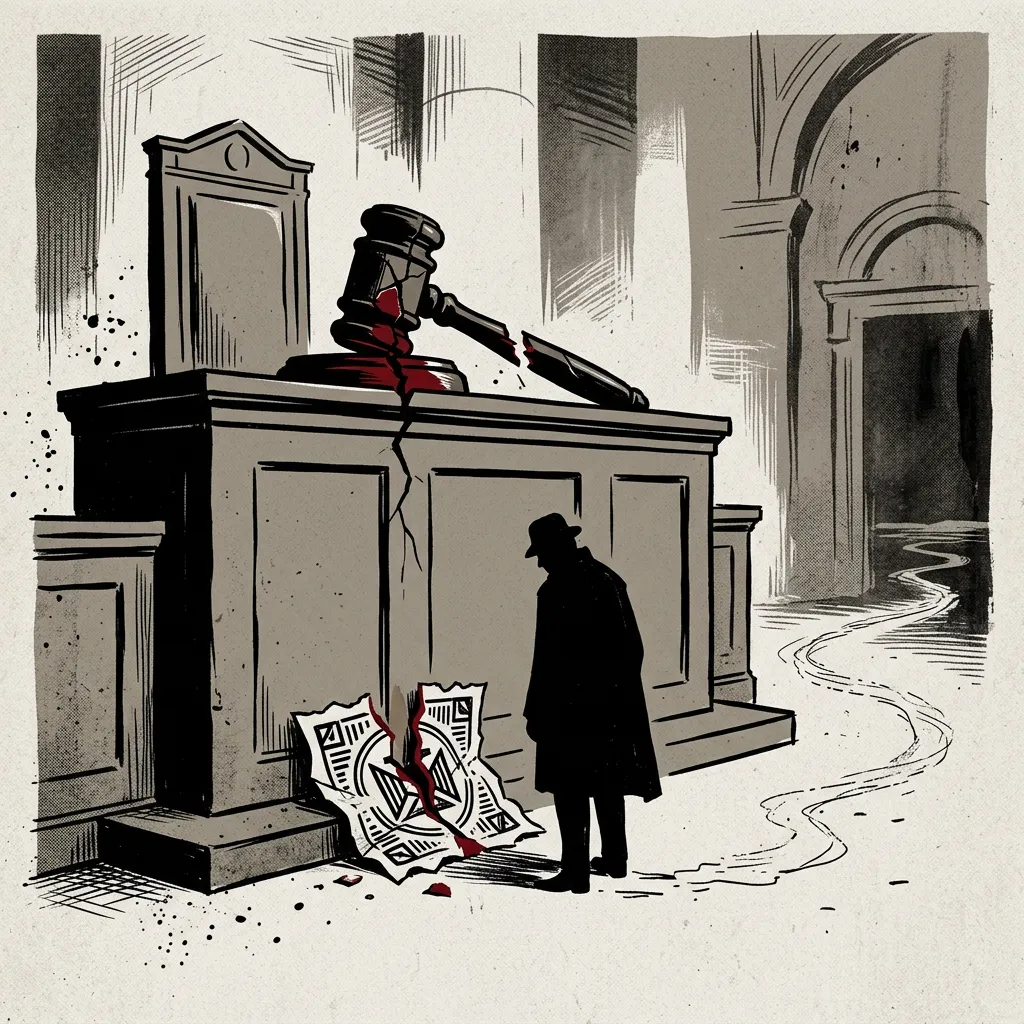
South Africa's highest court has ordered Parliament to establish an impeachment committee to investigate President Cyril Ramaphosa, reviving a process that was blocked in 2022. The ruling centers on the 2020 theft of a large sum of foreign currency from the president's private game farm, known as the Phala Phala scandal. The decision, delivered on May 8, 2026, overturns a parliamentary vote and mandates a fresh examination of a panel report that had previously found grounds for an inquiry.
The Court's Decision and Immediate Reactions The Constitutional Court ruled that Parliament acted unlawfully when it voted not to adopt a Section 89 impeachment inquiry panel report in December 2022. The court ordered that this report must now be considered by a dedicated impeachment committee. This judgment was sought by opposition parties, the Economic Freedom Fighters (EFF) and the African Transformation Movement (ATM). Following the ruling, EFF leader Julius Malema addressed supporters outside the court, accusing the ruling African National Congress (ANC) of voting to protect corruption and criminality. The BBC frames the outcome as a direct call for the president's resignation, highlighting the political pressure the ruling generates.
The Core of the Scandal and Parliamentary Block The scandal involves a heist at President Ramaphosa's Limpopo game farm in 2020, where a substantial amount of foreign cash was stolen. An independent panel established under Section 89 of the constitution later produced a report that concluded there was prima facie evidence justifying an impeachment inquiry into the president's conduct regarding the theft. However, an ANC majority in Parliament subsequently voted against adopting this report, effectively halting the impeachment process. The Constitutional Court has now found that this parliamentary decision was unconstitutional, as reported by sources like AllAfrica and Africanews.
Framing the Political Implications Different sources emphasize varying aspects of the ruling's political fallout. The Daily Maverick provides the most detailed domestic analysis, framing the judgment as "shape-shifting" and raising five fundamental political questions about South Africa's future, including whether President Ramaphosa will resign. It characterizes the court's order as a directive to "interrogate" the 2022 panel report. Al Jazeera and Africanews, while concise, focus on the court "reviving" the inquiry and overturning the parliamentary vote, presenting it as a procedural reset. The BBC adopts a more outcome-oriented frame, stating the president "faces a call to resign" directly as a consequence of the ruling. AllAfrica's aggregated reports capture the opposition's triumphant rhetoric and the procedural mandate from Chief Justice Mandisa Maya.
Divergences in Narrative Emphasis The reporting reveals clear differences in narrative focus. International outlets like Al Jazeera and the BBC distill the event into a clear headline: a top court revives an inquiry or creates a resignation call. Their summaries are procedural and impact-focused. African outlets, particularly the Daily Maverick, delve deeply into the domestic political mechanics and consequences. They discuss the ANC's role in blocking the initial report, the victory for specific opposition parties (EFF and ATM), and the looming questions about governance and the president's political survival. The Daily Maverick also uniquely references ancillary political stories, like a minister's "half-truths," situating the ruling within a broader context of political accountability debates in South Africa.
Synthesis of Broader Implications The Constitutional Court's ruling reinstates a formal constitutional mechanism to scrutinize the president's actions. It challenges the previous use of parliamentary majority power to shield a sitting president from inquiry. Regardless of the eventual outcome of the impeachment committee process, the immediate effect is a significant erosion of political security for President Ramaphosa and a validation of opposition-led legal challenges. The ruling underscores the ongoing tension between party political power and constitutional oversight in South Africa, setting a precedent for how similar processes may be handled in future. The mandated committee now becomes the next focal point for a scandal that has lingered for years, ensuring the Phala Phala affair will continue to dominate the nation's political discourse.