
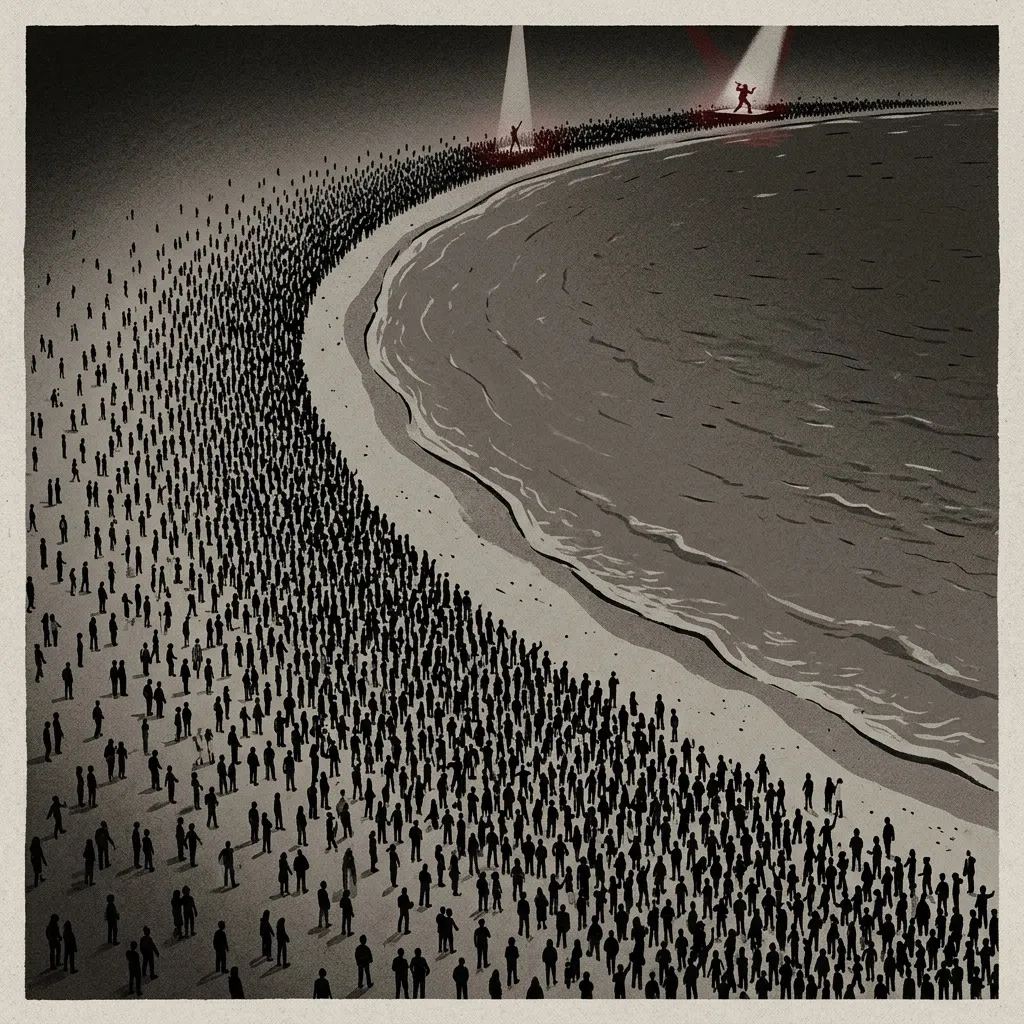
A free concert by Colombian superstar Shakira on Rio de Janeiro's Copacabana beach attracted an estimated two million people, according to local authorities. The event, part of a municipal series featuring major international artists, was reported as a significant cultural and economic success, with heavy emphasis placed on its smooth logistical execution and minimal serious incidents despite the enormous crowd.
Reporting on Scale and Cultural Significance The Brazilian state news agency, Agência Brasil, provides the most detailed account, framing the concert as a landmark event within the city's official "Todo Mundo no Rio" (Everyone in Rio) project. Its reporting highlights that Shakira was the third major international act in the series, following Madonna and Lady Gaga in previous years. The coverage emphasizes the artist's connection to Brazil, noting she opened the show wearing the nation's colors and speaking in Portuguese about her long history with the country. A drone show depicting a she-wolf, a symbol associated with the singer, preceded her performance. The agency also details significant Brazilian cultural collaborations, reporting that Shakira shared the stage with four local artists: Anitta, Caetano Veloso, Maria Bethânia, and Ivete Sangalo. Furthermore, it notes the performer dedicated parts of the show to women, particularly single mothers. The BBC's brief report corroborates the scale and the concert's place in the series, stating it followed similar shows by Lady Gaga and Madonna.
Framing Public Safety and Logistical Operations A primary narrative from Agência Brasil focuses on public security and the effectiveness of official planning. One article is dedicated almost entirely to this theme, headlined by the claim that no serious incidents occurred despite the massive turnout. It details police actions, reporting six detentions, with only one arrest made in the act for a crime committed during the event—a man carrying stolen bags. Other detentions are attributed to facial recognition cameras identifying individuals with outstanding warrants and a license plate reader flagging a stolen motorcycle. The article lists the seizure of 185 potentially dangerous items like knives and scissors at security checkpoints and notes the judicial system's on-site presence led to 16 recorded incidents, mostly for drug possession and theft, with nine resulting in preventive detention. This detailed breakdown presents the event as a controlled environment managed by coordinated state forces.
Economic and Municipal Impact The Brazilian source extensively promotes the concert's economic benefits and its role in municipal strategy. It cites an estimate from the Municipal Economic Development Secretariat that the event injected approximately 800 million Brazilian reals into the local economy through hospitality, dining, transport, and commerce. The reporting positions the concert series as a successful tourism driver, claiming a 34.2% increase in visitor numbers during the 2024 Labor Day holiday compared to the prior year, and a 90.5% rise in 2025 compared to 2023. It further states that tax revenue linked to tourism and events was 23.2% higher in May 2025 than in 2023, framing the concerts as boosting Rio's international profile and stimulating year-round tourism. The logistical aftermath is also covered, with reports of 362 tons of waste collected by 2,000 sanitation workers and 400 medical treatments administered at three first-aid posts, with 64 people requiring hospital transfer for issues like malaise, minor trauma, or alcohol overconsumption.
Framing the Event: Celebration vs. Administrative Showcase The framing of the event differs notably between the international and domestic sources. The BBC's coverage is succinct and global, presenting it as a major pop culture happening—a "huge crowd" attending a free concert by a global star on an iconic beach. Its framing is that of a spectator event. In contrast, Agência Brasil's reporting, while celebratory of the artist and the crowd's enthusiasm, is fundamentally an administrative and promotional showcase for the city government. The narrative is one of successful governance: a safely managed mega-event that delivers cultural prestige, direct economic stimulation, and long-term tourism growth. The meticulous detailing of police operations, waste management, medical services, and economic statistics serves to highlight the competency and planning of municipal authorities in executing such a complex undertaking. The concert is framed not just as a party, but as a proof-of-concept for a sustained municipal policy.
Synthesis and Broader Implications The synthesis of reports presents Shakira's Copacabana concert as a multi-faceted phenomenon. On a global cultural level, it reaffirms the beach's status as a premier venue for blockbuster free performances by the world's biggest music acts. From a local Brazilian perspective, particularly through the state-affiliated lens, the event is leveraged to demonstrate effective public administration, promote economic gains, and bolster the city's brand. The emphasis on safety statistics and logistical control also subtly addresses perennial concerns about crime and organization in Rio, aiming to project an image of security and capability to both domestic and international audiences. The concert, therefore, transcends mere entertainment, functioning as a tool for urban marketing and a testament to a specific model of hosting large-scale public events.