
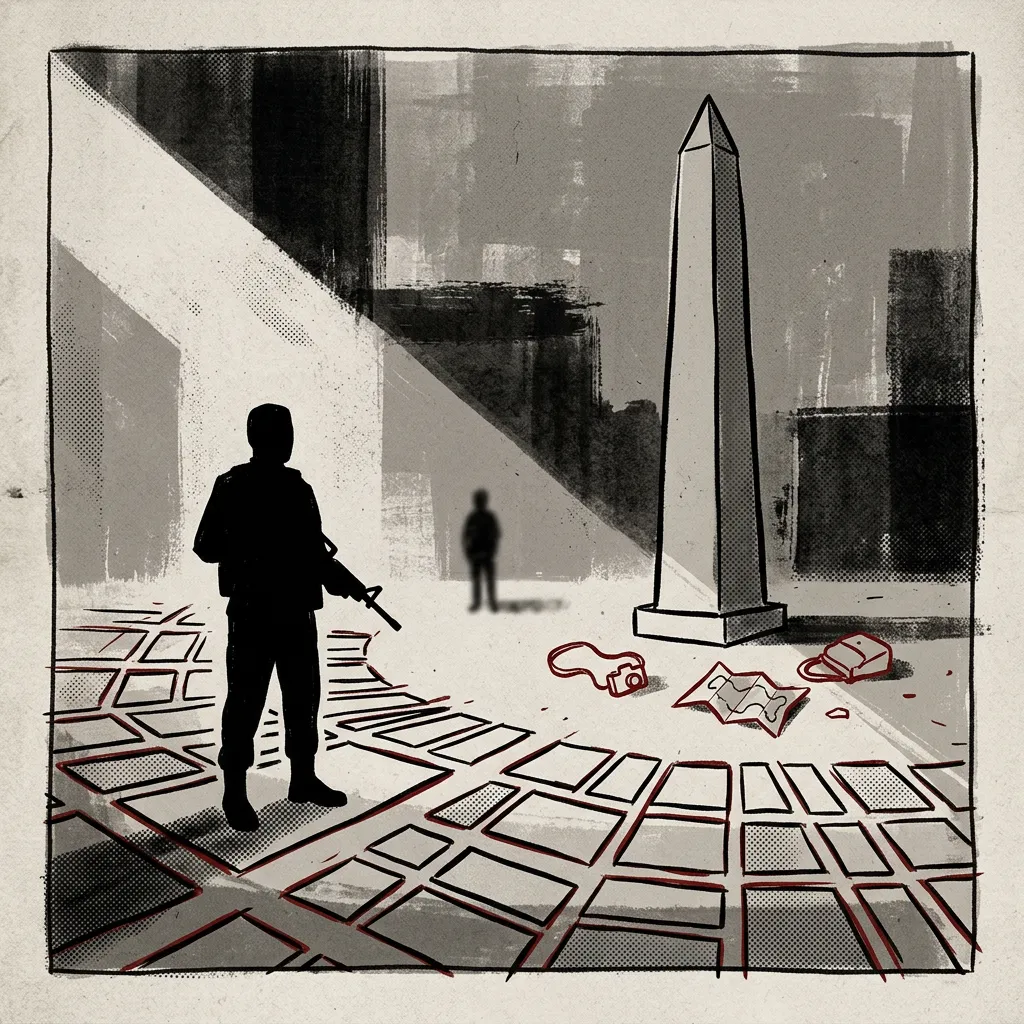
A shooting incident involving U.S. Secret Service agents near the White House complex on Monday resulted in an armed suspect being shot and a child bystander wounded, prompting a brief lockdown of the presidential residence. The event occurred in the late afternoon near the Washington Monument and National Mall, a heavily trafficked tourist area. While the basic sequence of events is consistent across reports—agents confronted a suspicious armed individual, gunfire was exchanged, and the suspect was shot—regional news outlets frame the incident with differing emphases on security context, political implications, and the impact on bystanders.
Source Perspectives and Framing
Politico Europe provides the most detailed account, explicitly situating the event within a pattern of recent security breaches and political violence in Washington. The report notes the incident occurred about a week after an alleged assassination attempt on President Donald Trump at the White House Correspondents’ Dinner and months after a separate fatal shooting targeting National Guard soldiers blocks away. This framing presents the event as part of a concerning trend, highlighting that White House officials had just convened a meeting to review security protocols. The report also specifies that Vice President JD Vance's motorcade had passed through the area shortly before the shooting, though no direct link is established, and details the non-life-threatening injury to a child bystander.
RT (Russia) offers a similar level of operational detail but employs distinct framing. Its headline emphasizes the White House lockdown and includes multimedia elements like video and photos. The report notes President Trump was attending an event that continued uninterrupted, framing the government's response as contained. A significant divergence is RT's inclusion of a link to a separate article about "high-quality footage" from the prior Correspondents’ Dinner shooting, implicitly connecting the two events. While it reports the child's injury may have been caused by the suspect's fire, the overall narrative focuses on the disruption and the security apparatus's response.
The Hindu (India) and Folha de S.Paulo (Brazil) offer more concise, wire-service-style reports focused on the core facts. The Hindu highlights the proximity of Vice President Vance's motorcade as a key detail. Folha de S.Paulo summarizes the Secret Service statement, noting the suspect fired first before fleeing and being shot, and confirms the incident led to a brief White House lockdown. Their framing is straightforward and incident-specific, with less emphasis on broader political or security contexts.
Clarín (Argentina) and Daily Maverick (South Africa) present abbreviated summaries. Clarín's report is notable for specifying that Trump was about to start a meeting and explicitly links the event to the heightened alert following the Correspondents’ Dinner breach, describing the prior suspect as armed with a pistol, shotgun, and knives. Daily Maverick, sourcing Reuters, provides the most basic account, stating the Secret Service confronted a "suspicious individual" who fired at officers before being shot.
Framing the Conflict and Security Narrative
The central divergence among sources lies in how they contextualize the shooting within the U.S. political and security landscape. European and Russian outlets explicitly frame it as a symptom of deeper instability. Politico Europe constructs a narrative of escalating political violence, directly referencing two other recent attacks to suggest a pattern that is worrying security officials. RT also connects the dots to prior incidents, though its presentation—through embedded tweets and video—focuses more on the spectacle of the lockdown and the potential for chaos near the seat of power.
In contrast, Latin American and Indian reports primarily treat it as a discrete security event. While Clarín mentions the prior Correspondents’ Dinner incident, it does so as a reason for the current "alert" status rather than to argue for a trend. The Hindu and Folha stick closely to the official statements regarding the motorcade and the exchange of fire, avoiding speculative connections. The African source offers no context at all, presenting only the immediate facts from the agency briefing.
Another key framing difference concerns the injured child. Politico Europe and RT give prominence to this detail, with RT specifying the injury was non-life-threatening and may have come from the suspect's bullet. Other sources either do not mention the bystander (Daily Maverick, Folha) or only allude to it indirectly through the context of a crowded tourist area.
Conclusion: A Spectrum of Interpretation
The synthesis reveals a spectrum of interpretation around a singular violent event. For U.S.-facing and European media, the story is inextricably linked to the nation's contemporary political tensions and security challenges. For other global outlets, it is a noteworthy incident of violence in a symbolic location, reported with varying degrees of ancillary detail. All sources agree on the central actions of the Secret Service and the suspect, but the chosen context—whether a pattern of attacks, the movement of dignitaries, or the disruption to the White House—shapes the ultimate narrative presented to their audiences, reflecting differing editorial priorities and perceptions of American political stability.