
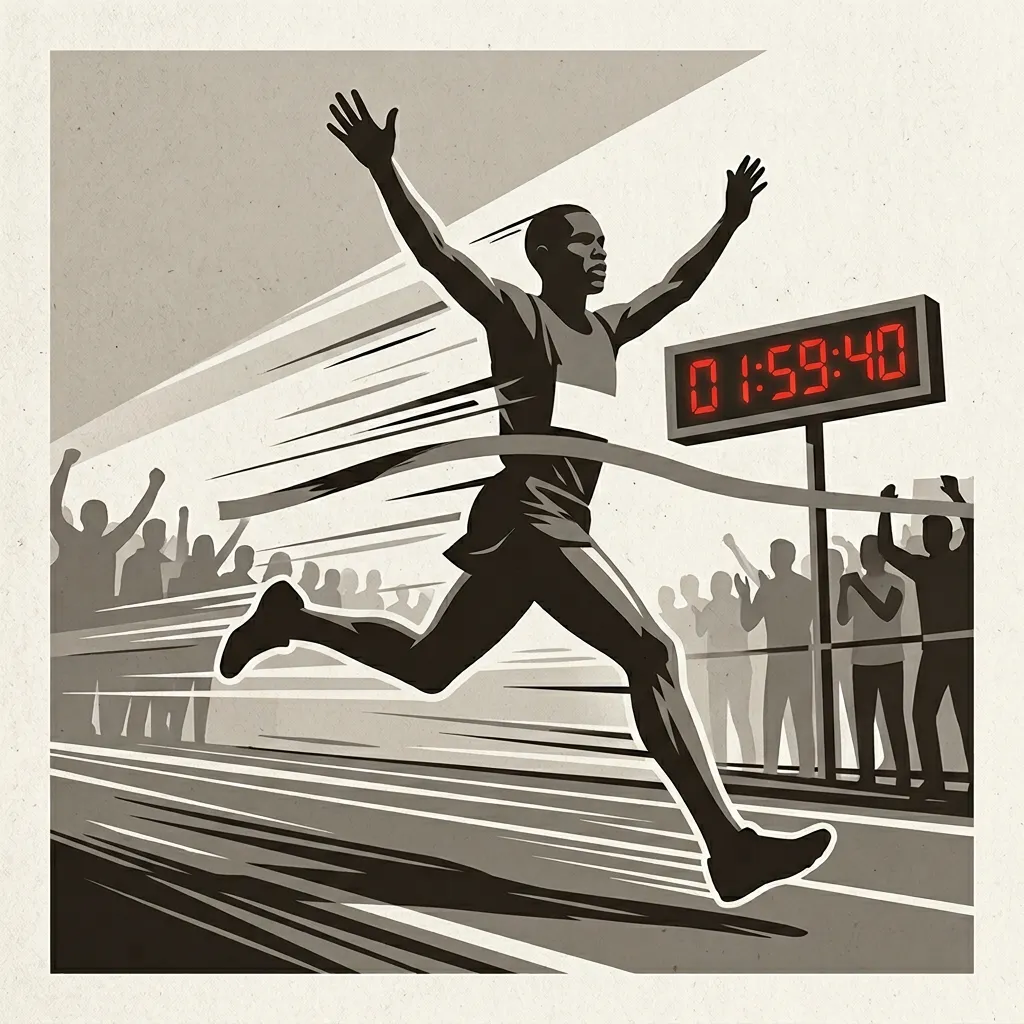
Sabastian Sawe Breaks Two-Hour Marathon Barrier in London
Kenyan distance runner Sabastian Sawe has achieved what many considered the final frontier in marathon running, becoming the first athlete to officially complete the 42.195-kilometer distance in under two hours at the London Marathon.
The Historic Achievement
Both European and African news outlets report that Sawe accomplished this landmark feat at the London Marathon, though the sources provide minimal detail about the specific time recorded or the conditions under which the record was set. The BBC frames the achievement through Sawe's personal perspective, highlighting his own account of the accomplishment. Africanews emphasizes the official nature of the record, distinguishing it implicitly from previous attempts that may not have met competitive standards.
Context and Significance
The two-hour marathon barrier has long represented an aspirational threshold in distance running. Previous attempts to break this mark have generated debate within athletics circles about what constitutes an official record versus a staged achievement. Africanews specifically notes this is the "first official" sub-two-hour marathon, a qualifier that suggests awareness of prior efforts that did not meet regulatory criteria for record recognition.
The BBC's coverage centers on the Kenyan athlete's experience, presenting the story as a first-person narrative of barrier-breaking. This framing positions Sawe as the protagonist in a personal achievement story. Meanwhile, the African outlet's emphasis on the historical nature of the event and its official status frames the accomplishment within the broader context of athletic record-keeping and competitive legitimacy.
Regional Athletic Dominance
Both sources identify Sawe as Kenyan, acknowledging the East African nation's continued dominance in distance running. Kenya has produced numerous world-class marathoners and middle-distance runners over recent decades, making Sawe's achievement part of a larger national tradition in the sport. Neither source, however, provides background on Sawe's previous competitive history or how this performance compares to his earlier races.
Information Gaps
Notably, both reports are extremely brief and lack several details typically included in major sporting achievement coverage. Neither source provides the exact finishing time, split times at various points in the race, weather conditions, the names of pacers if used, or quotes from Sawe beyond the BBC's reference to his perspective. The absence of these standard elements suggests either very early reporting immediately following the event or limited access to comprehensive information.
The BBC mentions that Sawe spoke about "becoming the first person" to achieve this mark, while Africanews describes him as "the first man" to do so officially. This minor difference in language—"person" versus "man"—may reflect editorial style rather than substantive distinction, though it could also indicate different understandings of whether the record applies across all gender categories or specifically to men's competition.
The London Marathon Setting
Both sources agree the achievement occurred at the London Marathon, one of the World Marathon Majors and a race known for fast times due to its relatively flat course and typically favorable spring conditions. The choice of London as the venue for this historic attempt, rather than other major marathons, is not explained in either report.
The lack of detail about whether this was during the elite race, what position Sawe finished in overall, or whether other runners also achieved exceptional times leaves questions about the competitive context of the achievement.