
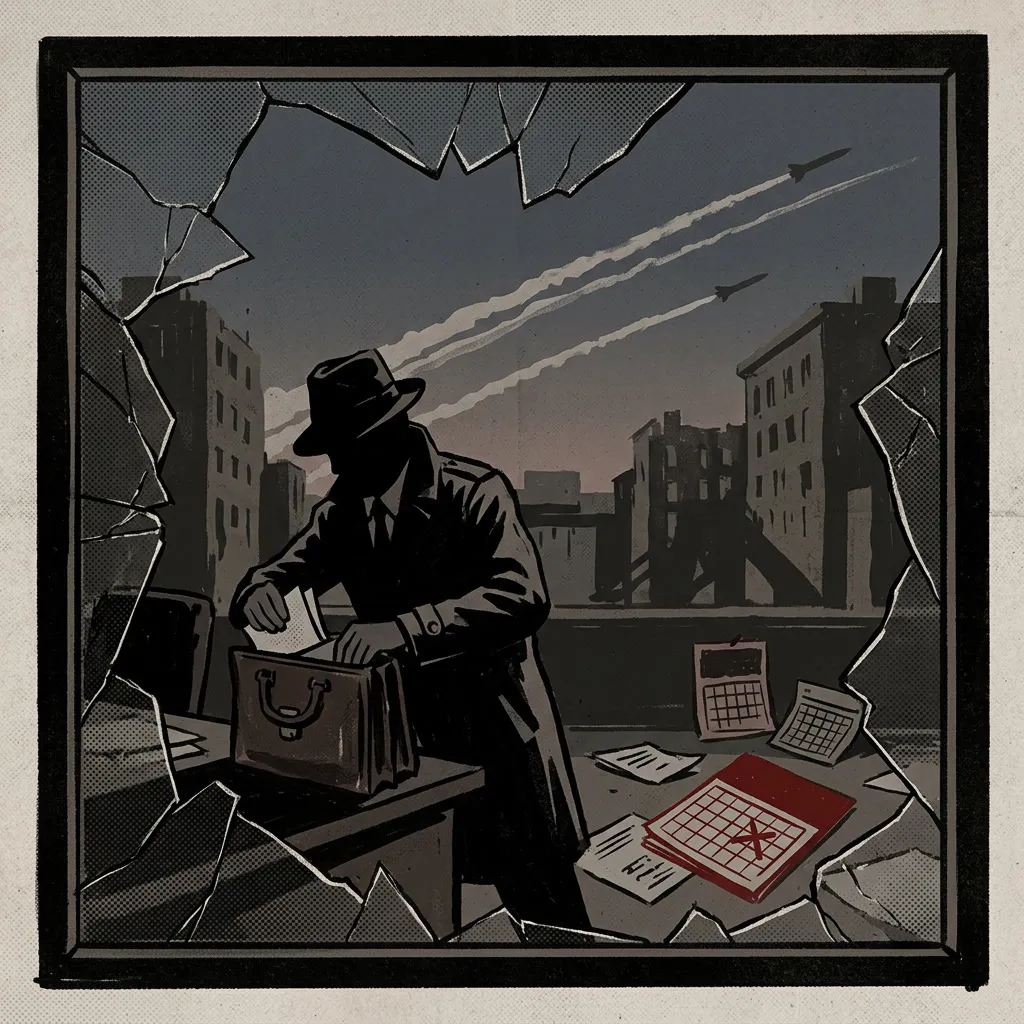
Russia has issued a formal warning to foreign diplomatic missions, urging them to evacuate personnel from Kyiv ahead of the May 9 Victory Day commemorations. The warning, citing the threat of Russian retaliatory strikes on the Ukrainian capital, has escalated tensions amid conflicting claims about ceasefire agreements and the origins of the current crisis. The situation highlights the precarious state of the conflict and the potential for a dangerous new phase of escalation centered on symbolic dates.
According to a report from the independent Russian outlet Meduza, Russia's Foreign Ministry circulated a diplomatic note urging the advance evacuation of diplomats from Kyiv. Foreign Ministry spokeswoman Maria Zakharova was quoted directly, stating the note recalled a May 4 threat from Russia's Defense Ministry and warned of the "inevitability of a Russian retaliatory strike on Kyiv" should Ukraine carry out an attack on May 9. Zakharova framed the Russian position not as aggression but as an "inevitable response to aggression." The Meduza report provides significant context, detailing that the immediate escalation stemmed from a misquoted version of Ukrainian President Volodymyr Zelensky's remarks. It states that due to a translation error, Zelensky's comments about Russian fears of Ukrainian drones flying over a scaled-back Moscow parade were misinterpreted as a direct threat to strike the Russian capital. Russia's Defense Ministry then used this inaccurate quote to justify its retaliatory threats on the same day.
European publication Le Monde presents a more concise summary, stating that Moscow said it would launch retaliatory strikes on Ukraine's capital if its Victory Day commemorations were disrupted. It contrasts this with a statement from President Zelensky, who said Ukraine would 'respond in kind' to Russia's attacks. This framing presents a direct, escalating tit-for-tat dynamic without delving into the disputed origins of the threats.
Al Jazeera's report offers a brief, headline-driven account, summarizing the event as Moscow threatening retaliatory strikes if Ukraine attacks Russia during the Victory Day commemorations. This framing implicitly accepts the Russian narrative's premise—that an Ukrainian attack is a potential trigger—without examining the contested claims about Zelensky's statements that underpin it.
Framing the Escalation
The sources diverge sharply in how they contextualize the chain of events leading to the evacuation warning. Meduza, providing the most detailed chronology, explicitly identifies a factual dispute. It reports that the Russian military's threat was based on a misinterpretation of Zelensky's words, an error that had emerged hours before the Defense Ministry's statement was published. This framing suggests the escalation may be rooted in a misunderstanding or a deliberate exploitation of one. In contrast, both Le Monde and Al Jazeera present the Russian warning as a reaction to a clear, existing threat from Ukraine, albeit with different levels of detail. Le Monde mentions Zelensky's promise to 'respond in kind,' linking it to alleged Russian truce violations, while Al Jazeera simply states the condition for Russian strikes is a Ukrainian attack. The Meduza report also details a parallel dispute over a temporary ceasefire, noting that both sides announced intentions to halt fighting but did not agree on timing, and that Zelensky has since accused Russia of violating its own declared truce.
In conclusion, the diplomatic evacuation warning underscores how symbolic dates like Victory Day become flashpoints in the conflict, laden with the risk of severe escalation. The differing reports reveal a fundamental disagreement over what initiated this specific crisis: whether it was a direct Ukrainian threat, as implied by Russian state sources and summarized in some international reports, or a cycle of threats ignited by a miscommunication, as detailed by independent Russian media. This divergence in narrative is critical, as it shapes the perception of who is initiating escalation and who is merely responding, influencing diplomatic and public responses to the heightened alert in Kyiv.