
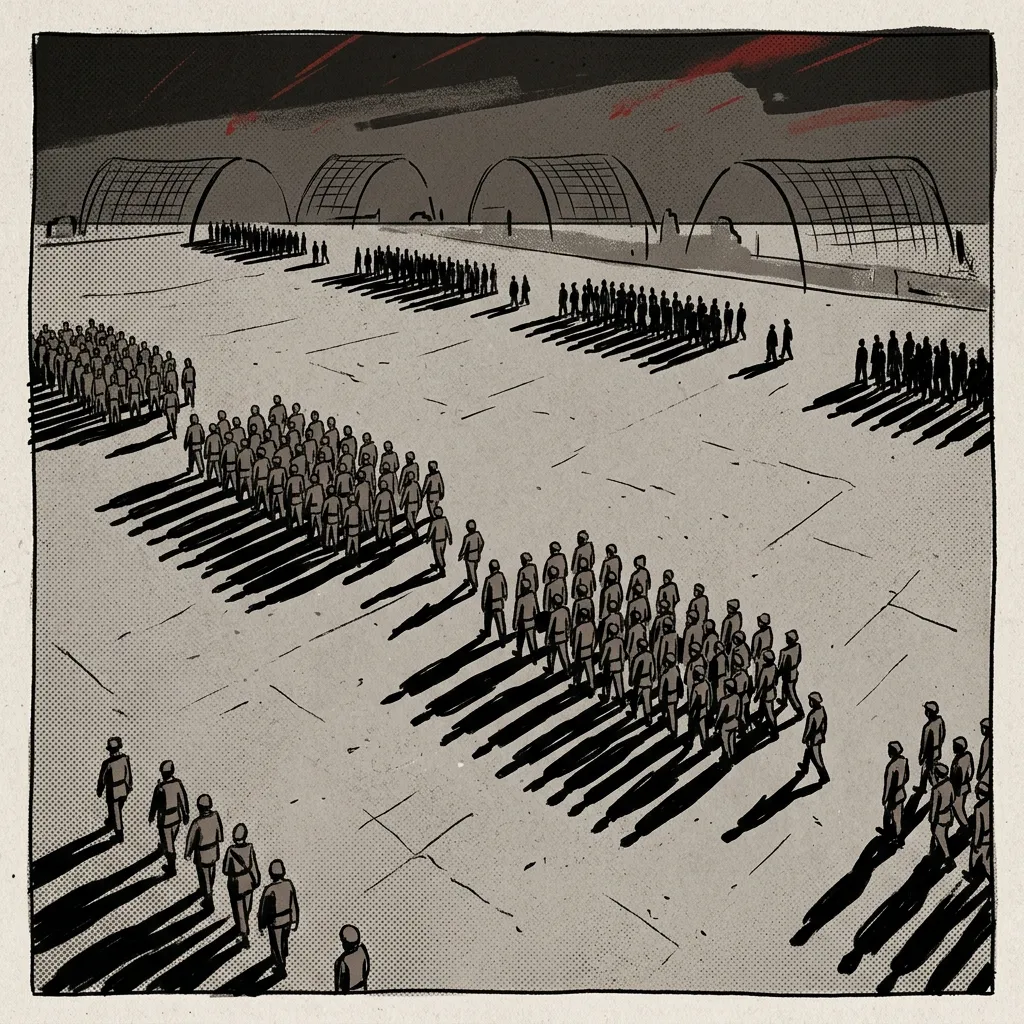
Russia's annual Victory Day commemorations, marking the Soviet defeat of Nazi Germany, are being held under unprecedented restrictions and security concerns in 2026. For the first time in nearly two decades, the traditional military parade in Moscow's Red Square will proceed without armored vehicles or heavy weaponry. This scaling back coincides with a major Ukrainian drone offensive targeting the capital region and widespread cancellations of related events across the country, painting a picture of a somber and heavily fortified celebration in the fifth year of the ongoing war.
Framing the Event: A Sign of Strain or Prudent Security?
Sources differ significantly in their interpretation of the scaled-back parade. The BBC frames the absence of military hardware as a direct signal of the war's toll, suggesting the move is "a sign Ukraine war not going to plan." This analysis implies the decision reflects a need to conserve equipment for the front lines or an inability to stage a full display. In contrast, Russian authorities, as reported by Meduza and Clarin, position the changes primarily as security measures. Clarin's report focuses on the "maximum alert" status of Russian security forces, who "fear that Ukrainian drones or missiles could reach the capital" during the parade. The Digital Development Ministry, cited by Meduza, explicitly stated that mobile internet restrictions in Moscow on May 9 were "necessary to ensure security."
The Scale of the Drawdown and Security Incidents
Meduza provides the most granular data on the national scale of the event's reduction. The independent outlet compiled lists showing that parades have been entirely canceled in at least 22 cities, including regional capitals like Rostov-on-Don and Nizhny Novgorod, as well as in occupied Crimea. Another 27 cities, including Moscow and St. Petersburg, will hold events in a "reduced format," defined as proceeding without modern military hardware, with scaled-back infantry columns, or using only vintage vehicles. The symbolic "Immortal Regiment" march, where citizens carry portraits of WWII veterans, has been moved online in several locations.
This backdrop of cancellations is set against a spike in aerial attacks. A separate Meduza report details that on May 7, Moscow's mayor claimed over 30 drones were shot down approaching the city, causing no casualties but leading to roughly 100 flight cancellations or delays at the capital's airports. The report notes that Russia's Defense Ministry claimed a nationwide interception of 347 Ukrainian drones that night, a figure described as close to a record. These incidents occurred despite conflicting ceasefire announcements. Meduza reports that Russia declared a unilateral ceasefire for May 8-9, while Ukraine announced one beginning May 6. Ukrainian authorities subsequently accused Russia of violating this truce.
Regional Perspectives on the Context
The Hindu places the heightened tensions squarely within the context of failed diplomacy, noting the drone attack followed after "Moscow shunned ceasefire offer" and as "U.S.-led peace efforts gain no traction." This framing emphasizes the breakdown in international negotiations as a catalyst for the military escalation around the symbolic date. Clarin's coverage, while also highlighting security fears, frames its report as a speculative inquiry, asking in its headline whether Ukraine could launch an attack on Red Square during the military parade itself. This focuses reader attention on the potential for a dramatic, symbolic strike.
Framing the Conflict: Celebration Versus Vulnerability
The narratives surrounding Victory Day 2026 reveal a stark contrast in framing. Official Russian sources and reports attentive to them (like Clarin's security angle) present a state taking robust, pre-emptive measures to protect a sacred national holiday from external threats. The event itself is still portrayed as proceeding, albeit in a modified, secure manner. The BBC and Meduza, through their detailed reporting on parade cancellations and the scale of drone attacks, frame the situation differently. Their coverage underscores the war's pervasive impact, suggesting the celebrations are being fundamentally reshaped—and in many places erased—by the conflict's realities. The absence of tanks in Moscow is not just a security detail but a potent symbol of a war consuming resources and imposing limits on state pageantry.
Conclusion: A Celebration Under Shadow
The synthesis of reporting indicates that the 2026 Victory Day is unfolding as a paradox. It is a commemoration intended to project national strength and historical triumph, yet it is being marked by unprecedented austerity, geographic contraction, and a fortress-like security posture in the capital. The major drone attacks immediately preceding the event validate official security concerns but also highlight the reach of the Ukrainian military. Whether interpreted as a prudent adaptation to wartime threats or a visible sign of strain, the scaled-back ceremonies reflect a nation whose contemporary conflict is directly impinging upon its most cherished historical narrative. The divergences in reporting focus either on the symbolic meaning of the drawdown or its immediate security rationale, but all sources converge on depicting a highly tense and altered commemorative landscape.