
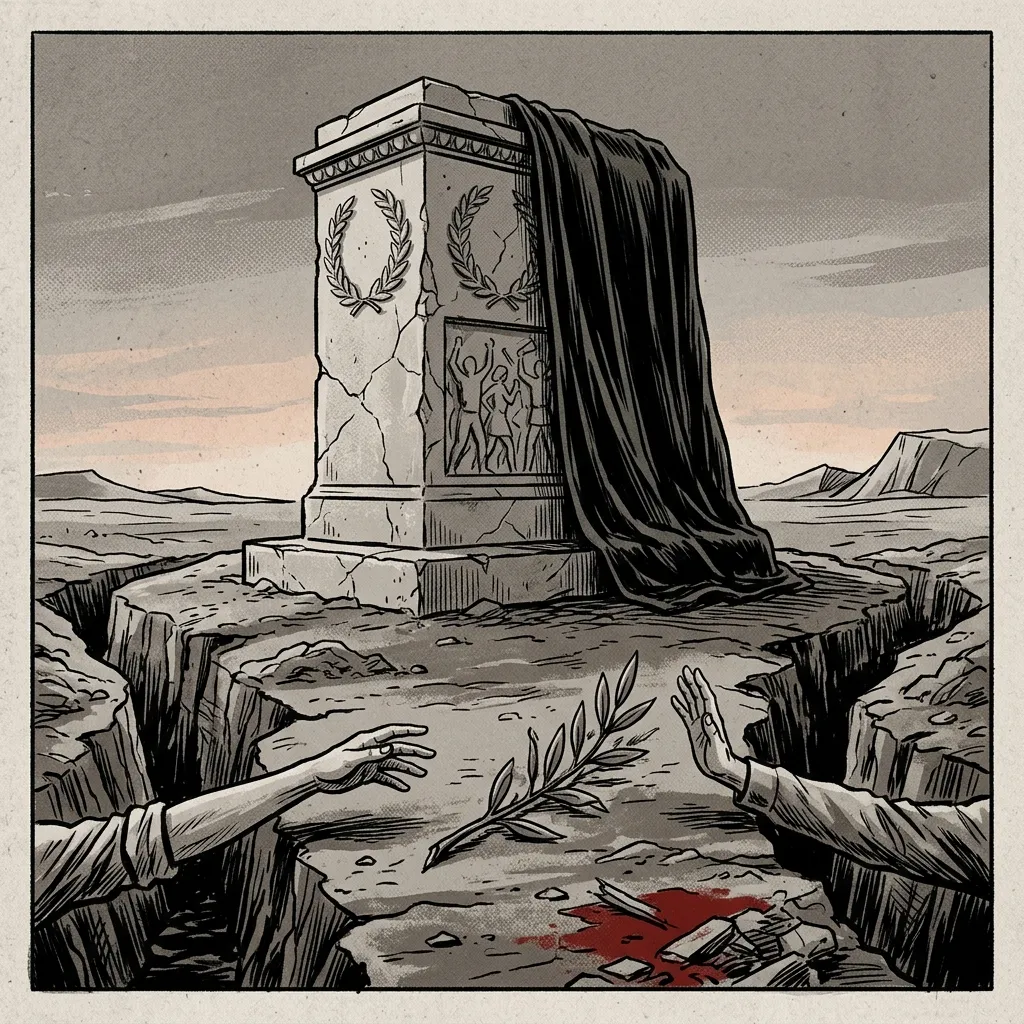
Russian President Vladimir Putin has declared a unilateral two-day ceasefire in the conflict with Ukraine for May 8 and 9, 2026, to coincide with Russia's commemoration of the victory over Nazi Germany in World War II. The announcement, made by Russia's Defense Ministry, has been met with immediate rejection and skepticism from Ukraine, which was not formally consulted, and comes amid heightened tensions and military activity in the lead-up to the symbolic date.
According to the Russian Defense Ministry's statement, as reported by sources including the Daily Maverick and Meduza, the ceasefire is an order from President Putin. The ministry expressed an expectation that Ukrainian forces would also halt hostilities. However, the announcement was coupled with a stark warning: should Ukraine attempt to disrupt Victory Day celebrations, Russian forces would carry out a massive retaliatory missile strike on central Kyiv, a threat they claim to have previously withheld. The ministry explicitly advised civilians and foreign diplomatic staff in Kyiv to leave the city. The Kremlin has asserted that Ukraine's consent to the ceasefire is not required, framing it as a sovereign decision by Putin.
Ukrainian President Volodymyr Zelensky's response, detailed extensively by the independent Russian outlet Meduza, directly contradicts the Russian narrative of coordination. Zelensky stated that Russia never officially notified Ukraine of the ceasefire or invited it to participate. He dismissed the short-term halt as "meaningless" and, in stronger terms, characterized a one-day ceasefire while killing Ukrainians before it as dishonest. Zelensky reiterated Ukraine's desire for a lasting, comprehensive ceasefire rather than what he described as a brief period of security for a military parade in Moscow.
Further context to the Ukrainian position is provided by reports on recent military dynamics. The BBC notes that the Russian ceasefire declaration follows a Ukrainian drone strike on an upmarket high-rise in Moscow, highlighting ongoing cross-border attacks. More pointedly, Zelensky, as cited by Meduza and echoed in Al Jazeera's framing, offered a psychological interpretation of Russian actions. He suggested that the scaled-back format of Moscow's Victory Day parade—reportedly conducted this year without military hardware—is a sign of Russian "fear" of Ukrainian drone capabilities. Zelensky argued that Russian authorities could not risk displaying equipment for fear of drones flying over Red Square, interpreting this as a sign of weakness.
Framing the Announcement
The reporting on this event reveals sharply divergent narratives centered on legitimacy, motive, and military reality. Russian state-aligned messaging, as conveyed through its Defense Ministry, frames the ceasefire as a solemn, unilateral humanitarian gesture tied to a sacred national holiday, portraying Russia as the responsible actor setting terms for a temporary peace. The accompanying threat against Kyiv is presented as a justified, defensive measure to protect that commemorative space.
Ukrainian and independent Western sources deconstruct this framing entirely. They present the ceasefire not as a genuine peace overture but as a tactical, self-serving move designed to secure a propaganda spectacle in Moscow free from military embarrassment. The lack of prior notification undermines claims of goodwill, while the explicit threat against Kyiv is highlighted as evidence of coercion rather than diplomacy. The Ukrainian counter-narrative, emphasizing Russian "fear" of drones and the parade's diminished scale, seeks to flip the script on Russian strength, using the Kremlin's own symbolic event to question its military confidence and operational security.
In synthesis, the ceasefire declaration is less a diplomatic event and more a contested information operation. It serves as a focal point for competing claims about who holds the initiative, who acts from strength or fear, and who is committed to a just peace. The stark divergence in reporting underscores that, even in a proposed pause for historical remembrance, the war of narratives continues unabated, with each side using the announcement to reinforce its own strategic messaging and undermine the opponent's.