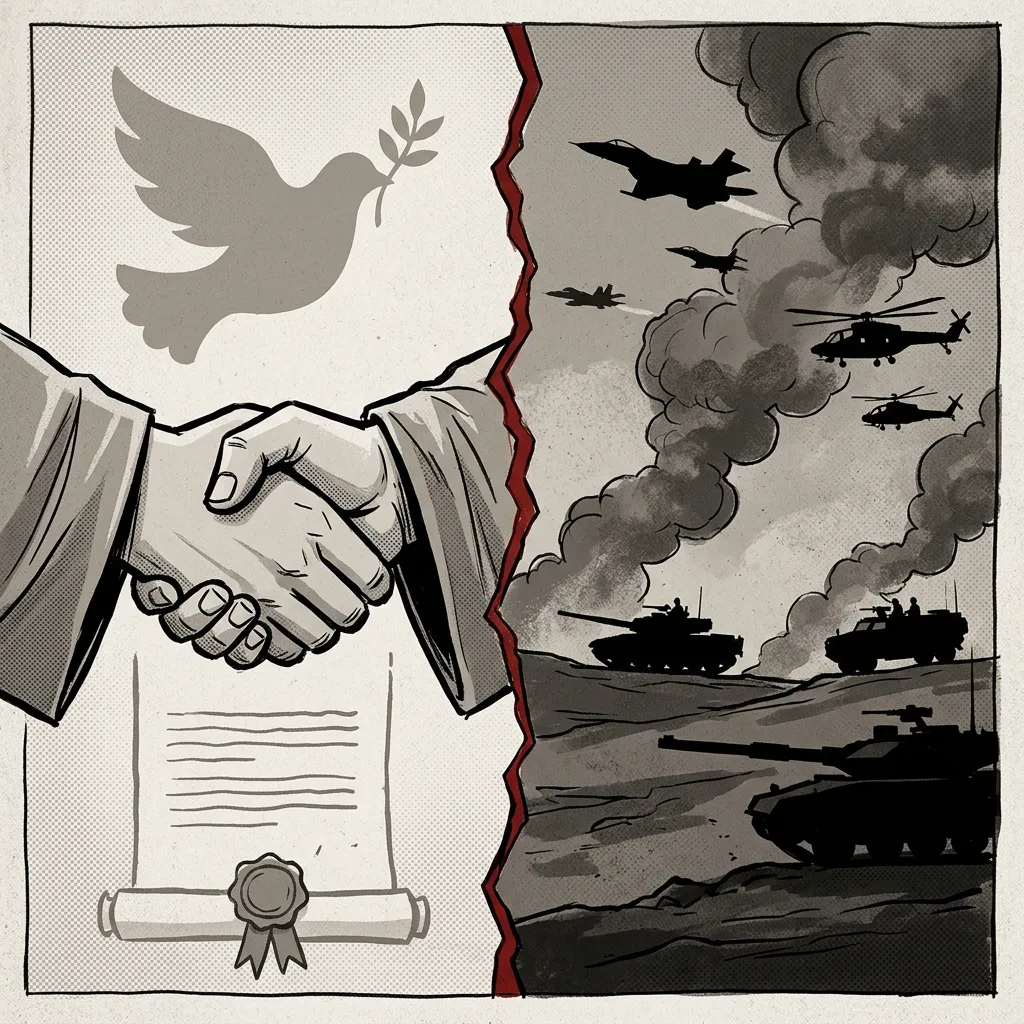
Conflicting Accounts of Ceasefire Implementation
Multiple sources report ongoing Israeli military operations in Gaza despite what various outlets characterize differently as either a "ceasefire" or "so-called ceasefire." The framing of this arrangement varies significantly across reporting, with some sources placing quotation marks around the term ceasefire itself.
According to Middle Eastern reporting, Israeli forces have conducted what one outlet describes as more than 2,400 violations of the ceasefire agreement. These sources report that Israeli military operations have resulted in multiple Palestinian casualties, with figures ranging from at least four deaths in one report to thirteen in another account citing Gaza's Civil Defence.
Casualty Reports and Territorial Movements
The Gaza Interior Ministry, as cited in one report, stated that among the casualties were two police officers. Middle Eastern sources describe Israeli forces as "advancing further into western Gaza" while simultaneously "expanding the area of their control in the east." This territorial expansion is characterized by these outlets as occurring alongside the reported attacks.
One source frames these developments as Israel "escalating attacks and expanding control" throughout the Gaza Strip. The same reporting suggests these actions are occurring while a "new US-backed technocratic administration" is being sidelined, though details about this administration are not elaborated in the available material.
Characterization of the Security Situation
The security environment is described by at least one source as a "state of war," questioning why Israeli military operations have intensified. This framing presents the situation as an escalation rather than a maintenance of existing security arrangements.
The use of quotation marks around the word "ceasefire" in multiple headlines from Middle Eastern sources suggests editorial skepticism about whether the arrangement functions as a genuine cessation of hostilities. This stylistic choice indicates these outlets view the term as contested or inaccurate given the reported military activities.
Information Gaps and Source Limitations
The available reporting does not include Israeli government or military perspectives on these operations, their legal justification, or whether Israeli authorities characterize these actions as ceasefire violations. No Western governmental sources or international monitoring organizations are cited in the provided material.
The reports do not specify the timeframe over which the cited 2,400 alleged violations occurred, making it difficult to assess the rate or pattern of incidents. Additionally, there is no information about the nature of these alleged violations—whether they involve airstrikes, ground operations, or other military activities.
No sources provide details about the terms of the ceasefire agreement itself, what actions would constitute violations under its framework, or whether any monitoring mechanism exists to verify claims from either side.
Regional Framing Patterns
Middle Eastern outlets consistently frame Israeli actions as violations of an agreement, using language that emphasizes expansion and escalation. Indian reporting, while noting the casualty figures, provides less contextual framing about ceasefire status or territorial control issues.
The absence of Israeli or Western sources in this synthesis reflects the limitation of available material rather than their non-existence. A complete picture would require perspectives from Israeli officials, international observers, and potentially other regional actors.