
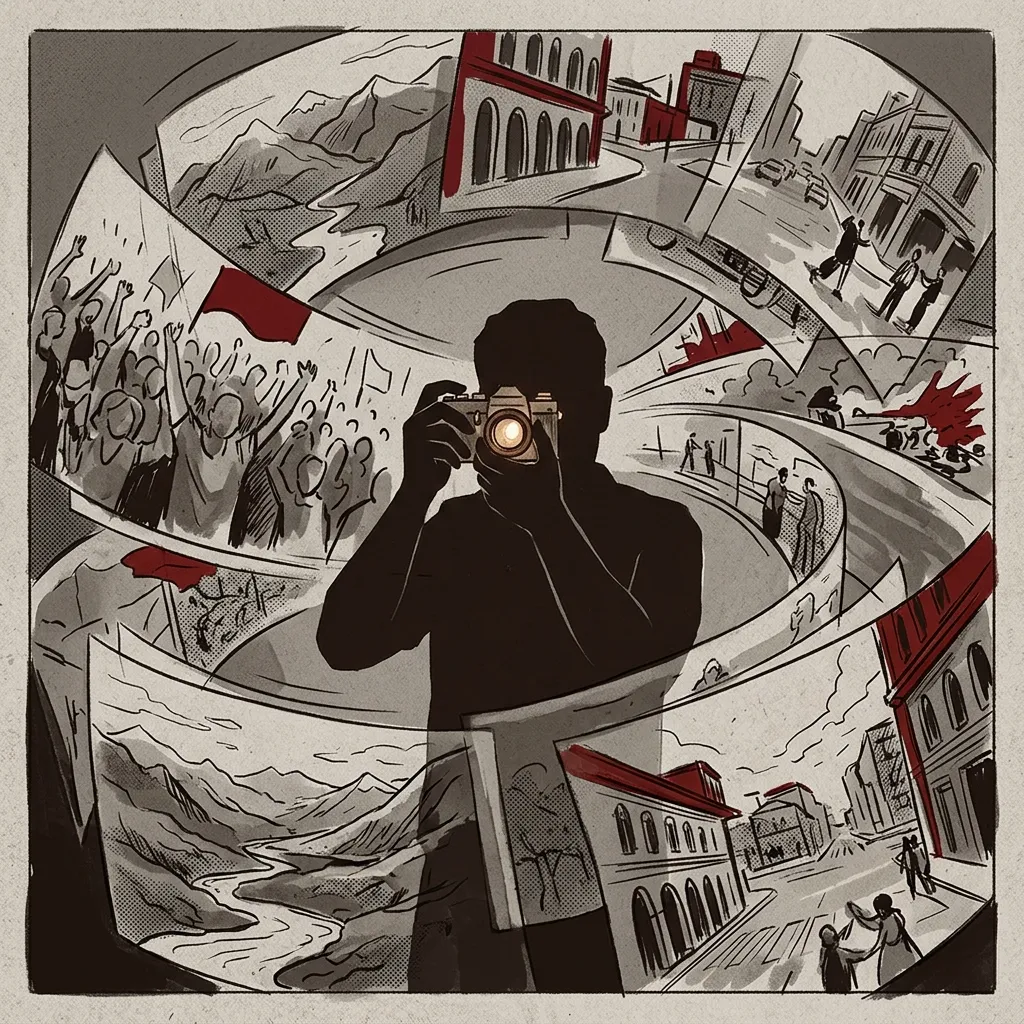
Raghu Rai, one of India's most celebrated photographers and a member of the prestigious Magnum Photos agency, has died at the age of 83, according to reports from international news outlets.
BBC News characterized Rai's death as India losing "a visual historian who was a chronicler of its most defining and often painful moments." The British broadcaster emphasized Rai's role in showing "India to itself," suggesting his work provided Indians with a mirror to their own society and history. This framing positions Rai primarily as a domestic chronicler whose significance lies in his relationship to Indian self-understanding.
Al Jazeera, meanwhile, described Rai as "a Magnum Photos icon" whose photographs "preserved India's memory through some of its pathbreaking events spanning decades." The Qatar-based outlet's language emphasizes Rai's international stature through his Magnum affiliation and frames his work as preserving collective memory rather than reflecting it back to Indians specifically.
Both sources agree on Rai's significance as a documenter of major historical events in India, though neither provided specific details about the circumstances of his death, his survivors, or the exact date of his passing in their brief reports.
The BBC's description highlights that Rai captured moments that were "often painful," suggesting a focus on difficult or traumatic episodes in Indian history. Al Jazeera's reference to "pathbreaking events" carries a more neutral or potentially positive connotation, emphasizing historical significance without the explicit acknowledgment of suffering.
Neither outlet elaborated on which specific events or photographs defined Rai's career, what made him "legendary" in Al Jazeera's assessment, or how he earned his reputation as a "visual historian" in the BBC's framing. Both sources appear to assume reader familiarity with Rai's body of work.
The Magnum Photos connection, mentioned only by Al Jazeera, is significant in photojournalism circles. Magnum is a cooperative agency founded in 1947 by photographers including Robert Capa and Henri Cartier-Bresson, and membership is considered among the highest honors in documentary photography. Al Jazeera's emphasis on this affiliation frames Rai within a global photographic tradition, whereas the BBC's focus on his relationship to India keeps the frame more nationally bounded.
BBC's phrasing that Rai "showed India to itself" implies a pedagogical or revelatory function to his photography—that Indians learned something about their own country through his lens. This suggests his work may have challenged prevailing narratives or brought attention to overlooked aspects of Indian society. Al Jazeera's language about "preserving memory" positions Rai more as an archivist or custodian of history, someone who ensured events would not be forgotten rather than necessarily reinterpreting them.
The age at death, 83, was confirmed by Al Jazeera but not mentioned in the BBC excerpt provided. Both sources treated Rai's passing as newsworthy for international audiences, not merely as a domestic Indian story, reflecting his significance beyond national borders.
What remains unclear from these brief reports is the immediate cause of death, whether Rai had been ill, where he died, details about his family, or what his final projects were. Neither source provided quotes from colleagues, family members, or cultural figures responding to the news. The brevity of both reports suggests they may be initial dispatches, with more comprehensive obituaries potentially to follow.