
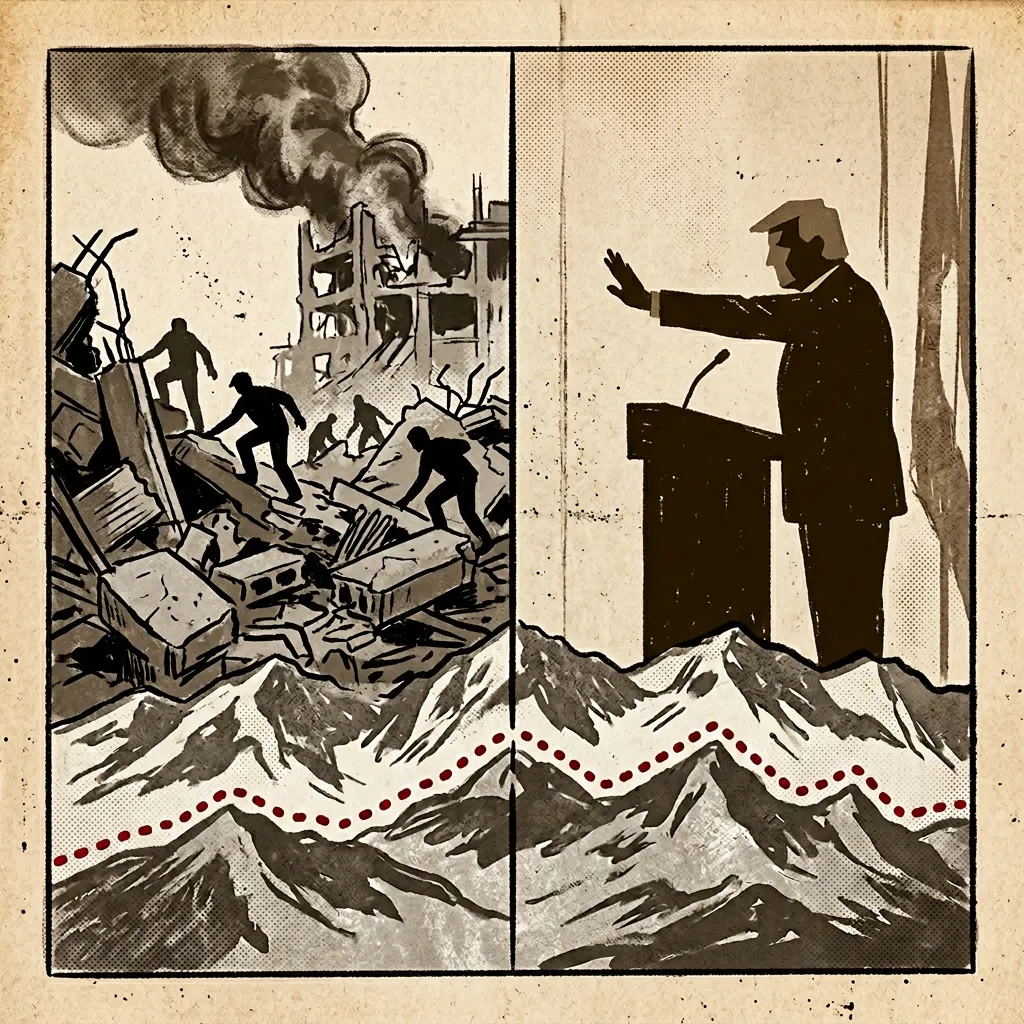
Conflicting Accounts Over Cross-Border Strikes
Afghan officials have accused Pakistan of conducting air strikes in Afghanistan's Kunar province that reportedly killed at least seven people and injured dozens more, according to multiple sources. The incident has sparked a sharp diplomatic dispute, with Islamabad categorically denying the allegations.
Afghan Claims and Casualty Reports
According to Afghan officials cited by international media, the strikes targeted areas in Kunar province, including a university. The Hindu reports that Afghan sources claim seven people were killed and 85 wounded in what they describe as the first such attacks since recent peace talks. The BBC, citing its own sources, reports at least seven deaths and 75 injuries from air attacks on the province.
The discrepancy in injury figures—85 versus 75—reflects the challenges of obtaining precise casualty counts in the immediate aftermath of such incidents. Both outlets agree on the death toll of seven and identify Kunar province as the location.
Afghan media reports and official statements have characterized the incident as strikes on a university, though details about the specific institution, the time of the attacks, and the circumstances remain limited in available reporting.
Pakistan's Categorical Denial
Pakistan's Ministry of Information and Broadcasting has issued a strong rebuttal, dismissing the Afghan claims entirely. According to The Hindu, the ministry characterized Afghan media reports and official statements about strikes on the university as "a blatant lie."
The Pakistani government has not provided alternative explanations for what may have occurred in Kunar province, nor has it acknowledged any military operations in the border region. The flat denial leaves two contradictory narratives without independent verification available in these reports.
Context of Recent Peace Talks
The Hindu specifically notes that these alleged strikes represent "the first attacks since peace talks," suggesting the incident carries particular significance against a backdrop of recent diplomatic engagement. The timing implies a potential setback to whatever dialogue had been underway between the two neighboring countries, though neither source provides details about the nature or status of those talks.
The BBC does not reference peace talks in its coverage, focusing instead on the immediate facts of the alleged strikes and casualty figures.
Information Gaps and Verification Challenges
Neither source provides independent verification of the strikes or their aftermath. The BBC attributes its casualty information to "sources," while The Hindu cites "Afghan officials" and "Afghan media reports." No international observers, independent journalists at the scene, or neutral third-party confirmation appears in either report.
The absence of detail about the university itself—its name, student population, whether it was in session, or what specifically was hit—leaves significant gaps in understanding what occurred. Similarly, neither source reports Pakistan's military or defense ministry providing any statement beyond the Information Ministry's denial.
Regional Implications
Cross-border tensions between Pakistan and Afghanistan have historically centered on accusations of militant safe havens and cross-border attacks. While neither source provides this broader context, the severity of the allegations—strikes on an educational institution resulting in mass casualties—and Pakistan's emphatic denial suggest the incident could have significant diplomatic ramifications.
The conflicting accounts leave fundamental questions unresolved: whether strikes occurred at all, who conducted them if they did, what the intended targets were, and whether civilian infrastructure was hit deliberately or incidentally.