
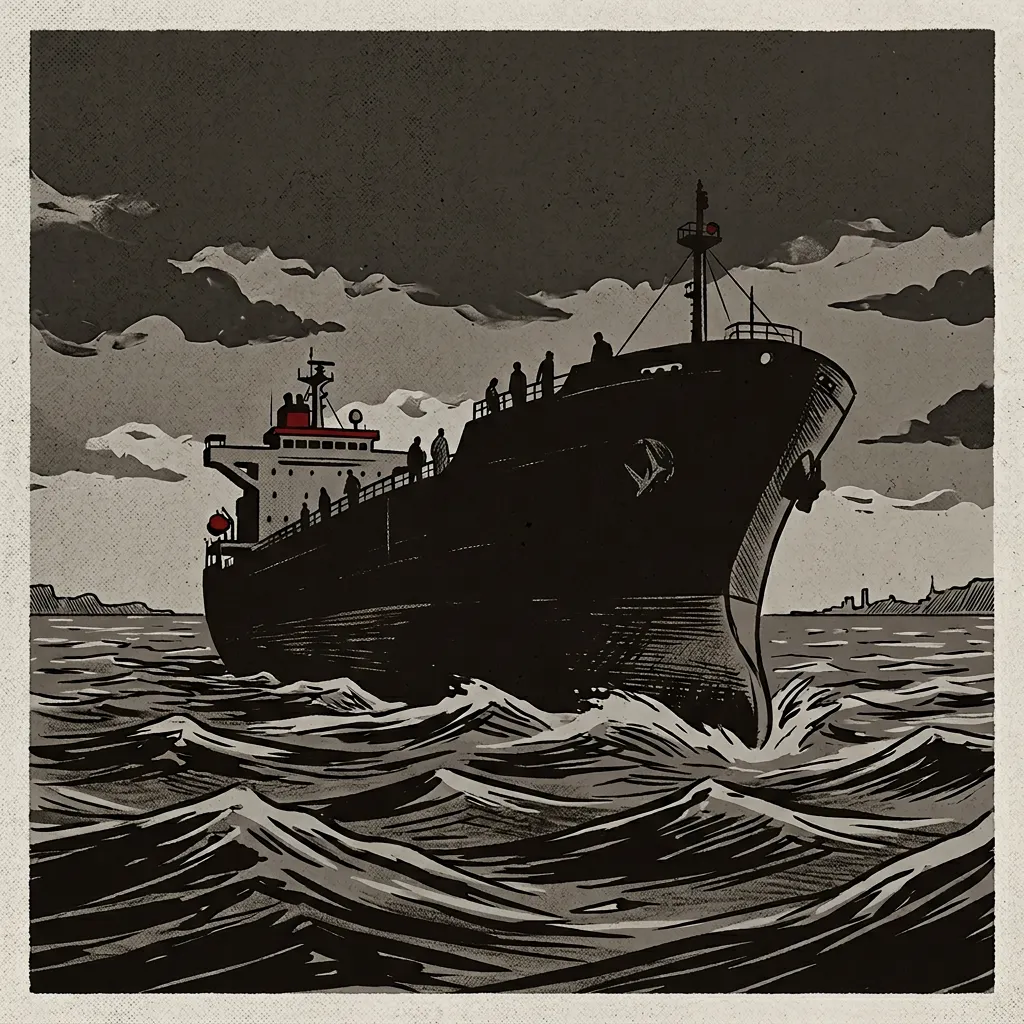
An oil tanker has been seized off the coast of Yemen and reportedly diverted towards Somalia, according to regional authorities and international maritime monitors. The incident has drawn attention to a potential resurgence of piracy and maritime insecurity in the Gulf of Aden and the western Indian Ocean. While the basic facts of the hijacking are consistent across reports, the framing of the event's significance, its connection to broader regional instability, and the attribution of responsibility vary notably between European, Middle Eastern, and South Asian news sources.
The BBC, reporting from a European perspective, immediately contextualizes the event within a specific timeline of similar attacks. Its report emphasizes that this is the second such hijacking of an oil tanker in the same general area within a ten-day period. This framing presents the incident as part of a concerning, accelerating trend that threatens a key global shipping lane. The focus is on the pattern and frequency, suggesting a breakdown in maritime security that could impact international trade and energy markets.
In contrast, Al Jazeera's coverage, originating from the Middle East, adopts a broader geographical and numerical lens. The outlet reports the event as at least the fourth vessel hijacking near Somalia in recent weeks. This framing expands the scope beyond just oil tankers to include vessels of any type and anchors the incident more firmly to Somali waters and the historical context of piracy emanating from the Somali coast. The narrative implicitly connects the event to the long-standing, complex issue of Somali piracy, which has roots in local instability and illegal fishing, rather than focusing solely on the immediate Yemeni coastal area.
India's The Hindu provides a more operational and state-centric account, directly citing Yemeni authorities. Its report details that the Yemeni coast guard identified the hijacking off the Shabwa coast and is actively tracking the vessel's movement toward Somali waters. Crucially, it includes a statement from the coast guard about ongoing efforts to monitor the tanker and ensure the safety of its crew. This framing highlights the response of a regional state actor (Yemen) and introduces the element of a potential rescue or interception operation, a detail absent from the other reports. It presents the incident as an active crisis being managed by national authorities.
Framing the Incident The divergence in reporting reveals how the same maritime security event is interpreted through different regional prisms. The BBC's narrative is one of a disruptive trend in a vital commercial corridor, relevant to a global audience concerned with supply chain stability. Al Jazeera situates the hijacking within the enduring and multifaceted challenge of Somali maritime crime, a narrative familiar to its Middle Eastern and North African viewership. The Hindu, reflecting India's significant stakes in the security of Indian Ocean sea lanes and its large diaspora of seafarers, focuses on the official response and the safety of the crew, blending national security concerns with human interest.
These framings are not mutually exclusive but emphasize different aspects of a complex situation. The incident occurs in a region already strained by the Yemeni civil war and persistent instability in Somalia, making attribution and context highly charged. Whether the event is portrayed as a spike in tanker hijackings, a continuation of Somali piracy, or an active incident requiring a state-led response shapes the perceived causes, responsible actors, and potential solutions. The synthesis of these reports indicates that while the hijacking itself is a concrete event, its meaning is constructed through the lens of regional priorities and historical maritime threats.
Concluding, the hijacking of the oil tanker serves as a focal point for broader anxieties about security in one of the world's most strategic waterways. The varying reports underscore that maritime incidents in this region are never viewed in isolation; they are immediately analyzed as indicators of larger geopolitical or criminal trends. For international shippers and insurers, the BBC's framing of a recurring threat is most salient. For regional analysts, Al Jazeera's connection to Somali piracy and The Hindu's report on Yemeni state action provide crucial pieces of a puzzle involving non-state actors, fragile states, and international naval patrols. The event highlights the persistent vulnerability of commercial shipping to regional instability, viewed through distinctly different narrative frameworks.