
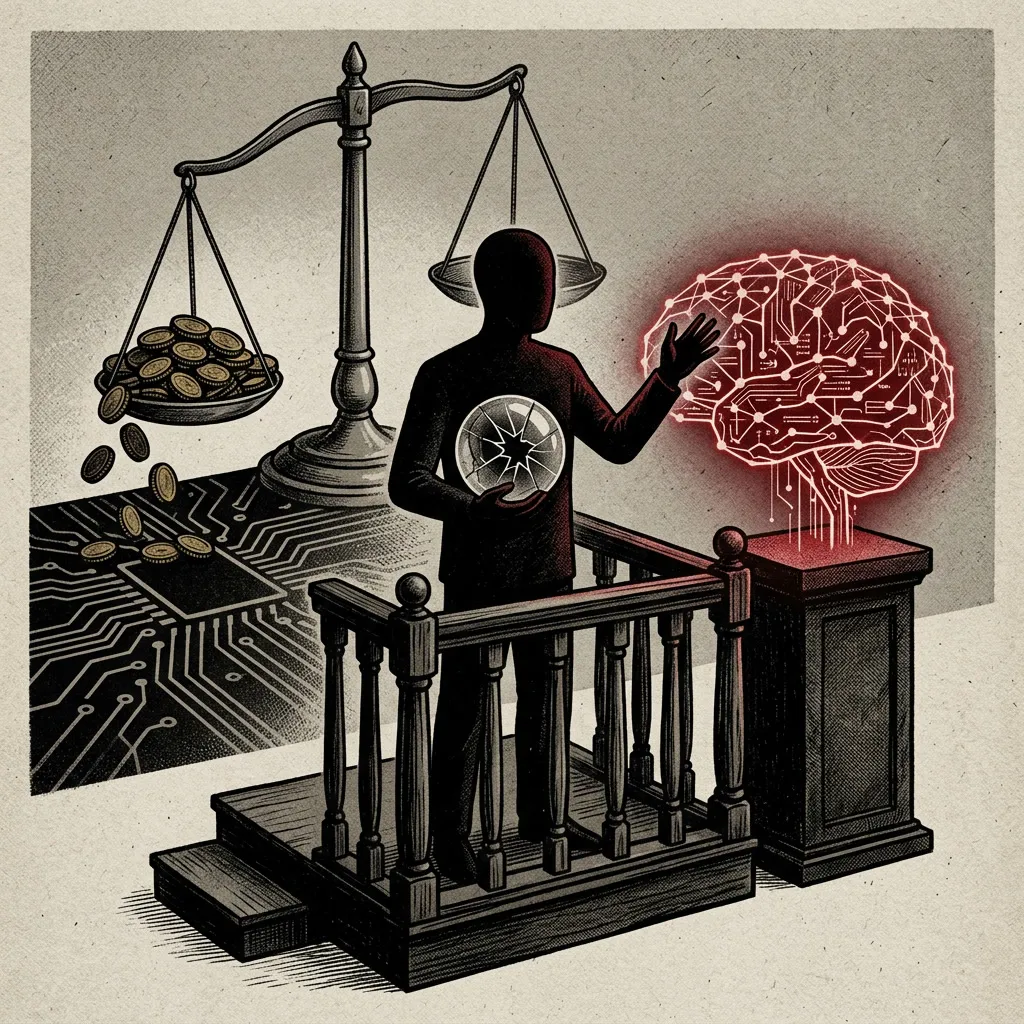
In a high-stakes legal battle, Elon Musk has taken the stand to accuse OpenAI's leadership of abandoning its founding charitable principles. The Tesla CEO, who was an early co-founder and funder, alleges the artificial intelligence company transformed into a profit-driven entity, betraying its original mission. The trial centers on whether OpenAI's pivot to a commercial model, including the development of ChatGPT, constitutes a breach of its initial nonprofit agreement.
Source Perspectives
Le Monde (Europe) frames the case as a significant corporate governance dispute with implications for the tech industry's ethical boundaries. One of its reports emphasizes Musk's role as a "benefactor" who provided $38 million between 2015 and 2017, directly funding OpenAI's co-founders. The publication highlights his accusation that CEO Sam Altman and President Greg Brockman betrayed the startup's mission by steering it toward a commercial future, noting the company's reported valuation of over $850 billion and plans for a public offering. A separate Le Monde article details Musk's demeanor in court, reporting that he displayed visible "irritation" when confronted with his own past emails and predictions about OpenAI's trajectory, suggesting a tense legal confrontation over the historical record.
RT (Russia) presents the testimony with a focus on Musk's personal rhetoric and the narrative of deception. It prominently features Musk's own characterization of himself as a "fool" for providing what he believed was "free funding" to create a startup. The report quotes Musk's allegation that Altman "stole a charity" and details the three-phase evolution of his view of OpenAI's leadership: from "enthusiastic support" to a loss of confidence, and finally to a belief that "they're looting a nonprofit." RT notes the company's current valuation at about $85 billion—a figure that differs significantly from the $850 billion cited by Le Monde—and outlines the legal remedies Musk seeks, including the removal of Altman and Brockman and a reversal of the for-profit shift.
Framing the Legal Dispute
The core factual claims are consistent across reports: Musk co-founded and funded OpenAI in 2015 under a nonprofit premise, contributed tens of millions of dollars, and is now suing because he believes the company has fundamentally strayed from that mission under its current leadership. However, the framing diverges in tone and emphasis. Le Monde adopts a more detached, analytical tone, situating the conflict within broader discussions about profit motives in AI development and corporate structure. Its reporting on Musk's irritation in court adds a layer of personal drama but within a formal legal context.
In contrast, RT's coverage is more narrative-driven, building a story around Musk's emotional language ("fool," "looting") and the dramatic accusation of theft. This framing personalizes the conflict, casting it as a showdown between a disillusioned founder and allegedly duplicitous executives. The significant discrepancy in the reported valuation of OpenAI ($850 billion vs. $85 billion) is a notable point of factual divergence between the sources, though neither publication explicitly questions the other's figure.
Broader Implications
The trial raises profound questions about the governance of influential technology organizations, especially those that originate with altruistic or open-source mandates. Musk's lawsuit challenges the permissible boundaries of organizational evolution, asking whether a entity founded for the public benefit can legitimately transform into a highly valuable commercial enterprise. The outcome could set a precedent for how founding charters and missions are interpreted legally, potentially affecting other tech nonprofits and research initiatives. Furthermore, the public airing of internal disagreements and early communications, as highlighted by Le Monde's report on Musk's emailed predictions, offers a rare glimpse into the foundational tensions within one of the world's most prominent AI labs. The case underscores the ongoing global debate over who should control and profit from advanced artificial intelligence.